Check Engine Light Means a Note, Not a Bill. Keep a Scanner in the Glove Box
A glowing red orb on the dashboard is a clue, not a verdict. One small tool reads the code, explains how bad it is, and shows you the next step before you pay a shop.
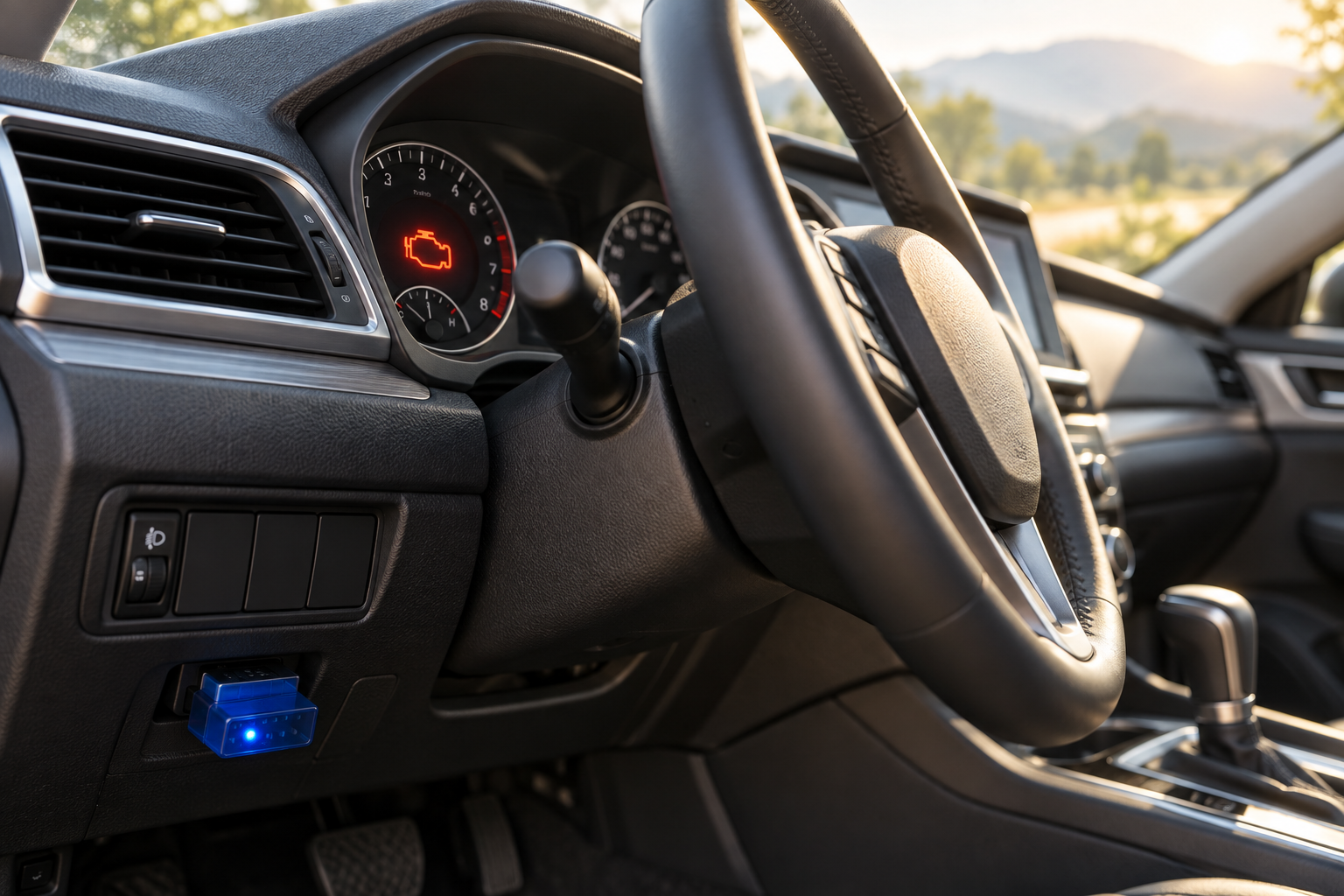
It is a normal Tuesday. You pull into the parking lot, turn the key, and the dashboard lights up like a little festival. Then, one red orb blinks at you. Check engine. You freeze, because you have been there before, and the thing about that light is that it always looks heavier than it usually is.
Here is the good news. A glowing check engine light does not mean the car is dead, and it does not always mean you are about to write a big check. Most of the time, the light is a note stuck on the windshield of a system that wants you to know something. The question is what it says, and how fast you can find out.
For a long time, the answer was a mechanic. You paid for a diagnostic scan, waited, and maybe got a printout you could not read. Now there is a smaller, cheaper way. You plug a tiny device into the port under the dashboard and read the code right on your phone. It costs a few dollars to run, and the right tool can do a lot more than just read a number.
What the code is actually telling you
Every modern car has a tiny computer that watches how the engine and the rest of the vehicle are working. When one of those systems drifts out of normal range, it writes a code. That code is the reason the check engine light comes on, and reading it is the whole first step.
Here is the part that surprises people. The code by itself is often not the diagnosis. It is a clue, and a good clue at that. Two cars can light the same code for very different reasons. A worn oxygen sensor, a loose gas cap, and a small fuel problem can all show up the same way, and the fix and the cost are completely different.
That is why a scanner that just reads the number and then stops is useful but only halfway useful. You want a tool that goes one step further. It should show you what the code means in plain language, how serious it is, and what a repair would usually look like. It should also let you clear the code so you can check whether the light comes back after you make the fix.
The scanner worth keeping in the glove box
Among the smaller diagnostic tools, one stands out for how much it actually covers without being a whole separate gadget. The TOPDON Carpal OBD2 Scanner Bluetooth reads standard check engine codes, but it also does a bit more than the cheap read-only devices. It connects to your phone over Bluetooth, works with both iOS and Android, and shows you the vehicle health check in plain English.
What makes it useful is the detail layer. Instead of handing you a code and a shrug, it tells you how severe the fault is. That matters. A light that means a minor issue you can watch, and one that means a problem that should not ride along to work, are very different conversations. The tool also comes with tailored repair instructions, so you know roughly what the next step looks like before you call a shop.
Another line that helps is that it can connect with up to three different vehicle brands at once. If you share the car, or if a family member borrows it, or if you simply want one device that covers more than one brand without re-pairing every time, that is a small feature that quietly makes a big difference on a long road trip.
Six maintenance tasks that usually need a professional
The diagnostic scan is the start, but the Carpal also bundles six of the common maintenance resets that people normally pay a shop to run. That is the part that turns a simple code reader into a real home tool.
Two of them are the everyday ones. Oil Reset clears the oil service indicator after an oil change, so you do not get a reminder light that you have already taken care of. TPMS Reset clears the tire pressure sensor flag after you add air or swap tires. If you keep those two in mind, the tool is already earning its keep on the cheap stuff.
Then there is a small set of less common but very useful ones. BMS Reset and EPB Reset smooth out the electronic brake and battery management systems so they run clean after a jump or a battery swap. Throttle Adaptation and DPF Regeneration keep the engine and the exhaust cleaner working where they are supposed to, which helps the car drive the way it was supposed to when you left the lot.
The honest answer is that these are not the same as a full shop visit. They are the small, routine resets that a scanner can do on its own. If a light means a real mechanical problem, you still want a human. But for the everyday flags and the small resets that keep the dashboard quiet and the car running right, this is the part most people do not expect from a cheap OBD2 device.
Who actually benefits from this
Not every driver needs a diagnostic scanner, and that is okay. But a few people get a real return on the money, and the check engine light is the most common reason they buy one.
First, the driver who wants to know before they pay. If you have a car that you use every day, a tool that tells you what the light means saves you from the blind walk into a shop. You walk in with a code in hand, which is a different conversation than walking in with a glowing light and a guess.
Second, the person who is trying to learn their car. Understanding the dashboard is a real skill. It takes a few months and one or two codes to figure out which lights are minor and which ones need attention. A scanner that explains the severity and the fix makes that learning a lot easier.
Third, the family with more than one car. If you share a vehicle, or if you are the one who always fixes the problems, the fact that the Carpal can work with up to three brands at once means you do not have to re-pair the tool for every car in the driveway.
How it compares to the rest
There are a few other ways to read a check engine light, and it helps to know the difference before you buy.
A cheap read-only scanner will read the code and give you a number. That is useful, but it leaves you with a number and a lot of guessing. A full diagnostic shop visit will tell you the whole story, but it also adds a fee and a trip. The Carpal sits in the middle. It reads the code, explains the severity, and gives you the repair direction, all without the shop fee and all without the long drive.
There is one trade to be honest about. You still need to know the basics. A code is a clue, not a verdict. If the tool says a minor fault and the light comes back a week later, that is the sign to take it in. If it says something more severe, you do not need to try to fix it in your driveway. That is the whole point of the tool. It gives you the information you need to make the decision, and then you make the decision.
Three habits that make it useful
One tool only works if you actually use it. Here are the habits that turn a cheap scanner into a real part of the car.
Keep it in the car. That is the whole point. If it lives in a drawer at home, you will not use it when the light comes on on a Tuesday. A small OBD2 scanner belongs in the glove box, next to the jumper cables and the paper map you already forgot about.
Read the code before you call. That one step changes the whole conversation. You go from a glowing light and a guess to a specific number and a clear next step. It takes thirty seconds, and it saves you from the first call being the most expensive one.
Clear the code after the fix. This is the one people skip. If you fixed the gas cap and you do not clear the code, the light will come back the next morning and you will have no idea why. Clear the code, take the car for a few days, and see what happens. If it comes back, that is the real problem.
The bottom line
The check engine light is not a death sentence. Most of the time it is a note, and the whole job is finding out what it says before you pay a stranger to guess. A cheap read-only device helps a little, but a tool that explains the code and tells you the next step is worth the extra cost.
If you want one that covers the common repairs and the small resets that keep the dashboard quiet, the TOPDON Carpal is the one to keep in the glove box. It reads the code, shows the severity, gives you the repair direction, and works with up to three brands at once.
Grab it, keep it in the car, and next time the light comes on, you will have the answer before you walk into the shop.