
Under-Desk Walking Pads: What to Check Before You Roll One Into a Small Office
A compact walking pad can make long desk hours easier, but only if the speed, noise, and size all fit your space and routine.
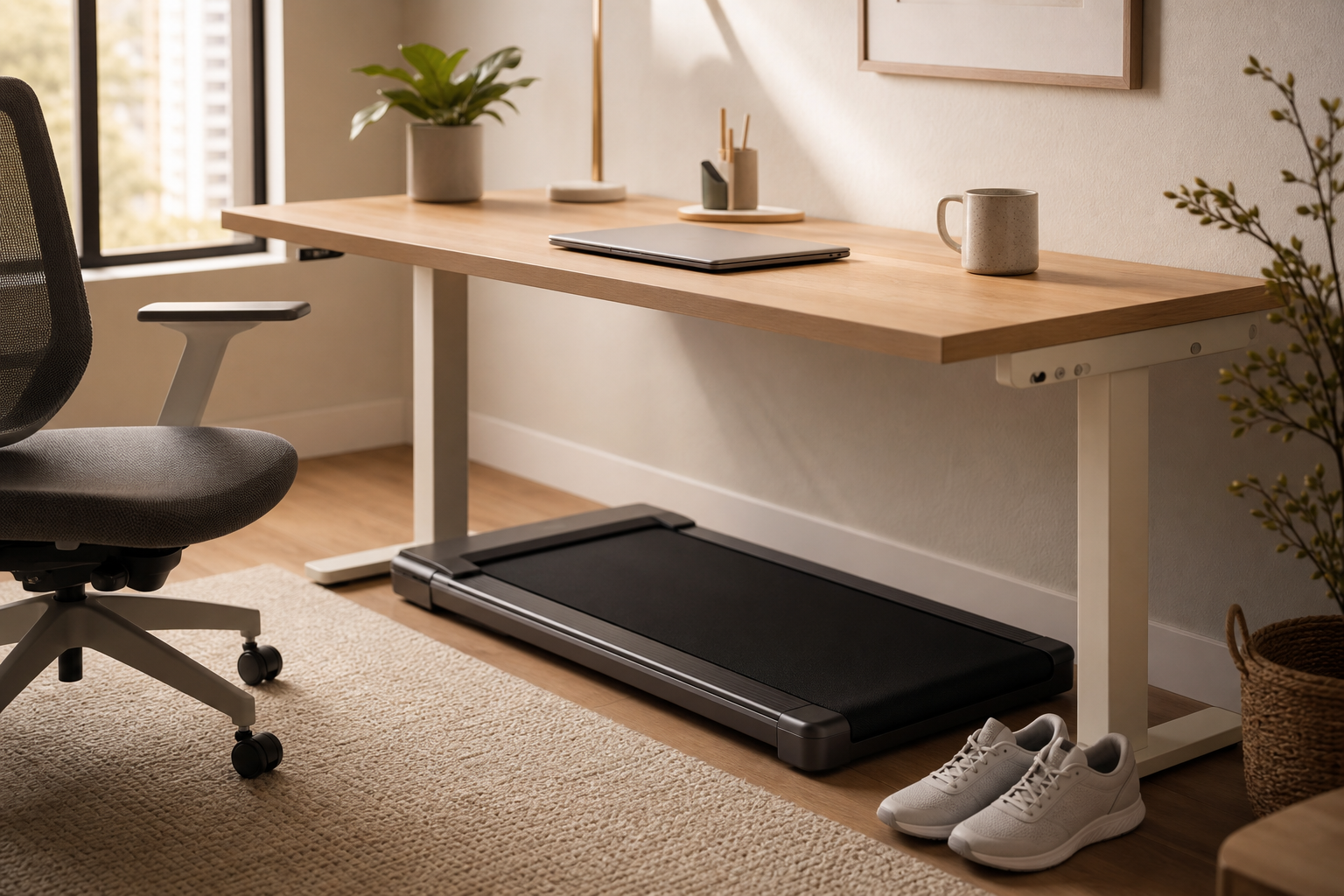
You open your laptop, finish a meeting, then stare at a coffee mug that has already cooled off. Your back feels tight, your shoulders are already up to your ears, and the only thing your body is doing is typing. If you have a small desk setup, you might still want a way to keep moving without taking over the room. That is the exact moment where people start looking at under-desk walking pads.
Before you buy, the biggest truth is simple: a walking pad is a furniture decision more than a fitness gadget. If the size, weight, and walking surface do not match your room, you will feel clever only for one week. If they do match, your routine improves in small ways that matter, like lower afternoon stiffness and less need to do every stretch you learned from a five-minute app video.
This guide stays practical. We are not chasing a miracle machine, and we are not promising that one pad replaces gym days. The question is what to check so the purchase does not become a noisy desk ornament.
Why people buy them for home office work
Most buyers want movement in the middle of a long workday. Maybe they have limited floor space, limited time, or no corner for a full treadmill. A walking pad can help with exactly that case. People also like the lower profile than full treadmills, so they can tuck it under a desk, roll out a chair mat, and still keep walking space for a chair and a stack of files.
The downside is that these pads are not magic. They can be loud when poorly tuned, they can wobble on uneven floors, and some models punish long sessions with a very short stride distance that feels tiring quickly. So the decision should feel like buying ergonomic office equipment, with a shopping list instead of a hype list.
Start with noise, not top speed
Look up to the first three things: base noise, speed options, and deck texture.
1) Noise level in your real room
The first person you should ask when evaluating a listing is the room itself. Do you have a shared office with a hard wall and one thin carpet? If yes, a vibration-sensitive deck will sound louder than a short review snippet suggests. You can always wear headphones, but neighbors, roommates, or a baby in the next room might notice. Prioritize a model with quieter motor behavior and avoid listing images that look like a high vibration motor is exposed.
Quiet does not mean silent. Use the phrase "quiet enough for phone calls" as your practical standard. If you can answer a work call without raising your voice, it is usually a workable noise target.
2) Speed range and pacing behavior
Many people look for high speed and then only use the lowest two settings. This is normal and not a failure. The useful question is whether there is a practical mid-speed step for desk walking. If one model jumps from slow to too fast, you will spend most of your day at a setting that feels either childish or unsafe.
A good check is whether the model gives a smooth start-stop response. If everything changes instantly, your calves can tense up. If the machine starts smoothly, your body can adjust and you are more likely to keep sessions consistent.
3) Surface grip and belt width
Some pads are sold with broad promises for many indoor uses. In practice, you want enough width for your shoes and stride style. If you wear house slippers for part of the day and sneakers for the rest, test if you can use both safely. The width does not need to be huge, but it cannot be so narrow that you feel like you are stepping on a ruler every three minutes.
Deck texture matters too. A grippy belt reduces slip, but too much texture can feel harsh with socks. If you will use the device barefoot, pick one with texture and build quality comments in the same listing section.
How to test fit in a small space
Measure your desk-to-wall path first. Then decide where your cables will live. Most complaints about these devices are not about features, they are about cables and storage.
- Measure width clearance. Leave enough room for a chair to move while the device is running. If your knees already touch the desk at one angle, you will not use it comfortably.
- Check cable exits. Many pads use rear power cords. If a cord is behind a wall outlet that is always blocked, your startup routine becomes annoying and you will skip it.
- Test floor tolerance. Use a tile line or rug seam test before buying. A simple check can reveal whether the deck bounces under foot pressure.
- Review weight limits. Confirm the published limit fits your actual use and never ignore this line as if it is just legal wording.
- Inspect return policy. A useful return period is needed for both the product and your desk layout, not only for your willpower.
For product discovery, start here with your tagged shopping view: browse under desk walking pads on Amazon with the required tag.
Claims you should translate into real use
Listings can be broad and marketing-heavy. Keep an eye on language that sounds like a headline and not a testable detail. The same patterns show up in many product pages.
- "Ultra thin" can describe storage depth, not stride width. Check both.
- "Quiet motor" usually means it is quieter than a full treadmill, not silent.
- "Smart" often means extra buttons or a simple app. Evaluate if those extras help your daily routine.
- "Heavy duty" may refer to frame strength while not always covering belt wear, so check replacement stories in real customer comments.
For people with limited floor area, a useful filter is honesty about constraints. If every listing note says only positive outcomes, that can be a warning to slow down and compare details.
What works for different routines
If you are call-heavy, choose lower noise and moderate top speed. If your goal is short movement breaks between tasks, choose easy startup and stable balancing. If you are training in intervals, check stride smoothness and safety controls.
If you share space, watch setup friction. A fold-flat design is often easier for apartments, but some fold systems cost convenience in stability. That is not a flaw, it is a tradeoff, and writing it down ahead of time saves regret.
Use a simple scorecard before checkout
When you narrow down two or three options, run this 10-minute scorecard:
- Room fit and cable flow: does it clear your desk path and chair movement?
- Noise during a short work test: can you stay on a call without leaning into the microphone?
- Speed curve and smoothness: does acceleration cause stress after four to five minutes?
- Surface safety: is the deck grip stable for your normal shoes?
- Support and return terms: is help clear if your floor setup fails?
If a model scores well on at least four of five items, it is usually a safe shortlist. If it fails three or more checks, it is often better to compare a second model first.
Smart buying step for today
Use your budget and compare listings through a deals page with affiliate tag included, then open one primary product page for exact sizing and policy details: under-desk walking pad deals on Amazon.
This method keeps the decision clear: do not buy for trend points, buy for room fit, comfort, and return flexibility. A machine that works with your real desk can support your routine quietly. A machine that does not fit your room will sit quiet in the closet, and that is not a healthy outcome for either your budget or your back.
So the short answer is yes, under-desk walking pads can be a good option for a small office. The better question is whether this one actually improves the habits you already struggle to keep, like short breaks and evening energy balance. If it does, it is a tool. If not, it is just another expensive way to make your floor less useful.