A Handheld Leaf Blower Makes Sense When the Cleanup Is Small
A few leaves on the steps or sawdust by the workbench rarely call for a full yard cleanup. Here is how to decide whether a cordless handheld blower fits those quick jobs, and what to check before buying one.
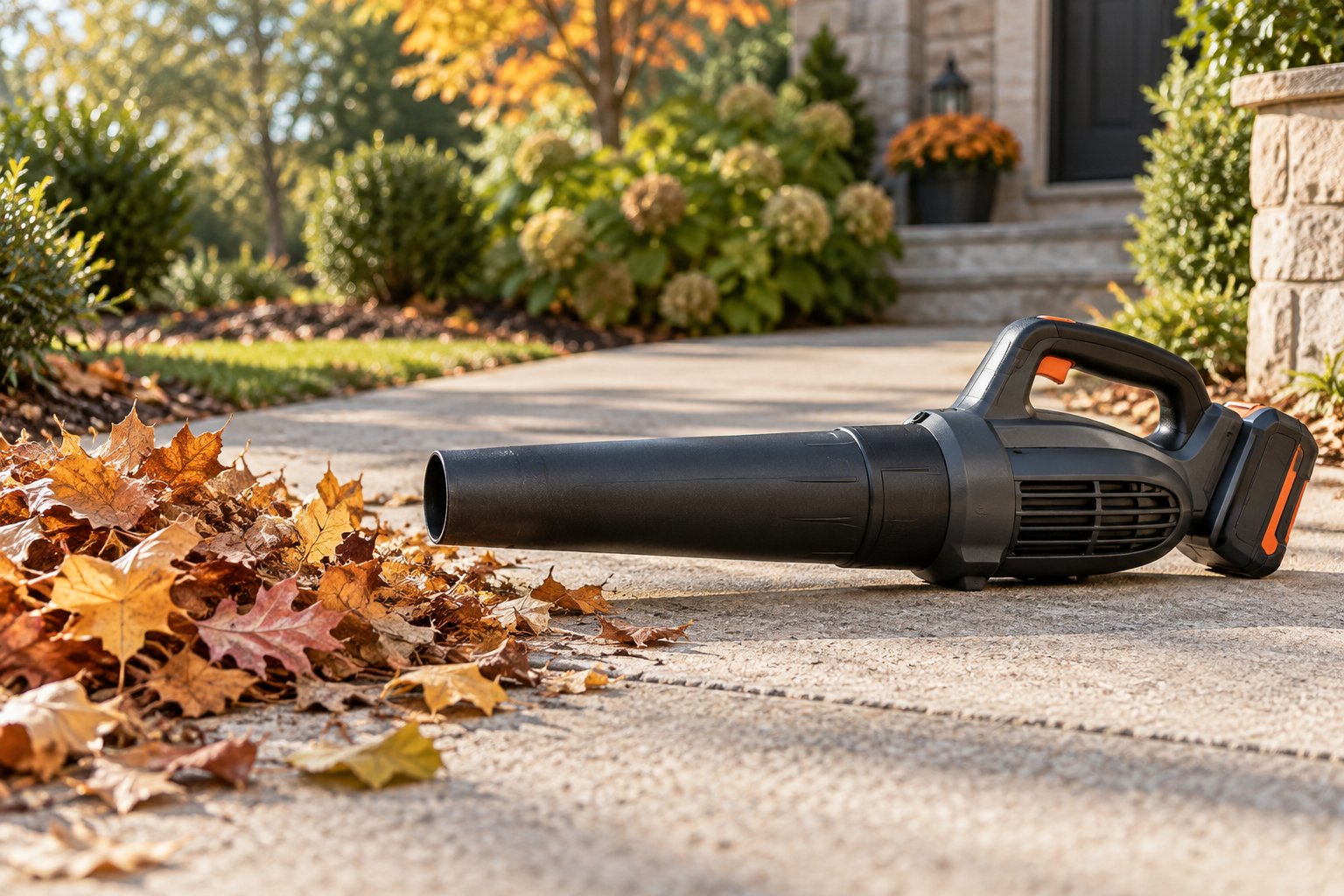
There are six leaves on the front steps, a scatter of grass clippings beside the mower, and a little sawdust near the workbench. The rake is in the shed, the broom is leaning in the garage, and suddenly a two-minute cleanup has become a small equipment decision.
A handheld cordless blower can be handy for those little messes, but it is easy to expect the wrong thing from one. It is a tool for moving loose material across a surface, not a vacuum, a pressure washer, or a magic button that makes yard work disappear. Before buying, think about the messes you actually have, the places you would use it, and how much time you want to spend charging and storing another battery.
Start with the cleanup, not the biggest number
Picture the last few times you reached for a broom, rake, or hose. Was the job mostly dry leaves on a walkway? Grass clippings on a patio? Dust and light debris in a garage corner? Those are the sorts of small, loose messes a compact blower may help gather toward one spot. You still have to collect or sweep the pile afterward, so the tool changes the first part of cleanup, not the whole chore.
Make a short list of your likely jobs. Then be honest about the awkward ones. Wet leaves stuck to concrete, gravel that should stay put, flower beds with loose mulch, and dusty shelves all call for more care than a clear driveway. Air moves things, including things you did not mean to move. A narrow path between a car and a garage wall can send debris exactly where you do not want it, while a gust can turn a neat pile into a second round of sweeping.
If most of your messes are damp, stuck down, or mixed with heavier material, a blower may not be the right first tool. A broom, rake, brush, or hose may be more useful. For a few dry leaves and clippings, a lightweight handheld model could be easier to grab than a full-size yard machine. The trick is matching the tool to the ordinary Tuesday mess, not the dramatic product photo.
What the listing numbers can and cannot tell you
The SEESE listing describes a cordless handheld blower with a stated 150 MPH air speed, 600 CFM airflow, a 21V 4.0Ah battery, and a claimed weight of 2.7 pounds. Those are listing specifications, not a test of how it will feel in your hand or how it will clear your particular yard. They give you details to compare, but they do not settle the buying decision by themselves.
Air speed and airflow describe different parts of the story. Speed refers to how fast air leaves the outlet; airflow is the amount of air moved. Neither number alone tells you how easy the tool will be to control, how long a charged battery will last in your use, or whether the nozzle will reach the corner you care about. If a listing leans hard on a very large motor-speed figure, look for practical details too, such as what is included, how the battery is handled, and whether the tool's shape suits your spaces.
Weight deserves a real-life check. A claimed 2.7 pounds sounds manageable, but the feel depends on where the weight sits, how you grip it, and whether your arm gets tired holding the tool out in front of you. If possible, compare the listed weight with tools you already own. A short burst beside a patio is different from holding a blower overhead or working along a long driveway.
Check the battery details before checkout
Cordless convenience comes with a simple trade: there is no cord to manage, but there is a battery to charge and keep track of. The listing names a 21V 4.0Ah battery. Check the full package details to confirm whether the battery and charger are included, how many batteries come in the box, and whether the battery can be replaced if it wears out. Do not assume that a battery from another tool will fit just because the voltage sounds familiar. Compatibility depends on the maker's actual battery system.
Runtime is another detail worth treating carefully. A product description may give a number, but how long a battery lasts can change with the speed setting, the amount of work, and the way you use the tool. If the listing does not give a clear runtime for a specific setting, do not build your plan around an imagined one. For a small entryway or patio, a short session may be all you need. For a larger property, battery capacity and charging time matter more.
Think about your habits, too. If you often start yard jobs with an empty battery, cordless freedom will not feel especially freeing. A charging spot near the garage door can help, as can a simple routine of checking the battery after use. If you prefer tools that are ready whenever you are, a corded option or a broom may be less fussy.
Plan where the debris will go
Before switching the tool on, decide where you want the leaves or clippings to end up. Choose a collection point away from a doorway, open garage, storm drain, or neighbor's clean patio. If the area is breezy, wait for calmer conditions or sweep by hand. A blower can save effort in the right conditions, but wind has no interest in your tidy plan.
Start with the lowest setting if the tool offers one, and test a small patch. Aim across the ground rather than straight down, and use short passes to guide debris instead of sending it flying. Around gravel, mulch, planters, parked cars, and open windows, take extra care or use a broom. Keep other people and pets clear of the work area, and follow the product's safety instructions for eye and hearing protection. Even a small tool can stir up dust and send grit moving.
Dry leaves are usually easier to direct than soggy ones. If a pile will not move, stop and check whether it is wet or caught in grass rather than simply holding the trigger longer. A leaf blower is not a leaf persuader. Sometimes the rake is the more sensible answer, and there is no shame in picking the tool that finishes the job with less fuss.
A quick fit check
Before ordering, compare the listing with your real routine:
- List two or three dry, loose cleanup jobs you would actually use it for.
- Check whether the battery and charger are included, and read the return and warranty details.
- Look at the tool's weight and shape, not only the advertised air numbers.
- Consider where you will charge and store it, and whether the battery system suits your other tools.
- Choose a safe place to gather debris, with enough room to control where it moves.
If that list describes your regular cleanup, the SEESE cordless blower may be worth comparing with other compact options. Read the package contents and current listing carefully before deciding; specifications and included accessories matter more than a dramatic promise. See the SEESE cordless leaf blower listing on Amazon.
If you mainly tackle a large lawn, wet piles, or heavy debris, compare larger yard tools instead. If your jobs are only a few leaves now and then, a rake or broom may still win on price and simplicity. The best choice is the one that handles your actual mess without making storage, charging, or cleanup into a new project.