
Small Garden Sprayers Must Match Your Yard Before a Bigger Discount Helps
A buyer often saves on price and loses value when a sprayer is too heavy, too weak, or too hard to use in their real space. This guide keeps the shopping math real and helps you pick a tool that works on a small yard, not only on a sale page.
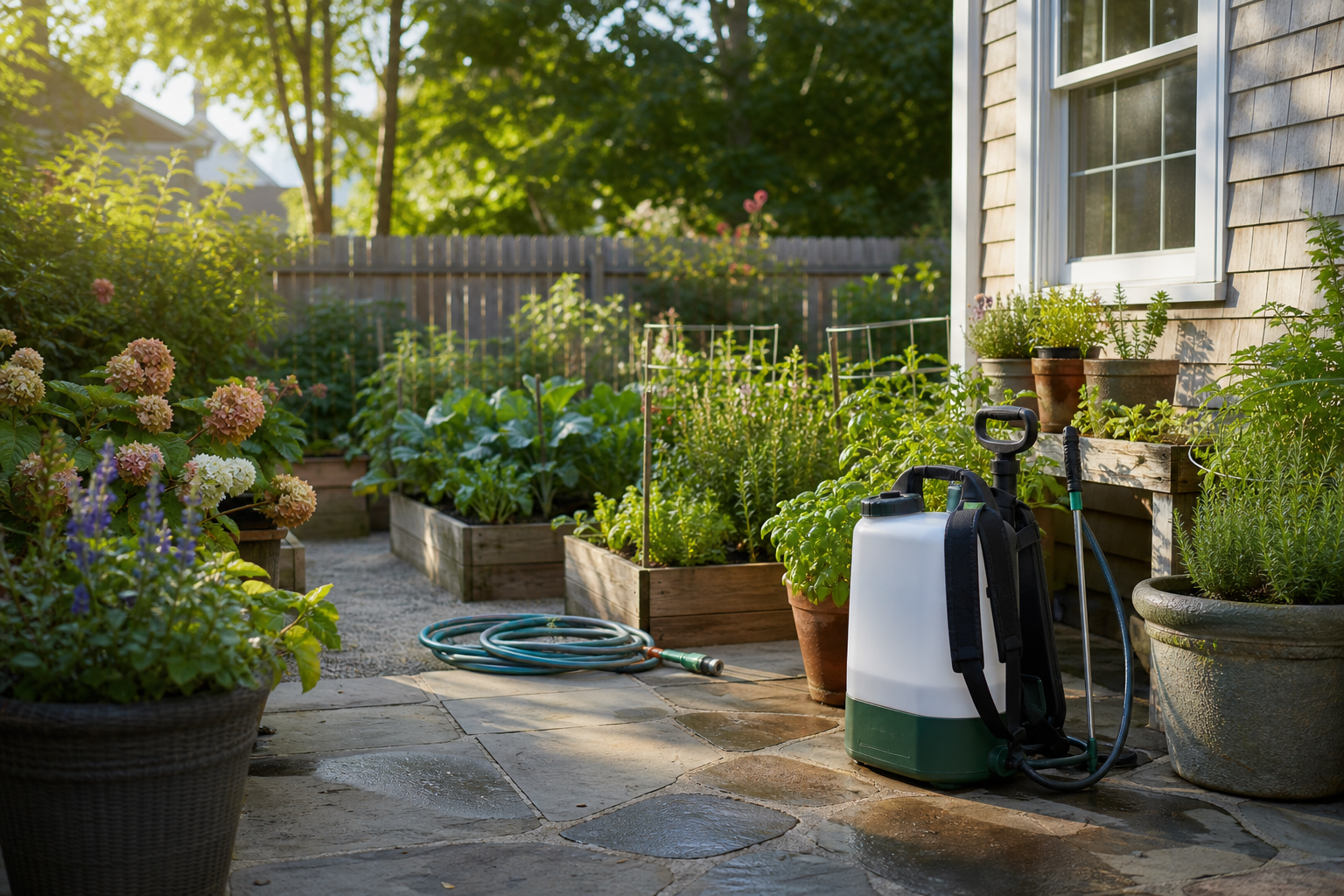
At 6:15 on a bright Saturday morning, Carla carried a brand-new battery sprayer into her 12-by-18 backyard and immediately saw the problem. The sale looked perfect from the listing, the coupon made it feel like a bargain, but the tank felt too heavy, the trigger was hard to control, and she ended the day with two missed corners and one sore shoulder.
That is the most common first-day feeling after bargain shopping for garden tools. The price is low, the product looks like the one that will end the weekly maintenance fight, and the first test exposes a mismatch. The goal is not to avoid all deals. The goal is to buy only the ones that match your space, your schedule, and your back.
Begin with your space and workload, not the coupon badge
Before checking a single listing, write down three facts. How many square feet do you actually spray in one pass, how often do you need to do it, and where do you store the tool? If your routine is small beds and planters around a patio, a heavy model can become a burden in a few minutes. If you cover a larger yard edge, the same model may simply underperform.
- Small zones with regular touch-ups usually need short sessions and repeatable control.
- Medium gardens with repeated weeding need better runtime and steadier pressure.
- Shared use by more than one person favors lighter loading and quick refill habits.
These are not technical preferences from a listing page. They are workflow constraints that turn a good catalog item into a good buy.
Match tank, pressure, and comfort as one decision
The first number people check is often price, but that is the least useful number at the first step. A sprayer is a package of three tradeoffs: tank size, pressure stability, and how natural the spray arc feels at shoulder height. For many patio-sized gardens, a 12 to 16 liter range is often easier than a giant can. For dense paths and repeat use, power and adjustable pressure matter more than headline PSI.
Three practical rules help:
- Favor comfort before capacity when your target area is small. Many buyers end up moving a full tank less than they expected, and weight drives fatigue.
- Choose clear nozzle control over raw spray force. A wide atom pattern for leaves can waste liquid and make cleanup harder.
- Check battery runtime against your actual route length. If your route is one quarter day work, 30 to 45 minutes may be enough with one refill.
Use one anchor and one fallback, then compare honestly
If you are shopping for a first tool, pick one anchor model that fits your area and one backup model for days when access is tight. The anchor gives your checkout math a stable target. The backup keeps you from adding needless complexity after the first click.
One common candidate for small yards is the VEVOR 3.2 Gallon Electric Battery Backpack Sprayer. It is usually a better start than a heavy power washer when you need repeatable spot treatment and quiet control.
If your edge sections are narrow, compare with one compact alternative like a booster water spray setup with a hose attachment. This can help in short strip work where setup time is tight.
If your yard includes hard stains and concrete algae, and you have the patience to set up hoses, check one stronger option for reference: a 2600 PSI electric pressure washer. It is a different workflow. If you need it only for monthly deep wash, keep it as fallback. If your use is weekly and routine-based, the backpack sprayer should remain your main purchase.
Deal math that survives the coupon clock
Deal hunting gets messy when buyers compare only the front price. Use a small checkout test before you place an order and include return safety.
- Final price after every visible discount, including taxes.
- Battery runtime against your first two weekly sessions.
- Return policy, shipping timing, and seller support language.
- Included parts, especially filters and nozzles.
If the second round for refills and replacement parts exceeds savings within 30 days, you did not buy value. You bought overcapacity. In that case, scale down to a smaller model and keep the bigger option for a later quarter.
Plan your first week so the tool becomes useful
Most buyers fail not at checkout, but after the first weekend. The tool either becomes a part of your routine or becomes an object behind another storage shelf. Give yourself a short setup loop.
Day one: test one full tank with water only. Verify trigger comfort, spray arc, and how often you need to readjust.
Day two: add one common mix for spot spray and check edges near paths and patio plants.
Day three: run the same route again and compare total time. If the method is slower or more tiring than expected, compare with one fallback model.
Day four: decide keep or return while options are easy and support windows are still active.
The short version before the next sale
Small outdoor maintenance does not need the loudest machine. It needs a sprayer that fits your route and your body. Right size, right pressure, and right follow-up routine are better than a louder listing and deeper discount.
When the next sale appears, skip the reflex of buying first and fitting later. Start with your yard shape, your weekly rhythm, and the return path. A good sprayer is the one that helps on the next two weekends, not the one with the loudest sale badge.
Tip: If you are unsure, add one comparison point only. For many buyers, seeing a second model with a different pressure profile prevents expensive repeat purchases and makes the original decision much easier.