
Family Game Night Questions That Get Past 'Fine'
A game-night question can get a one-word answer or a story about the class pet, depending on how you ask. These kid-friendly conversation cards give families a low-pressure way to start talking, with room for silly answers too.
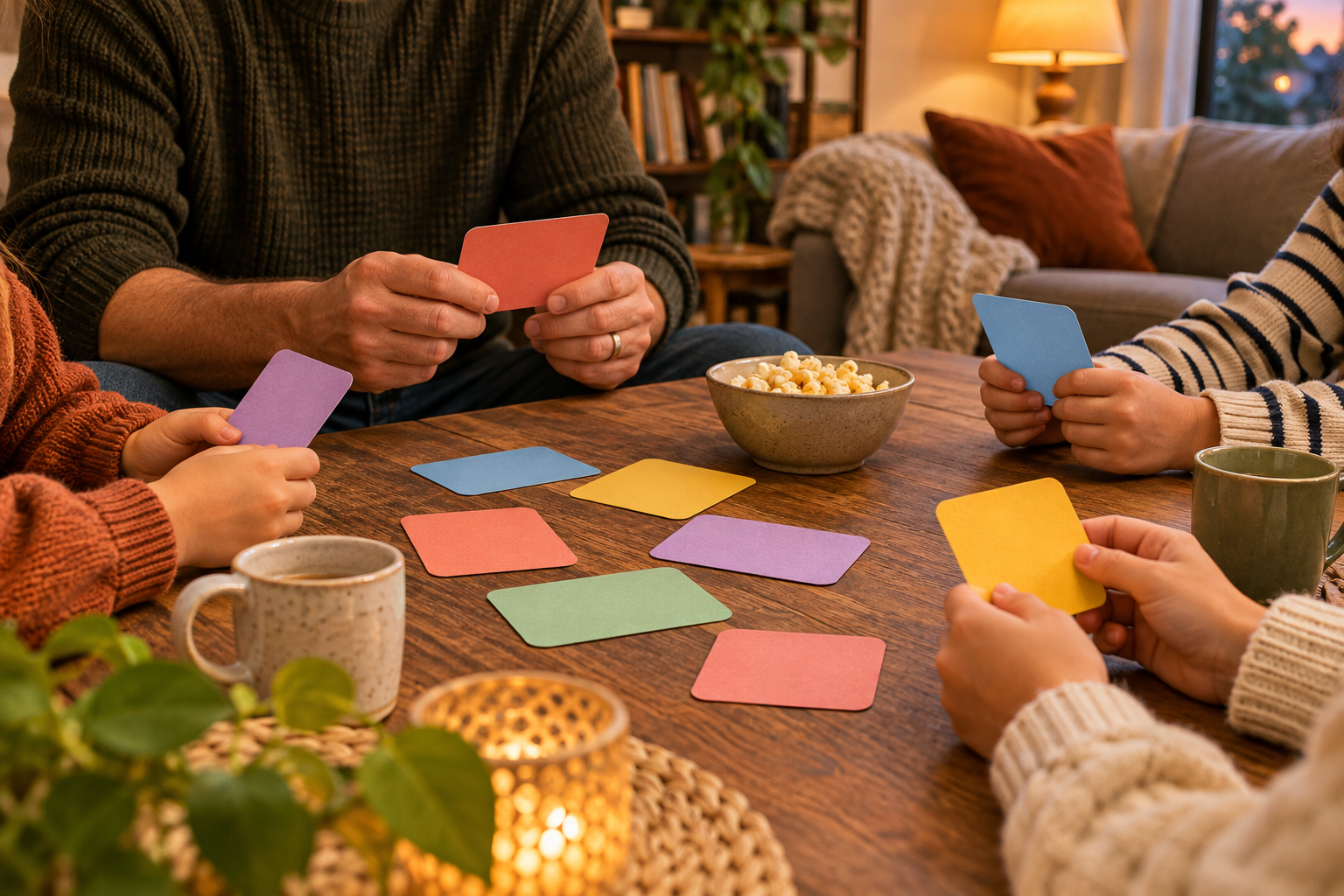
Ask a child how school went and you may get a crisp, confident answer: "Fine." Ask what the class pet would do if it could run the school for a day, and suddenly you have a full staff-reorganization plan. The difference is often the question. Conversation cards can give family time a nudge when everyone is tired of the usual check-in.
WE'RE NOT REALLY STRANGERS Kids Edition is a conversation card game listed for ages 5 and up, with 150 cards for two to six players. Its product description says the cards are arranged in three levels and include wildcards. That gives you a ready-made way to move from lighter questions toward more thoughtful ones, without asking a grown-up to invent a perfect prompt while also keeping an eye on dinner.
See WE'RE NOT REALLY STRANGERS Kids Edition on Amazon
Why a prompt can help
Family conversations rarely need a grand setup. They need a little space and a question that does not feel like a quiz. A card gives everyone the same starting point. It can also make it easier for a quieter child to join in, because the attention is on the prompt rather than on coming up with something clever on the spot.
That does not mean every card will unlock a long heart-to-heart. Some answers will be short. Some will take a detour through dinosaurs, snack rankings, or a very detailed explanation of a playground dispute. That is fine. The point is to make talking feel welcome, not to collect profound answers like stamps.
Set the mood before you shuffle
Pick a moment when nobody is rushing out the door or trying to finish a task. A relaxed meal, a quiet stretch after school, or a weekend game night can work. Keep the cards within reach and agree on a simple rule: anyone can pass on a question. A child who knows they can skip one is less likely to feel cornered by the next one.
It can help to answer first yourself. Keep your answer honest and age-appropriate, then leave room for the kids to respond in their own way. You do not need to turn the game into a lesson. If a prompt leads to a funny story, enjoy the story. If it opens a serious subject, listen before offering advice.
For younger players, read the card aloud and explain a word if needed. The listing identifies the game for ages five and up, but children vary in reading comfort and in what they enjoy discussing. A parent or older sibling can help with the words while letting the child choose how much to share.
Let the levels do their job
The product description says the deck has three levels, including a first level called Perception, plus wildcards. You can use that structure as a guide rather than a strict schedule. Start with lighter prompts, then see whether the group wants to keep going. Nobody has to reach a particular level for game night to count.
Wildcards can change the pace. Treat them as a bit of variety, not a demand for a performance. If a prompt asks a player to do something that feels awkward or unsuitable for the group, skip it or adapt the moment. The best house rule is the one that keeps everyone comfortable.
Small changes for different family nights
With two players, take turns drawing and answering. With a larger group, let people answer in order, or invite anyone who has a story to jump in. A quieter child might prefer to answer after hearing a sibling go first. There is no need to make every turn perfectly equal; keep the conversation moving and watch for signs that someone wants a pause.
On a busy weeknight, play for a few minutes rather than aiming to finish a stack. During a longer weekend game, let each person choose a card for someone else, as long as the recipient can pass. On a road trip, put a few cards aside before leaving so nobody has to dig through a box while the car is moving. Keep the driver out of the game, of course. The road already has enough plot twists.
You can also use a card as a conversation starter without playing a full round. Read one prompt at dinner, on a walk, or while waiting for an appointment. If the question does not land, choose another kind of conversation. A game should make family time easier, not become one more activity everyone has to complete.
What to check before buying
The listing describes a 150-card set for two to six players and ages five and up. Think about who will actually play. If your household has more than six people, you may want to take turns or split into groups. If you are buying for a child who is still learning to read, consider whether an adult will be nearby to read prompts aloud.
Also consider the kind of game your family enjoys. This is built around conversation, so it is a better fit for people willing to answer questions than for players looking for a fast strategy game with a winner at the end. Some families love an open-ended chat; others would rather stack blocks or race toy cars. Knowing your crew is more useful than any promise on a box.
Price and listing details can change, so check the current product page before ordering. The search result used for this draft listed the game at $25, but that is not a guaranteed price or a claim that it is discounted. Compare the current total, delivery details, and return information before you decide.
Keep the conversation kind
Children sometimes answer a personal question with something unexpected. Resist the urge to correct the story or turn it into a lecture. You can ask a gentle follow-up, such as what happened next or how they felt, then let them decide whether to continue. If a topic needs a longer conversation, save it for a quieter moment rather than trying to solve it between bites.
It is also worth modeling a pass. Adults can say, "I want to think about that one," or choose a different prompt. That shows kids that sharing is a choice. The game can invite conversation, but trust grows when people are allowed to set their own pace.
A box of questions cannot guarantee a magical family moment. It can, however, save you from asking "How was your day?" for the fourth time and hoping for a different answer. If your family likes talking games, a deck with a clear age range, multiple levels, and space for a silly detour may be a useful addition to the game shelf. Start with one card, let the answers wander a little, and call it a good night even if the deepest revelation is that everyone agrees on the best pancake topping.