
Find the Right Breaker Without the Guesswork
The label inside the panel says 'spare,' but the kitchen outlet still works. A circuit breaker finder can narrow the search, though it helps to know what the tester can and cannot tell you before you start.
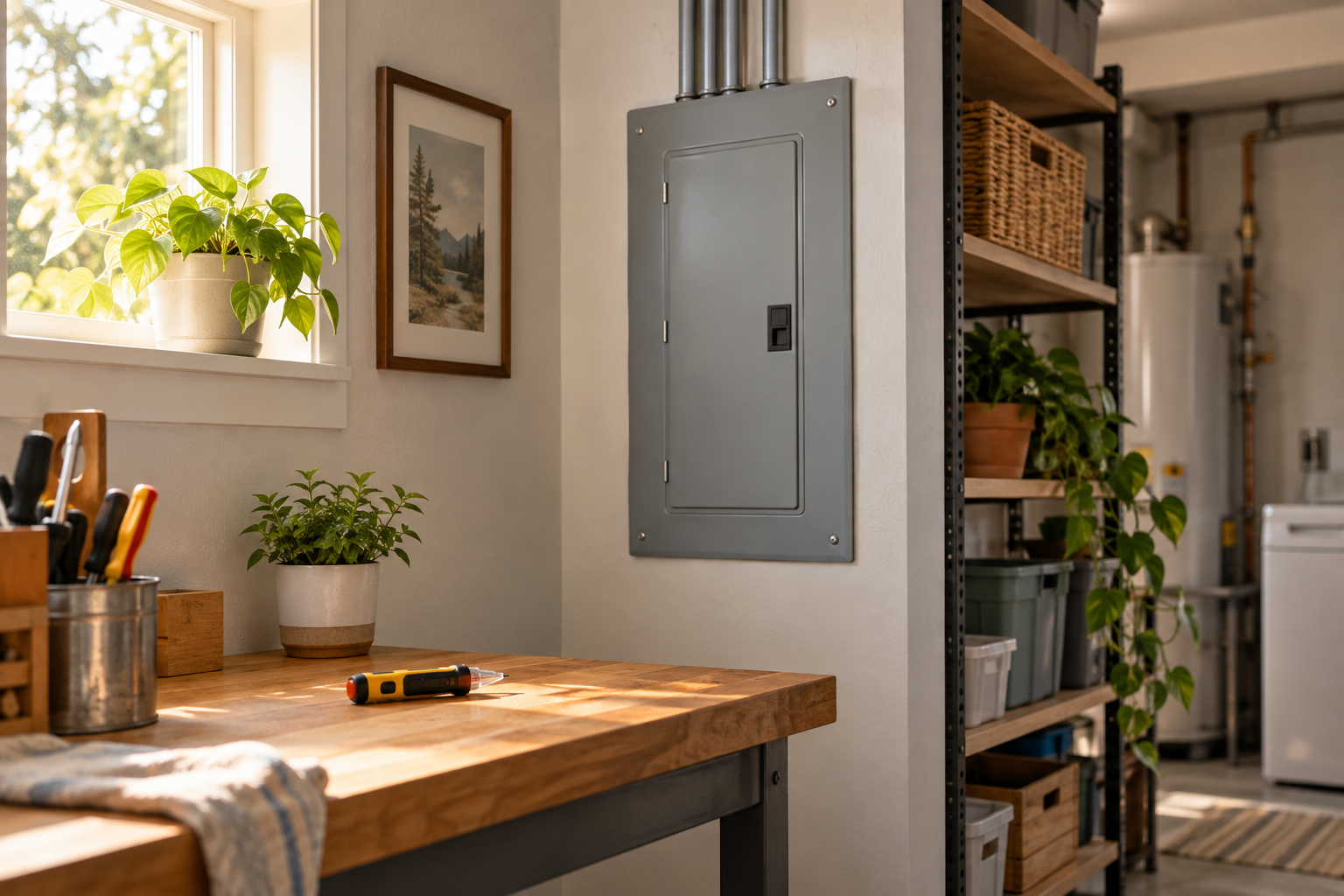
You plug in a lamp, walk to the breaker panel, flip one switch, walk back, and the lamp is still on. Try another. Repeat until the labels stop looking like useful information and start looking like a family mystery.
A circuit breaker finder is meant to make that chore less of a guessing game. The KAIWEETS KT302P listing returned by the current product search describes a kit that combines a breaker finder with an outlet and GFCI tester. It operates on 90-120V AC circuits and uses a two-scan process: learn first, then locate. That can be handy when you need to identify a circuit before routine work, but it is not a substitute for electrical training or a reason to open wiring.
See the KAIWEETS Circuit Breaker Finder Tool Kit
What a breaker finder actually helps with
Most homes have a panel where breakers control different circuits. The trouble is that labels may be incomplete, outdated, or written by someone who thought 'lights' was a useful description for half the house. A breaker finder helps you match a powered outlet to the breaker that controls it.
In a typical kit, one part plugs into an outlet and sends a signal along its circuit. The receiver is used at the panel to identify the breaker associated with that signal. The KT302P listing describes a learn-then-locate scan, which gives you a first pass to learn the signal and a second pass to identify the likely breaker. In plain terms: plug in the sender, scan at the panel, then confirm the result instead of relying on a guess.
That is useful for everyday planning, such as figuring out which breaker controls a room before you label the panel or deciding which circuit to shut off before a simple task. It is also useful when a breaker controls more than one outlet or room, which is common enough to make assumptions risky.
What the extra outlet tester is for
The product listing also describes outlet-wiring checks and GFCI testing. GFCI outlets and breakers are designed to interrupt power when they detect a ground fault, a condition that can create a shock risk. You may see them in places where water and electricity can meet, such as bathrooms, kitchens, garages, and outdoor areas.
A plug-in tester can provide an indication about outlet wiring, while a GFCI test checks whether the protective device trips when tested. That is a useful screening step, not a full inspection. A simple tester cannot tell you everything about an electrical installation, and the exact signals or indicators depend on the tool and the wiring. Read the product instructions and the outlet or breaker instructions rather than treating one light pattern as a complete diagnosis.
For GFCI protection, follow the manufacturer's testing directions. The Electrical Safety Foundation International recommends using the test and reset controls to check GFCI operation. If a device does not trip or reset as expected, stop relying on it and contact a qualified electrician. The same goes for an outlet that feels warm, smells burnt, makes crackling sounds, or shows visible damage.
Keep the job on the safe side of the panel
Here is the important boundary: identifying a breaker is different from repairing electrical wiring. You do not need to remove the panel cover to use a finder. Do not touch exposed wires or internal panel parts, and do not work on a circuit just because a tester gave you the result you expected. If the task involves wiring, a damaged panel, repeated tripping, or anything you are unsure about, bring in a licensed electrician.
Before you start, choose an outlet that is in good condition and easy to reach. Unplug appliances if the instructions call for it, and make sure the tester is rated for the circuit and outlet you are checking. Never force a plug into a receptacle, use a tester near standing water, or use a product with damaged leads or housing.
Once you have a likely breaker, verify the result using the tool's directions and a safe, visible indicator such as a lamp. If the outlet remains powered, the wrong breaker may have been selected, the circuit may have more than one source, or the tester may not be working as expected. Stop and investigate safely rather than assuming the power is off.
Check the kit before choosing one
Breaker finders are not all identical. Before buying, check the listing for the circuit voltage range, which outlet types the sender fits, what the receiver displays or signals, and whether it includes the outlet or GFCI checks you want. The current KAIWEETS KT302P listing says it is for 90-120V AC and includes a GFCI outlet tester. It also describes the two-scan locating method. Those are listing claims, so compare them with the manual and the tool's markings when it arrives.
Think about the panel and outlet locations in your home, too. A tester is less useful if you cannot safely reach the outlets you need to identify, or if the panel layout is unfamiliar. If you rent, check with the property manager before testing circuits that could affect shared equipment. In a multi-unit building, a breaker may serve spaces beyond the one you are working in.
Also decide whether you need a finder occasionally or are shopping for a tool you will use often. For one labeling project, a straightforward kit may be enough. For regular electrical work, a professional should choose equipment suited to the work and use it with proper training. A tool that combines several checks can save a drawer from accumulating testers, but extra functions are useful only when they fit the job.
Make the panel labels earn their keep
After you identify a circuit, update the panel directory in plain language. Instead of writing 'north side,' try 'bedroom outlets and hall light,' if that is what you confirmed. If more than one person lives in the home, labels that make sense to everyone are more helpful than a private shorthand only the original label-writer understands.
Do one circuit at a time and record what you actually tested. A breaker finder can help make the match, but it cannot promise that every outlet on the circuit has been found or that the panel directory is complete. If results conflict, leave the label uncertain and ask an electrician to sort it out. Guessing confidently is still guessing, only with nicer handwriting.
The KAIWEETS kit may suit someone who wants a single tool for routine breaker identification and basic outlet or GFCI screening. Its listed 90-120V range and two-scan method give you concrete details to compare, but the safest feature is still knowing when to stop. Use the tester to gather information, follow its instructions, and leave repairs and uncertain wiring to a qualified professional.