
The First Spray Should Hit a Test Patch, Not the Patio
Thirty pressure settings can sound like a promise of control. The safer first move is smaller: test an out-of-sight spot, watch what the surface does, and only then decide whether the washer belongs in the routine.
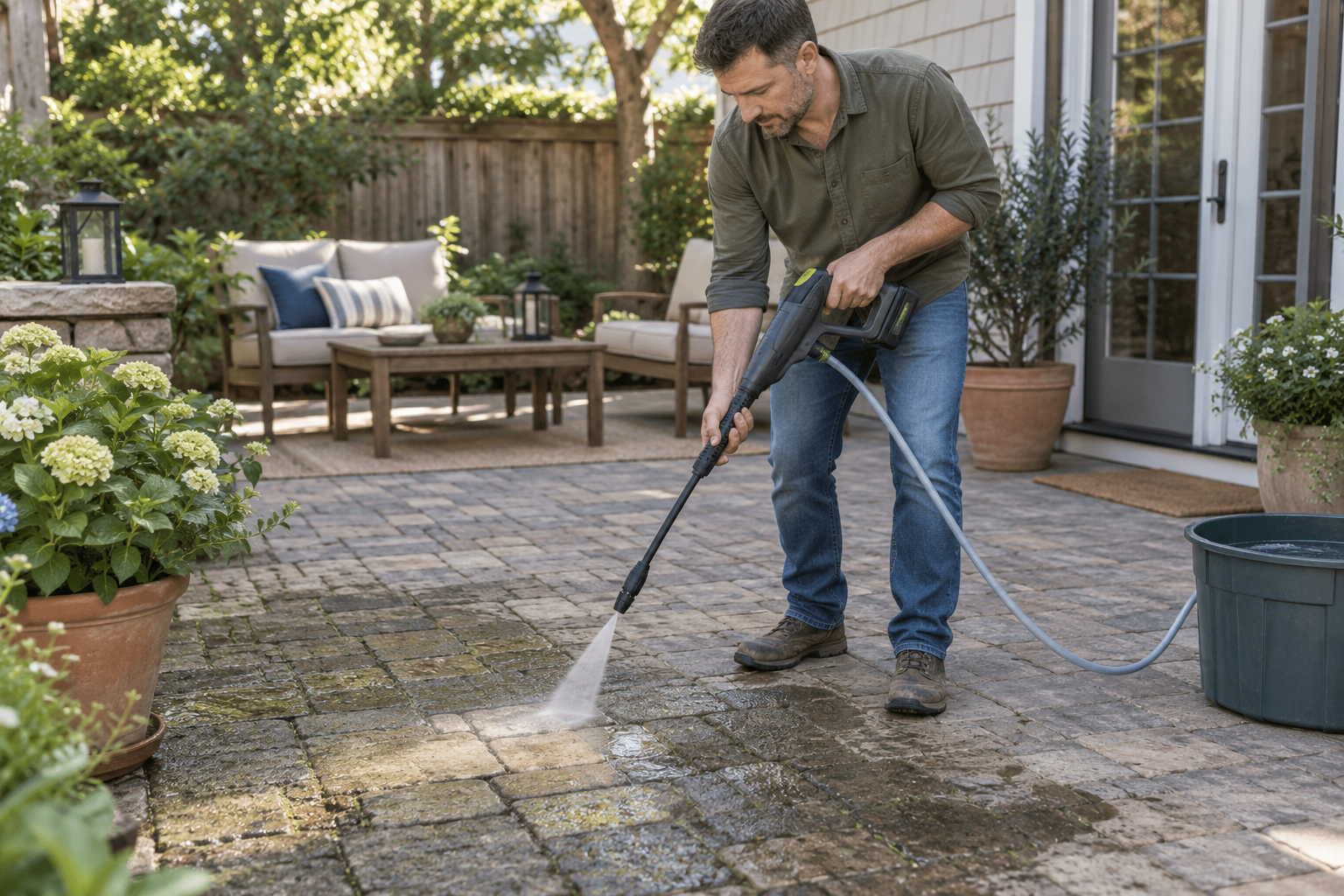
The patio looks like it needs a rinse, so you aim a cordless washer at the nearest chair and pull the trigger. That is a fast way to learn that grime is not the only thing water can move. Paint, loose grout, soft wood fibers, and dirt you meant to keep can all come along for the ride.
A pressure washer with adjustable settings gives you choices, but the first choice should be where to test. The YKYI cordless pressure washer listing describes 30 pressure levels, a 24-foot hose, a 6-in-1 nozzle, and a battery-powered setup. Those details may help a shopper compare a compact washer with a garden hose or a larger machine. They do not tell you how a particular patio, chair, or car finish will respond.
Start with the material, not the control panel
Before connecting anything, read the washer's instructions and the care guidance for the surface. A maker may set limits for a car finish, deck coating, siding, stone, or outdoor fabric. If the two sets of directions disagree, follow the more cautious one. If you cannot find reliable guidance for a delicate or valuable surface, use a gentler cleaning method instead of treating an adjustable dial as permission.
Then look at what is actually dirty. Loose dust and a thin film of pollen often need a rinse, not a forceful blast. Packed mud may need soaking and a soft brush before water does much. Grease, algae, and old stains can call for a cleaner suited to that material. More pressure is not a substitute for the right cleaning method, and it can make a small maintenance job much more expensive.
For a test, pick a hidden patch that matches the area you plan to clean. A corner behind a planter is more useful than a different material tucked nearby. Follow the manual's starting distance and nozzle guidance, begin at the gentlest setting it recommends, and keep the spray moving. Do not hold the stream in one place to see what happens. If the finish changes, fibers lift, water gets behind a joint, or the surface starts to pit, stop.
Make a test patch boring on purpose
A good test does not need drama. It needs a clean comparison. Try a small area, let it dry, then look for a change in color, texture, coating, or the material around a seam. Wet surfaces can hide scratches and make some finishes look temporarily darker, so a quick glance while everything is soaked may miss a problem.
Before working across a larger area, move light planters, cushions, toys, and anything else you do not want splashed. Sweep away loose leaves and grit first so they do not become flying debris. Pick a clear direction to work in and keep the hose from crossing your path. On a patio, that might mean one small section at a time, checking the result before moving to the next. A steady pace makes it easier to notice when the spray is lifting dirt, and when it is starting to affect the surface underneath. If water begins collecting where it should not, pause and change the plan rather than chasing it with a stronger setting.
Try a second hidden spot only if the first test gives you a clear reason to adjust. Change one thing at a time, such as the distance or the setting, while keeping to the manual. If you change the nozzle, pressure, distance, and angle together, you will not know which change caused the result. It is a little less exciting than turning every dial at once. It is also less likely to turn Saturday's rinse into a repair project.
Keep people, pets, electrical items, and breakable objects away from the work area. Never aim the spray at a person or animal. Even a compact battery washer can produce a concentrated stream. Use eye protection if the instructions call for it, and avoid spraying near outlets, open doors, damaged seals, or gaps where water could get indoors.
Where adjustable settings can help
Several settings can be useful when one cleanup includes different surfaces. A broad, gentle spray may suit a sturdier item that only needs a rinse, while a narrow or stronger stream can be too aggressive for nearby finishes. The product listing describes a 6-in-1 nozzle and adjustable pressure. Think of that as a set of options to check, not a guarantee that every combination is right for every job.
For a car, verify the vehicle maker's cleaning advice and the washer manual before using a pressure washer. Keep clear of damaged paint, loose trim, sensors, seals, and areas where water can be forced behind a panel. For patio furniture, check its material and coating. For older deck boards or crumbly mortar, consider a hose and brush first. If the surface already flakes, cracks, or sheds grit when you touch it, pressurized water is unlikely to improve its mood.
Notice the water supply too. The listing says its hose can draw from a bucket, pool, or lake, and it includes a connector for a faucet or garden tap. That can make the setup flexible, but the source still needs to be clean enough for the washer, and the instructions should explain how to use the filter and prime the hose. A bucket that runs dry mid-job can interrupt the flow. Check the setup before you start rather than discovering it while holding a wet nozzle over the flower bed.
Choose the job before choosing the washer
For a shopper comparing cordless models, write down the two or three surfaces you actually expect to clean. Then compare their care instructions with the washer's manual, not only with the pressure number in the product title. Check the included hose length, water-source requirements, battery and charging details, nozzle options, and how the maker says to store the unit. A long list of settings is useful only if the controls and instructions make sense to you.
Also ask whether a regular hose, sponge, or bucket would do the job. Cordless equipment can be handy when a power cord would be awkward, but a battery does not make every cleanup faster or safer. If your main task is rinsing delicate cushions or cleaning an already worn surface, a soft brush and a bucket may be the better tool. If you want to compare the listed kit and current details, see the YKYI product page and confirm the specifications before checkout.
The first spray is a small experiment, not a test of courage. Start with the surface, follow the instructions, and let an inconspicuous patch answer the question. If it stays unchanged after drying, you have a reason to continue carefully. If it does not, the best pressure setting may be the one you never use.