A Pressure Washer's PSI Number Needs a Second Number Beside It
A big PSI figure can grab your eye, but water flow and the job itself tell a fuller story. Here is how to compare the claims before a cordless washer lands in your cart.
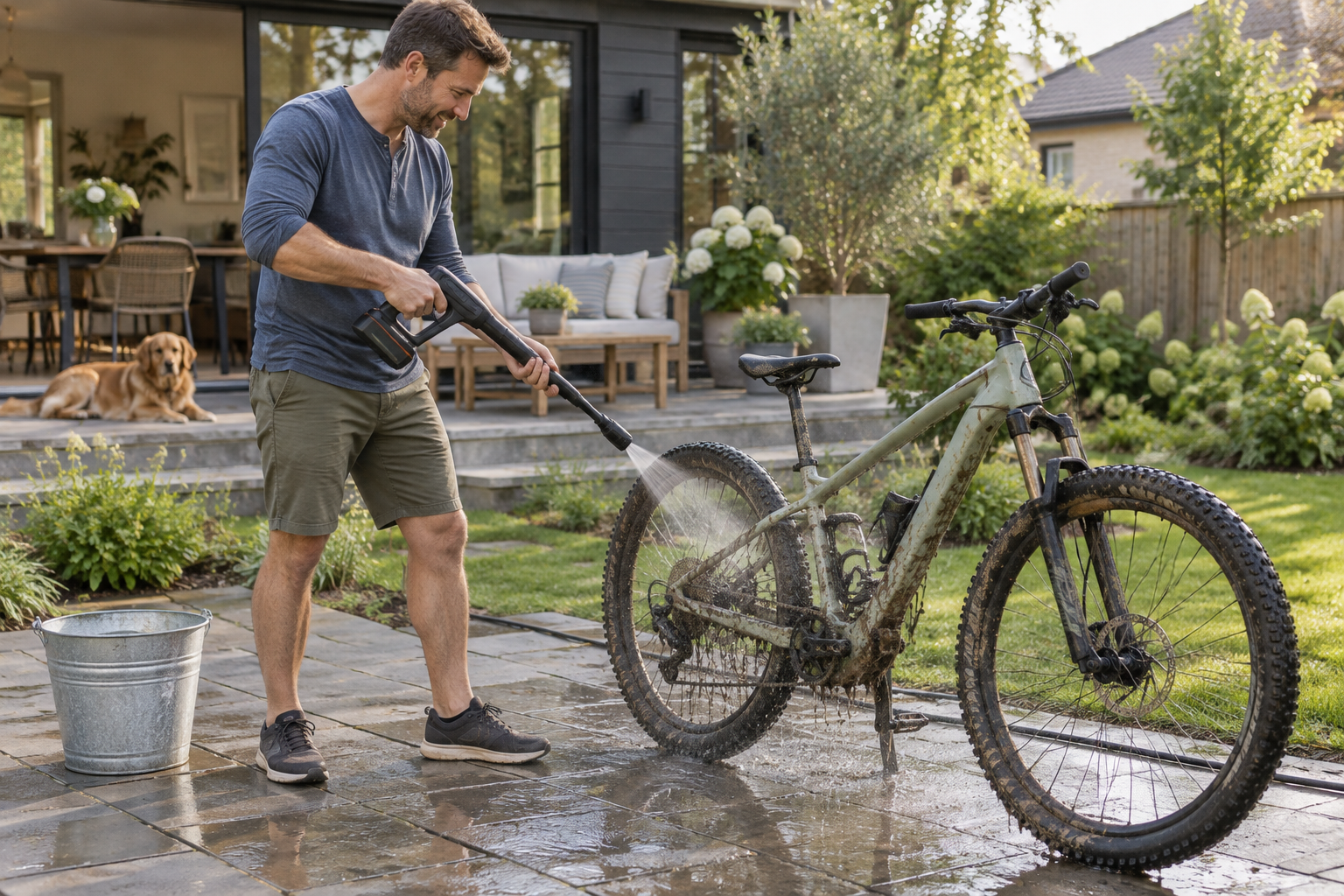
You are halfway through washing the car when the battery light blinks, the bucket is empty, and the mud on the wheel arch has barely noticed you. That is the moment a product page's bold pressure number stops being an abstract spec and starts feeling personal.
For a cordless washer, portability is the obvious draw. You can carry it to a car, patio chair, or muddy garden tool without dragging a power cord across the yard. But a pressure figure by itself cannot tell you how the machine will fit your cleanup routine. Water flow, battery details, hose setup, and the size of the job all deserve a look too.
Read pressure and flow as a pair
PSI means pounds per square inch. It describes pressure, or how forcefully water is pushed through the nozzle. GPM means gallons per minute, a measure of how much water the machine moves. They answer different questions. Pressure is one part of the spray; flow helps describe how much water is available while you work.
That is why comparing two listings by their largest PSI number alone can mislead. Check whether each seller reports both pressure and flow, and whether the numbers are described as maximum or working output. A maximum is not necessarily the setting you will use for an ordinary wash. If one page gives only a headline number, mark the missing detail as a question rather than filling it in yourself.
For a point of comparison, Kärcher lists its corded K1900PS at 1,900 PSI and 1.2 GPM in its technical information. That does not make it a direct match for a cordless handheld tool. It is a useful reminder that product pages can publish pressure and flow side by side, and that a pressure number is only one line in a spec sheet.
Match the tool to the kind of mess
A cordless washer makes the most sense when moving the tool matters more than covering a huge area quickly. Think about rinsing a bicycle after a trail ride, knocking loose dirt off garden tools, or giving a small patio set a refresh. Those are short jobs where carrying a compact tool and water source could be more appealing than setting up a larger machine.
For a broad driveway, a long fence, or a deck coated in stubborn grime, pause before assuming a handheld washer will save the afternoon. Large surfaces take time, and a smaller portable tool may mean more stops to refill or recharge. If those are your regular jobs, compare area-cleaning information, hose reach, and battery capacity across suitable models. If the listing does not provide those details, contact the seller or look for a model whose specifications are clearer.
Also think about the surface, not only the dirt. A forceful spray can damage paint, soft wood, loose grout, or delicate trim if you aim too close or use an unsuitable setting. Start with the gentlest approach the manufacturer recommends, keep the nozzle moving, and test an inconspicuous spot first. For anything fragile, check the surface maker's care instructions before bringing pressure into the picture.
Give the battery claim a closer read
A battery-powered tool lives or dies by the details around its battery. Look for voltage, amp-hour capacity, whether a battery and charger are included, and the seller's stated run time. If the page promises a maximum number of minutes, treat it as a seller claim, not a guarantee that every job will last that long. Spray setting, interruptions, battery age, and how often you pull the trigger can change the day you actually have.
Ask yourself what a normal session looks like. One quick rinse of a bike is different from cleaning a pair of cars. A shorter run time might be fine for the first job and annoying for the second. Check whether the battery is replaceable, whether extra batteries are sold, and how long charging takes. If those answers are missing, the tool may still suit you, but you are buying with a few unknowns.
Sort out the water plan before checkout
Portable does not always mean self-contained. Some cordless washers draw water from a bucket or another container; others expect a faucet connection or offer both options. Check the exact model's instructions for the included hose, filter, connectors, and permitted water sources. A product photo with a bucket nearby is not enough to confirm how it works.
Measure the distance from your likely water source to the place you plan to clean. A hose that reaches the near side of a car may not reach around it, and repositioning a bucket every few minutes gets old in a hurry. If you want to work away from a tap, confirm that the listing and manual specifically support that setup. Do not assume a generic accessory will fit just because the connector looks familiar.
Use the listing as a checklist, not a promise
One currently available cordless option from YKYI is listed with a 1,200 PSI headline and a 3 GPM flow claim. Its listing also names a battery, a 24-foot hose, and a multi-function nozzle. Those are seller-provided details, not results from an independent test. If that format looks close to what you need, check the current listing and confirm the exact package contents, battery details, and return terms before ordering. Prices and availability can change.
Before you click, make a tiny three-line comparison for two or three models:
- Pressure and flow, with each figure labeled as maximum or working output when the listing says.
- Battery capacity, included charger, and any stated runtime or recharge time.
- Water-source options, hose length, nozzle choices, and what comes in the box.
Then add your own use case beside the numbers. If you want a quick rinse in a spot with no outlet, portability may matter most. If you want to clean a large area without frequent pauses, flow, runtime, and coverage details may matter more. There is no magic spec that makes every cordless washer right for every yard.
A little skepticism is useful here, not because every listing is suspicious, but because product pages love a large number in a large font. The better buy is the one whose pressure, water flow, battery, and setup match the chores you actually plan to do. If the missing details are the ones that matter to you, keep shopping. Your future self, holding a full bucket and a charged battery, will appreciate the extra minute.