
A Cordless Washer for the Muddy Gear That Never Makes It to the Sink
A bike, garden tools, and patio chairs can bring half the yard indoors. A small cordless washer may help with the rinse, if you give it the right jobs and keep the spray gentle where it counts.
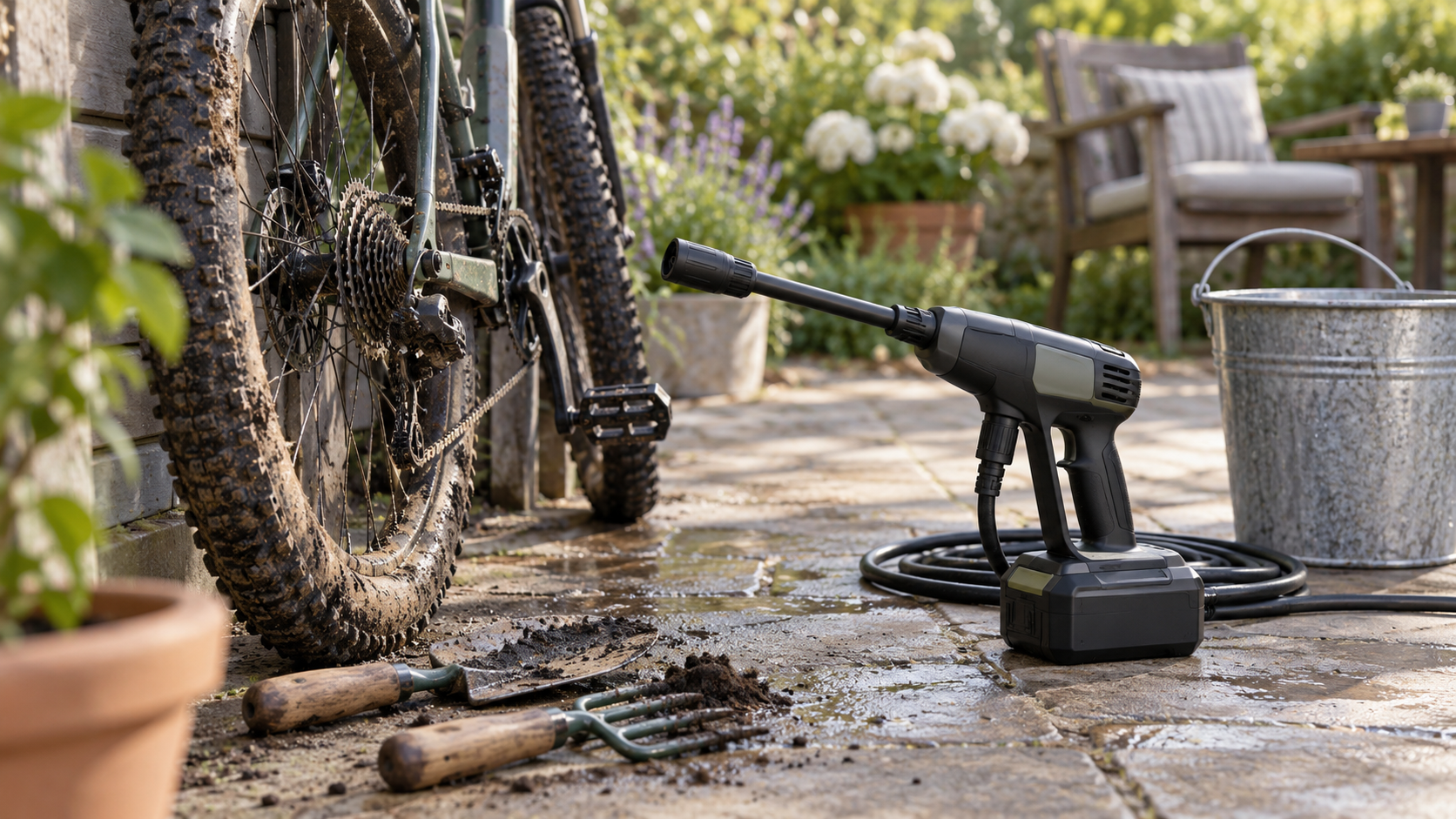
The bike rolls into the garage with a brown stripe up the frame. The garden trowel is wearing yesterday's soil, and the patio chair has a pollen film that seems to have settled in for the season. None of these jobs calls for a heroic afternoon with a hose, but each one is annoying to carry into the house. That is the sort of small outdoor cleanup a portable washer might make easier.
The current Muzisst cordless washer listing describes a battery-powered unit that can draw water from a bucket, tap, or hose. It also lists a six-in-one nozzle and positions the washer for light to moderate chores around the home. Those are listing claims, not a test result, so it makes sense to think of the tool as a convenient rinse option rather than a tiny version of a commercial machine.
Start with the gear that is awkward to bring inside
Small outdoor items often have the same problem: dirt is easy to remove, but the item is too bulky, muddy, or inconvenient to wash in a sink. A muddy bike tire, a pair of garden clogs, plastic planters, or a folding chair can be rinsed where they sit. For a quick cleanup after yard work, you could also knock loose soil off a hand tool before putting it away.
That does not mean every surface should get a close blast. Begin with the broadest, gentlest spray setting available and stand back. Use a little water first, watch how the surface reacts, then move closer only if needed. For a bicycle, keep the spray away from wheel hubs, bearings, suspension seals, and other spots where forceful water could push grime where it does not belong. A soft brush and a cloth are still better for delicate parts. The washer can handle the mud on the tire; it does not need to audition for mechanic.
Give the water somewhere to go
A rinse is only convenient if the mess does not move from the bike to the garage floor, or from the chair to the neighbor's clean patio. Choose a spot where dirty water can drain without running into a doorway, a storm drain, or a planted bed. Put small parts on a tray or an old towel, and keep the clean items away from the muddy ones.
A bucket can be useful when an outdoor tap is inconvenient, and the product listing says this model can draw from one. Keep the container stable and large enough for the job. A bucket that tips when the hose shifts turns a tidy rinse into a small, unnecessary pool. If you use a tap or garden hose instead, arrange the hose before switching on the washer so you are not stepping over loops while holding the spray gun.
Check the setup instructions that arrive with the product for how to connect the water source and prime the unit. Do not run it dry unless the manual says that is allowed. Before each use, look over the hose, fittings, nozzle, and battery for damage, and stop if a connection leaks or anything feels loose. Keep the spray pointed away from people, pets, and electrical equipment. Water under pressure can hurt, even when the machine is small.
Match the spray to the item
A six-in-one nozzle sounds flexible, but more settings do not remove the need for judgment. Start on a sturdy plastic planter or the tire tread, not on a painted sign, a loose sticker, a soft wood finish, or a fragile plant. Test an inconspicuous patch first. If the finish changes, fibers lift, or water starts going somewhere it should not, stop and switch to a sponge, brush, or ordinary hose.
For outdoor furniture, check its care label or maker's instructions before washing. Mesh, cushions, wicker, and older finishes can react differently from molded plastic. Remove loose cushions first, and let items dry fully before stacking or storing them. On garden tools, a rinse can remove loose soil, but dry metal parts afterward and follow the tool maker's care advice if the tool needs oil or sharpening. Water is good at moving dirt around; it is not a substitute for maintenance.
Plants deserve a little thought too. A gentle rinse may help remove dust from sturdy outdoor pots, but a concentrated stream can bruise leaves or wash soil from the roots. Use a watering can or a gentle hose setting for plants themselves. Keep the pressure washer aimed at the pot or surrounding hard surface, not at a delicate stem that did nothing to deserve this.
Keep the job smaller than the cleanup
Portable tools are most useful when setup and packing away stay easy. Before starting, gather the bucket or hose, the washer, and a place to set the battery and small attachments. Clear the work area so the hose will not snag on a pedal, chair leg, or garden rake. If the job needs a ladder, overhead spraying, or a lot of time at full reach, pause and choose a safer method instead.
Battery-powered does not mean unlimited. The listing does not provide a runtime figure in the information we checked, so do not plan a long session around an assumed number of minutes. Charge the battery according to its instructions, and try one small chore first. A planter or a pair of muddy shoes is a sensible trial run. A whole deck, driveway, and fleet of bikes is a different afternoon.
Afterward, follow the manual's directions for relieving pressure, disconnecting the water, and caring for the battery. Drain and store hoses as directed, wipe dirt from the unit, and let wet items dry before putting them away. The routine should be simple enough that the washer is ready next time, rather than becoming another damp object at the back of the garage.
Decide what earns a place on the shelf
A cordless washer is a better fit when you regularly rinse a few muddy, awkward items and value being able to work near them without dragging a power cord across the yard. It is a weaker fit if your main goal is stripping old paint, deep-cleaning a large driveway, or blasting years of grime from a big surface. Those jobs call for equipment selected for that work, plus careful attention to the surface and the manufacturer's safety instructions.
Before buying, name three real chores you would use it for. If you can picture the dirty bike, the garden tools after a rainy weekend, and the chairs before guests arrive, the tool has a place in your routine. If the list is mostly imaginary, a bucket, brush, and garden hose may already be doing the job. The best purchase is the one that gets used without turning a five-minute rinse into a whole new project.