
How a Smart Cat Water Fountain Can Make Busy Pet Days Less Noisy
My upstairs neighbor, who can hear everything except the exact moment a cat bowls down to empty, once said this: My cat never tells me when it is thirsty, and I never know if I am overthinking or underchecking.
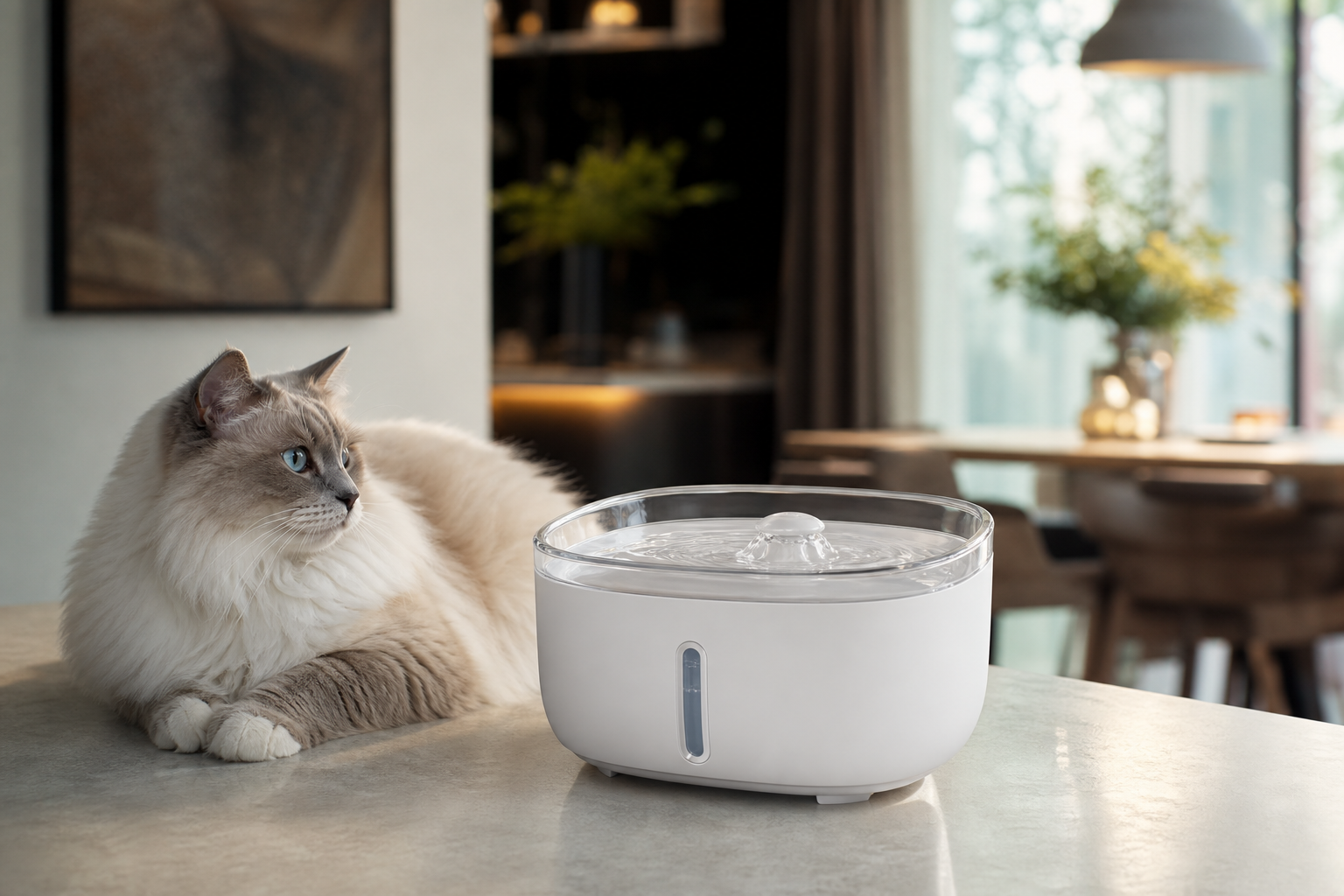
My upstairs neighbor, who can hear everything except the exact moment a cat bowls down to empty, once said this: My cat never tells me when it is thirsty, and I never know if I am overthinking or underchecking. That sentence felt funny because it was also true for me. I was not trying to become a cat-water scientist. I just wanted a calm house and a dependable routine between meetings, errands, and the daily is the dish full? panic loop.
That is where an automated pet water station becomes useful. Not because it is magical, but because it solves one tiny repeated friction point. The HAPAW 2.4G Wi-Fi Cat Water Fountain with App Control (Amazon link with tag=kivcrt-20) can act like a tiny assistant that keeps you informed instead of forcing you to guess. If you are willing to trust your own routine and not just a gadget, this can be a genuinely practical upgrade.
What changed, and why this is still not a toy
Most people buy a pet fountain because it looks neat. Some buy it because the cat finally drinks from fountain instead of static bowls. A few buy it after a reminder from a friend. The setup changes in a bigger way when Wi-Fi control enters the room. A smart fountain can turn a passive object into a scheduled habit: regular checks, clearer maintenance reminders, and less I forgot noise. That is the automation move. You are not just buying a device; you are replacing uncertainty with a lightweight process.
The model in this post is marketed around app control and automatic circulation. In plain language, that means you can monitor water level and circulation behavior from your phone and keep an eye on patterns without standing over the bowl every hour. It is not for everyone, but if your day already runs like five starts, three resets, and one surprise, this kind of support can reduce mental load.
Why this setup works best for people, not only for cats
Lets be honest: the real problem with many pet-care routines is not laziness. It is that life gets fragmented. You leave for work, open one tab, jump to another, come back, and wonder if you ate, watered plants, fed the cat, and checked meds. The fountain does one part of that chain if used correctly.
Think of it this way: your smart fountain helps you answer three quiet questions in minutes.
- Is water still flowing after a busy day cycle?
- Have I missed a setup task like emptying the tray or cleaning the filter?
- Can I keep the routine simple so I do not create another task that turns into a chore mountain?
That list looks simple on purpose. Good automation is boring on paper and surprisingly powerful in practice. The more predictable your process becomes, the less you think about it. Think of this as one less sticky note on your fridge.
How to run a low-stress three-check setup
Rule one is to keep it short. If your setup feels like a PhD tutorial, your future self will ignore it. For this funnel, I recommend a three-check method and stick with it for a full week before deciding anything.
Check one, morning: place the fountain where it is reachable, stable, and away from noisy vents. Fill once, run a two-minute test, and verify flow noise is reasonable. Not every cat likes a fountain that sounds like a tiny blender.
Check two, midday: open the app once, glance at status, and do not chase perfection. You only need to confirm the baseline: water circulation, clean tray state, and no obvious maintenance warning.
Check three, evening: glance at your cat's drinking behavior for one minute. Then clean a little if needed, not a lot, because over-cleaning can make you miss the bigger step, which is maintaining consistency.
That last point is huge. Over-focusing on gadget metrics can become the new busywork. The goal is fewer interruptions, not one interruption every few hours.
Friendly reminder: a smart device should reduce anxiety, not become another tab you open fifteen times a day.
Small wins to expect, and small things that do not change
People ask me if this replaces other habits. No. It does not replace daily feeding, litter care, or basic safety. What it does replace is a repeated mini-crisis. Your cat will still drink, nap, explore, and act like a cat. You still need to keep up with food, litter, and time. But the fountain can remove one loop where you second-guess whether water is available.
In homes with small cats, seniors, or multi-cat setups, that can still be a big emotional win. Not because one device changes behavior overnight, but because it gives you a small, consistent signal. I have seen owners say I feel calmer, and that matters. You spend less energy checking, which usually leaves more energy for actual care.
Who should likely skip this purchase
If your biggest goal is set and forget for two weeks and walk away, this may not be the best fit. Smart setups still need short human attention windows. If you travel a lot and are away all day with unpredictable access, or if your home Wi-Fi is already a mess of dead zones, you may be disappointed.
If your routine prefers hard edges and no apps, a good old glass bowl could still be better. I know that sounds boring, but boring often wins for long-term consistency. You do not need one smart thing. You need one thing that you actually use.
How to evaluate it before buying
Before clicking purchase, use this quick plan. It keeps the decision honest and avoids returning a decent product for the wrong reason.
Step 1: list your real bottleneck. Is your issue random water refreshes, unclear maintenance, or forgetfulness around refilling? Write one sentence.
Step 2: decide whether your day has predictable windows. If your schedule is chaos 90 percent of the week, automation still helps, but only if setup is simple.
Step 3: test placement and app signal stability before finalizing your final spot. If signal flips between good and bad, relocate first, not after purchase regret mode begins.
Step 4: plan a one-week maintenance rule. You do not need daily deep cleans, but you do need a regular reset after several days. Consistency beats perfection.
If you like structure, you can treat this like any other home habit. Keep a simple two-line log: one for refills, one for cleaning. The log costs almost no time and makes the app data meaningful. Without it, even the smartest home gadget becomes a digital mood ring.
Bottom line
If you are choosing your first pet automation purchase, this fountain is a calm entry point. It gives your routine a little memory and your mind a little less noise. You are not buying it to become a gadget collector. You are buying it to protect your bandwidth for the parts of care that truly need your hands: checking on your pets, keeping your space clean, and staying present.
And if you do buy it, use it like a good assistant: with one clear routine, not as a substitute for care. That is the easiest way to turn cool smart thing into an actually useful household habit.