
How a Smart Pet Camera Can Reduce the Daily Pet-Care Stress Loop
Last winter, I found myself in a very normal modern parent-mode situation. I had a stack of grocery bags by the door, one shoe still on the couch, and a two-year-old dog with very clear advice: do not let him touch the...
Last winter, I found myself in a very normal modern parent-mode situation. I had a stack of grocery bags by the door, one shoe still on the couch, and a two-year-old dog with very clear advice: do not let him touch the electrical outlet. I did not feel like arguing with either the dog or the calendar. I needed a way to stay productive at work without replaying in my head, every ten minutes, the same question: is my home okay right now?
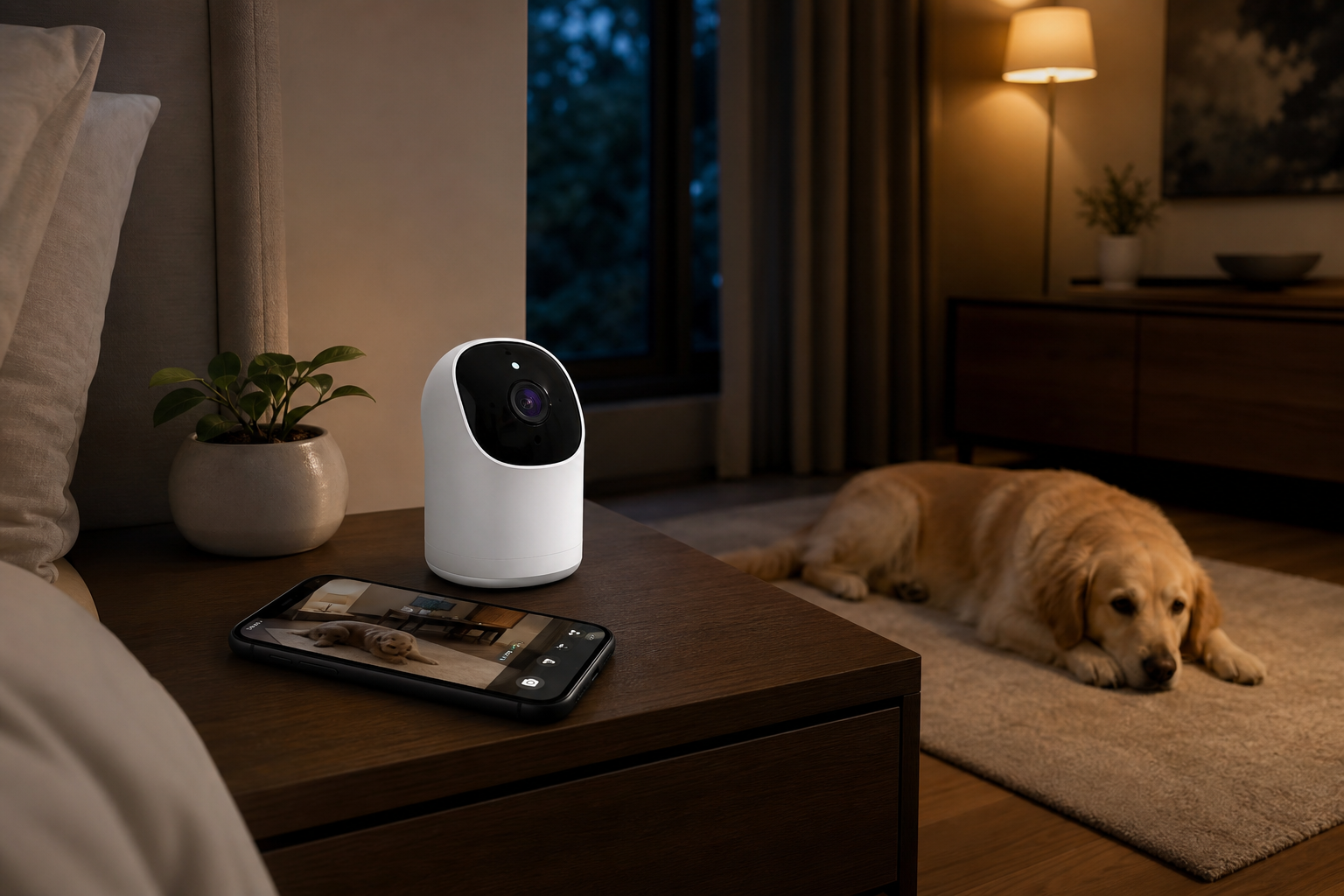
That is the real place where this product fits. The Furbo 360 Dog Camera (Amazon link with tag=kivcrt-20) is not a toy, and it is not a miracle camera. It is a practical little middle step between "I am at work and can only guess" and "I am home and constantly running back." If you are looking for a way to reduce pet-care stress with a short routine, this guide is for you.
Why this product first, not a generic pet camera
Most cameras solve one problem: they let you see something. The Furbo 360 adds a second goal: it adds a simple workflow around your day. Home-life problems are often timing issues disguised as technology issues. You are away for fifteen minutes, then thirty, then a full meeting, then a short commute home. Every interruption is costly, and every interruption steals your focus. With a setup that uses live checks and alerts, the camera helps you replace panic with routine.
The "360" part is the first reason people get sold on it. A pet camera only helps if it shows the real scene, not a tiny corner and a fuzzy tail. Here, you can rotate through the room to see where the dog is, whether food bowls are still full, and whether anything small and chewable has ended up near a dangerous spot. I do not promise that one camera will replace responsible care, but it removes a lot of blind spots from your day.
The one thing it does well
- Broad room view with pan movement so you can avoid the "I can see but not understand" problem.
- Clear voice and alert options for quick check-ins without making repeated app calls.
- Night visibility that helps during evening checks when your nervous system is already on high alert.
- A compact setup that does not require a hardware overhaul at home.
That list looks simple, and it is intentionally simple. If a product has ten fancy feature terms before the first use, it usually takes the joy out of it. The point is not to buy more gadget features. The point is to stop guessing.
How it changes your routine
People often treat pet tech like entertainment purchases. They want "something fun," then get frustrated because it does not reduce stress. The useful trick is to connect this to your real schedule. Build a three-check routine and test each step for two days.
First check: right after you leave the house. Open the app, scan water, food, and floor space. You are not trying to catch every detail yet; you are only making sure the room is stable.
Second check: during your first break at work. A thirty-second scan tells you whether movement is normal and whether your dog is restless enough to deserve a short voice check.
Third check: before evening screen time. Many owners relax after a long day if they can confirm things are normal once and then focus on dinner instead of imagining ten emergencies at once.
This rhythm matters more than hardware. Most stress comes from uncertainty, and uncertainty sounds loud when you are busy. A simple repeatable scan lowers that noise.
Think of it as turning stress into a known routine. You still care, but you are no longer controlled by every tiny thought.
When this product is a great fit
This setup is especially useful if you work in multiple places, split your day between office and home visits, or leave a dog alone for long stretches. It also helps if your home has a regular nap corner and the rest of the house can be chaotic. A camera with rotating view is better than a fixed one in that case, because it gives you a true room-level picture, not a fixed hallway shot.
If you already use a routine for feeding, cleanup, and door checks, this camera can add confidence instead of clutter. It fits as a fourth signal in your routine, not as a total replacement for what you already do.
When not to buy one
If your main goal is "surveillance for the sake of watching," this may feel expensive. If your stress comes from wanting constant visual proof every minute, no camera can make you fully hands-free. Also, this setup has setup steps you need to respect: account setup, placement, and occasional resets. If you do not want those recurring steps, it may add friction.
Good decisions are not always about owning the newest gadget. Sometimes the better decision is a simpler pen-and-paper feeding log. I mention this because the biggest buyer mistakes are often made by people who confuse features with value. A camera helps only when it plugs into a predictable daily system.
How to evaluate with one-product clarity
Use this short process before buying:
First, define your hardest moment of the day. Is it the first ten minutes after leaving, the first break at work, or last night before bed?
Second, ask what the camera needs to tell you in that moment. Food levels? restless pacing? signs of stress? no, no, or yes?
Third, compare this model to your space. If your setup is simple and movement is limited, this may be more than enough. If your layout is very complex, test alternatives before buying.
Fourth, check Wi-Fi reliability in every room you may use. Even a strong camera loses value in a weak signal zone.
Final thought: one tool, less chaos
Good tech advice rarely sounds exciting, so here is the honest version: this model will not solve every home-care problem. It will, however, reduce repeated small stress loops. You do not need perfect technology to make a real difference. You need a tool that shortens the distance between worry and information.
For busy owners, that difference is huge. If you want one practical add-on for modern pet routines, this is a strong candidate: broad room view, repeatable checks, and a workflow that rewards consistency. The best part is that with daily use, your job is not to watch every minute. Your job is to build a short routine and use the camera as an assistant, not a replacement for care.