
The Seat Gap Eats Small Stuff. Check the Fit Before You Fill It
A parking ticket slides beside the seat, then your phone follows it. A two-piece seat-gap organizer can add a small catchall, but first check the gap, seat movement, and what you actually need to carry.
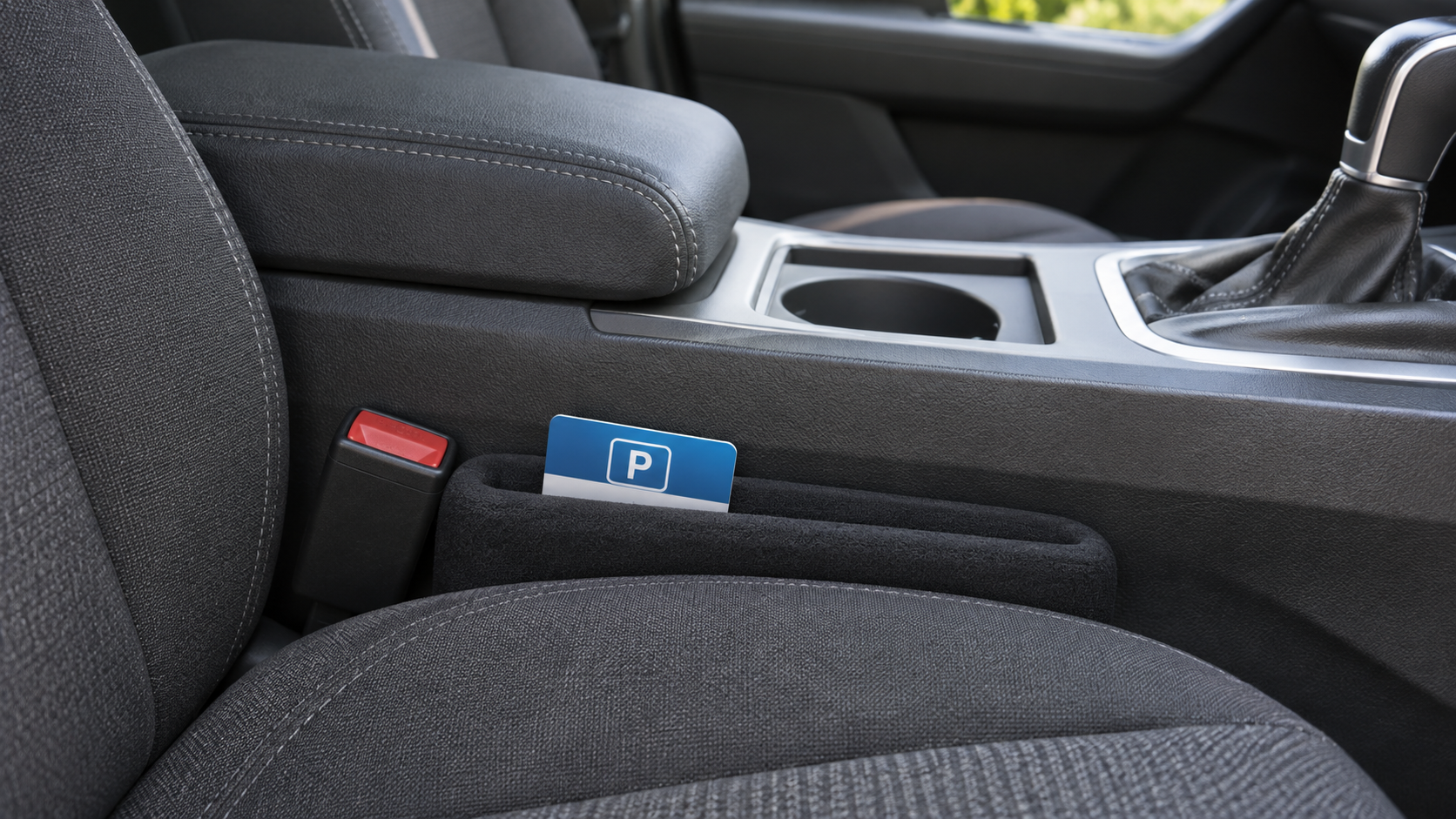
You pull into a parking garage, reach for the ticket, and find an empty hand. It has slipped beside the seat again, along with a coin and the pen you were sure you put in the door pocket. That narrow space between the seat and center console has a talent for swallowing small things.
A seat-gap organizer tries to make that space useful. The Givifive two-pack in this listing combines a soft foam gap filler with a storage slot and a hook. The idea is simple: catch some of the little items that tend to fall, then keep a few within reach. Before you order, though, the fit in your particular car matters more than the word universal in a product title.
Start with the gap, not the shopping cart
Cars that look alike can have very different spaces around the seats. The center console may flare outward, the seat may sit close to it, or a trim panel may create an awkward shape near the buckle. Measure the open space at the front and back, and compare it with the product's current listing details. If the seller does not provide dimensions that let you make a useful comparison, that is a reason to pause rather than hope the foam will sort everything out.
Check the seat at more than one position. Move it through its normal range while watching the gap and the organizer area. A snug fit when the seat is all the way back may become a squeeze when it moves forward. Do not force a filler into a space that pinches, bows, or interferes with the seat.
Also look at the belt buckle and the release button. You should be able to reach and use the buckle normally. Keep the organizer clear of seat controls and any parts of the cabin that your vehicle manual says must stay unobstructed. If you are unsure whether an accessory belongs beside your seat, check the vehicle guidance before installing it.
Decide what belongs in the slot
The appeal is obvious when you have dropped a parking stub into the car's tiny Bermuda Triangle. But a new pocket can become a miniature junk drawer just as quickly as the console does. Think about the few things you reach for often: perhaps a parking card, a charging cable, or a small packet of tissues. The product description mentions a storage slot and a hook, but it does not answer every question about what will fit your routine.
Keep the load light. A hook is not a promise that every bag, bottle, or heavy item is appropriate to hang there. Check the seller's instructions for intended use and weight limits, and skip anything that swings into your leg or gets in the way. Items you need while driving should be settled before you pull away, not fished out while the car is moving.
The main job of a gap filler is modest: reduce the open space where small things can disappear. It will not organize a whole cabin, make a cluttered console tidy by itself, or guarantee that nothing ever drops. If your usual problem is a drink with nowhere to go, this is the wrong kind of accessory to solve it. If it is loose coins and cards slipping beside the seat, the format may be more relevant.
A quick fit check before keeping it
When the package arrives, read the included directions first. Set the item in place without stretching or wedging it, then check that you can still reach the buckle and move the seat as intended. Sit in your normal driving position and make sure the organizer does not press uncomfortably against your leg. If something feels cramped, remove it. A small storage win is not worth turning every adjustment into a wrestling match.
Test the seat's usual forward and backward movement slowly. Watch for fabric or foam catching on a trim edge. If you fold or adjust the seat for passengers, child seats, or cargo, check that those routines still work. The right placement is the one that stays out of the way, not the one that fills every inch of empty space.
A two-pack can be useful if both front seats have similar gaps and the pieces fit each side. It does not mean both sides of every vehicle will accept them. One seat may sit close to the console while the other has more room, or the buckle placement may differ. Test each side on its own before treating the pair as a matched set.
Keep the car's real routine in mind
Think about who rides in the car and how often you clean it. A daily commuter may like having a predictable spot for a parking card. A family car may need the space around the seat kept open so crumbs and dropped toys can be reached during cleanup. Someone who regularly carries passengers may prefer not to add anything that narrows the space between seats.
There is also the question of what you can retrieve safely. If an item slips down, stop in a safe place before trying to get it. A gap organizer can reduce some drops, but it cannot make reaching beside a moving seat a good idea. Small objects are annoying; a distracted reach is worse.
For cleaning, follow the care instructions that come with the product. The listing describes soft foam, but it does not establish that the material is machine washable or safe for any particular cleaner. A dry brush or gentle wipe may be a sensible first thought only if the product instructions allow it. Avoid soaking it or applying a cleaner that could mark the car's upholstery.
When to skip the organizer
Pass if the fit is uncertain and the listing does not give enough information to resolve it. Skip it if it blocks the buckle, catches when the seat moves, crowds your leg, or makes routine cleaning harder. A small gap is not a problem that must be filled. Sometimes the easiest fix is putting the parking ticket in a door pocket or using a console compartment you already have.
If the fit checks out, give the organizer a short trial with only the items you intended to store. After a few drives, see whether you are actually using the slot or whether it has become one more place to stash receipts. The useful version of car organization is not the one with the most pockets. It is the one that keeps the things you need in a place you can reach when the car is parked.
Before buying, compare your seat gap with the listing dimensions, confirm how the hook and slot are meant to be used, and check the return terms in case the shape does not suit your car. You can find the Givifive car seat gap filler organizer on Amazon. The API-returned listing describes a two-piece set with a storage slot and hook; verify the current seller details before ordering.