
A Jump Pack That Also Inflates Tires: What to Check Before It Lives in Your Trunk
A flat battery and a soft tire rarely wait for a convenient afternoon. A jump starter with an air compressor can combine two roadside tools, but its fit, instructions, and charging routine matter more than a big number on the box.
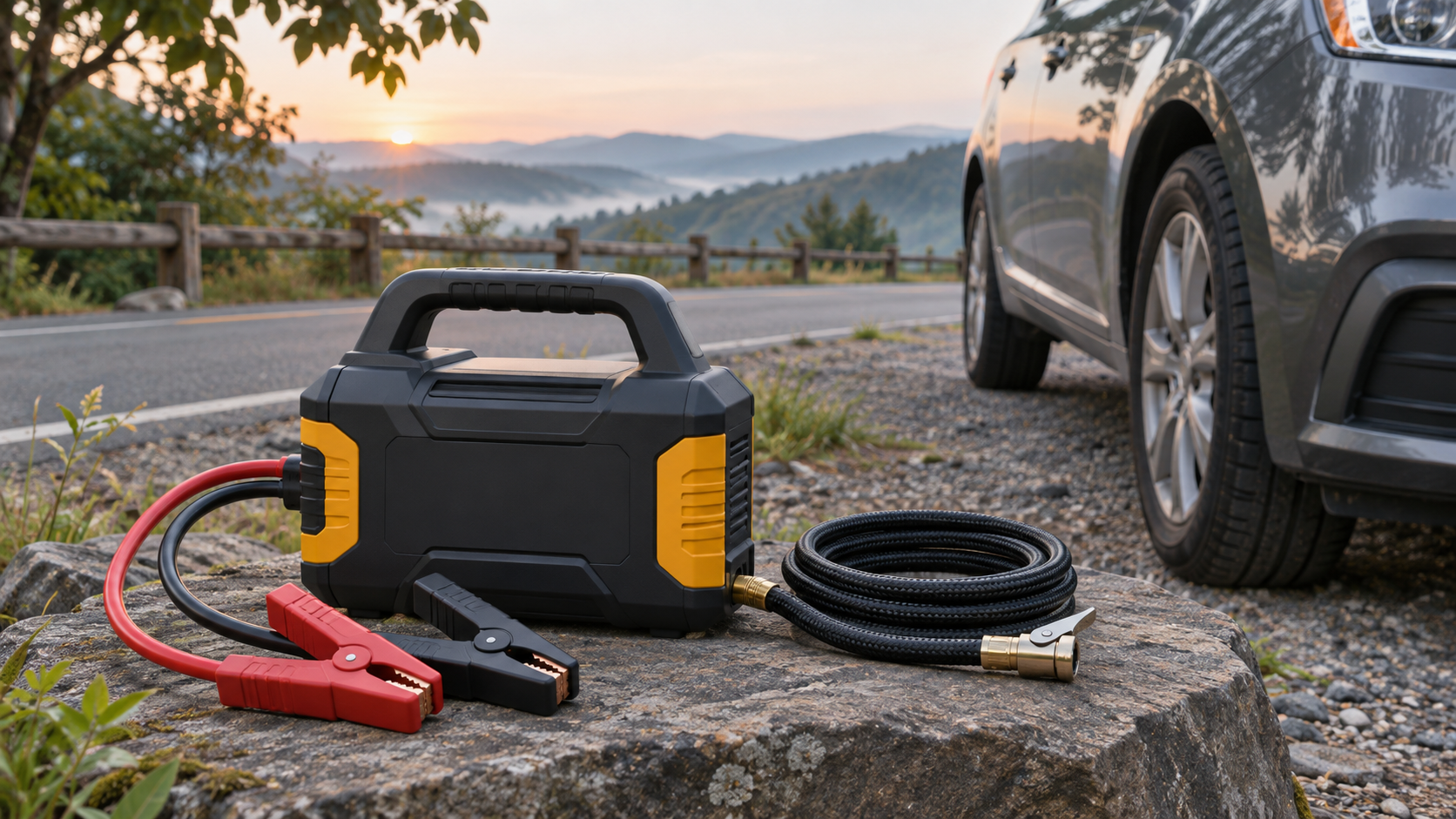
You are already late, the engine gives you a click instead of a start, and one tire looks a little low. That is when a compact jump pack with an air compressor sounds like it might earn its spot in the trunk. It could be handy, but the label deserves a careful read before you count on it.
One API-listed option is the MAIDELI 6000A portable car battery jump starter with air compressor. Its listing describes a jump starter, tire inflator, pressure gauge, power bank, and several light modes in one unit. The listing also claims a 6000A peak rating and a force-start function. Those are seller claims, not a promise that it will suit every vehicle or solve every roadside problem. See the MAIDELI jump starter listing.
Start with your vehicle, not the peak-amp number
A large peak-current figure is easy to compare, but it is only useful if the pack matches the vehicle and the maker's instructions. Check the owner's manual for the recommended jump-start points and any restrictions. Some vehicles have specific procedures, and a battery that is damaged, leaking, frozen, or otherwise unsafe is not a good moment to improvise with a new gadget. If the manual says to call for help, do that.
Then compare the listing's supported vehicle range with your engine and fuel type. The MAIDELI description says it can support up to 10-liter diesel engines and describes a force-start feature for low-voltage batteries. Do not treat that as a universal fit guarantee. Confirm the current product instructions, included cables, and connection procedure before buying. A boost feature is not a reason to skip the manual or clamp things together by guesswork.
AAA's jump-starting guide stresses taking care and following the correct sequence. A portable pack removes the need to position another car nearby, but it does not remove the electrical safety steps. Read the instructions while you are calm, not with the hood up in the rain and your phone at 4 percent.
Decide whether the compressor suits your tires
The listing describes the unit as having a built-in air compressor and pressure gauge. The point of carrying one is to add air when a tire is low, not to guess at a pressure that looks about right. Use the tire pressure shown on your vehicle's door placard or in its manual. That is the vehicle maker's recommendation; the number printed on a tire sidewall is not a substitute for the vehicle's target pressure.
Before checkout, look for details the headline may not make obvious: how the inflator gets power, what hose and adapters come in the box, how the display works, and whether the instructions explain when to stop. Check whether the compressor is intended for the kind of tire you expect to inflate. A small portable inflator can be useful for topping up, but it is not automatically a solution for a puncture, damaged sidewall, or tire that keeps losing air.
It is also worth asking how often you would use the extra functions. A built-in light can help you see a valve in a dim parking spot. A power bank may be useful during a delay. But every added feature competes for space and attention, and a feature list does not tell you how easy the controls are with cold hands. If all you need is occasional tire pressure correction, a separate inflator and jump pack may be easier to choose and replace independently.
Check the practical details before buying
- Size and storage: Measure the space where you plan to keep it. Make sure the pack, cables, and hose can stay together rather than migrating to three corners of the cargo area.
- Charging: Find out how the unit recharges and how the maker recommends checking or maintaining its charge. A forgotten, flat battery pack is mostly a heavy reminder.
- Temperature guidance: Compare the stated operating and storage temperatures with where you plan to keep it. A trunk can get much hotter or colder than a climate-controlled room.
- Included pieces: Confirm the clamp leads, air hose, adapters, charging cable, and any storage case you actually need are included in the current box.
- Instructions and support: Look for clear directions, warranty terms, and a way to get help. A complicated emergency tool is not made simpler by being compact.
The MAIDELI listing claims a temperature range from -4°F to 140°F, about 24 months of standby, and more than 1,500 recharge cycles. Treat those as claims to verify against the current listing and manual, not as a maintenance-free promise. Check the pack periodically according to its instructions, especially before a long trip or a season when you expect to need it.
Make a small roadside plan
A jump pack belongs in a broader plan, not in the role of tiny roadside superhero. Keep your phone charged when you travel, know how to contact roadside assistance, and tell someone where you are if you are waiting in an unsafe spot. If the car is in traffic or you cannot work away from moving vehicles, prioritize getting to safety and asking for help over trying to save a few minutes.
For a tire, use the recommended pressure rather than eyeballing it. NHTSA advises checking the vehicle placard or owner's manual for the right pressure and checking tires regularly. A portable compressor can add air, but it cannot inspect the tire for a nail, repair structural damage, or tell you that a slow leak is harmless. If pressure drops again, arrange an inspection.
When you receive any jump pack, take a few minutes to identify its controls and read its instructions. Check that the leads and hose are intact, locate the charging port, and learn how the maker says to connect and disconnect it. Do not test it by deliberately draining your car battery or letting air out of a tire. Practice with the manual nearby and a safe, ordinary setup.
One box, two useful jobs, with a few trade-offs
A combined jump starter and inflator makes sense if you want both tools in one place and the unit's stated vehicle compatibility matches yours. It may be less appealing if you want the smallest possible battery pack, need a compressor for frequent or demanding work, or prefer separate tools with simpler controls. Compare the current price, what the box includes, the warranty, and the exact use instructions before deciding.
The MAIDELI model's description packs a lot into one product name: jump starting, tire inflation, a pressure gauge, a power bank, and lights. That mix is appealing for an emergency kit, but the useful question is still whether its limits and care requirements fit your car and habits. If they do, keep it charged and accessible. If they do not, choose a simpler tool and keep the roadside plan anyway.