
Soft Fruit, Busy Fingers: How to Choose a Sensory Sorting Toy
A basket of plush produce can turn a quiet stretch into squeezing, sorting, and a little kitchen pretend play. Before choosing a set, check what each piece does, how it fits your child's stage, and what care the listing actually explains.
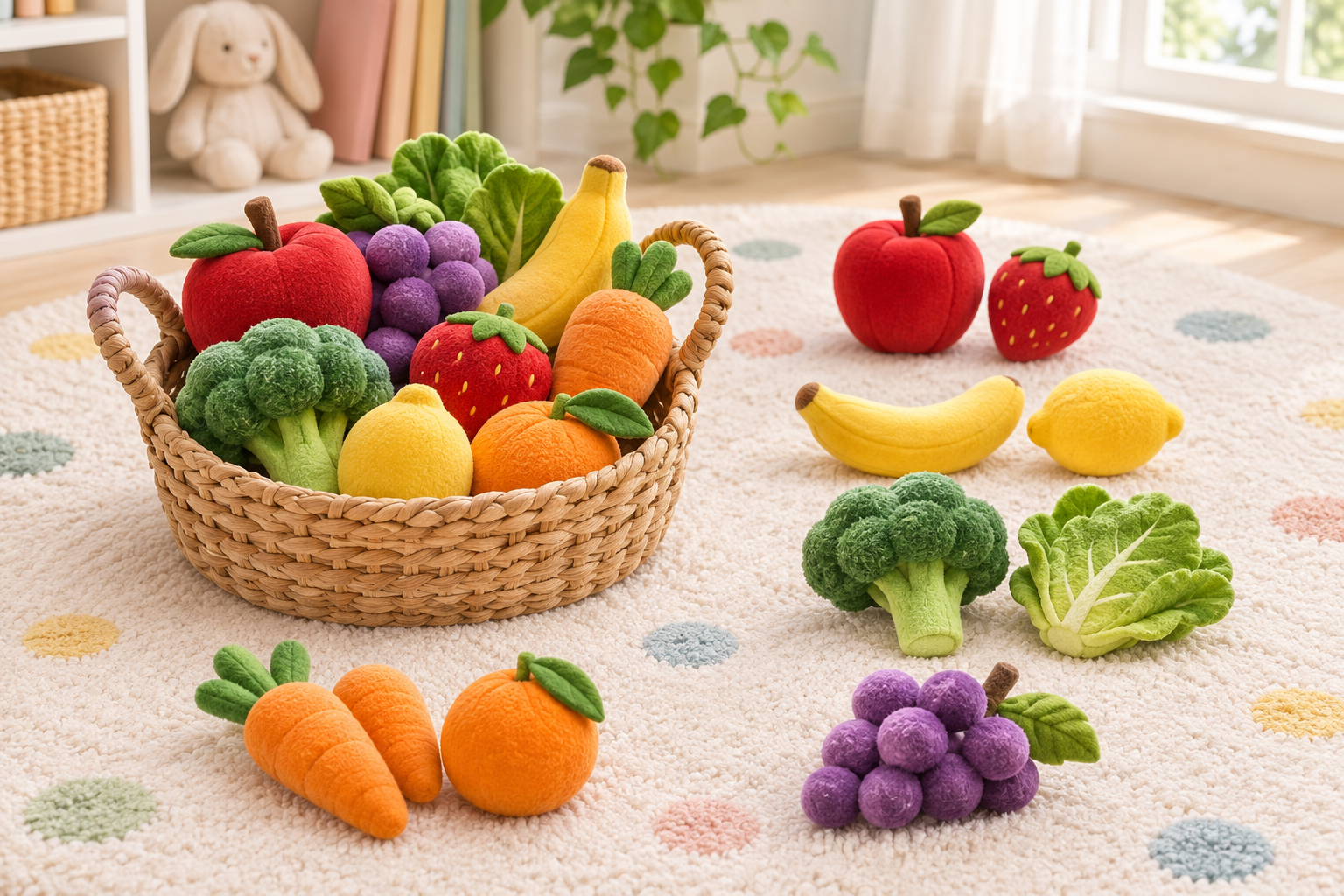
The laundry is folded, the coffee is finally warm, and your baby has discovered the very exciting corner of a cardboard box. That is often the right moment for a small play invitation: a few soft objects to grasp, squeeze, and move around. Plush fruit and vegetable sets add pretend food to that kind of hands-on play, with textures and sounds that may catch a curious baby's attention.
One current option is the Hahaland 16-piece sensory fruit and vegetable set. Its listing describes plush pieces with crinkle material, rattles, varied textures, and color sorting play. The product description also mentions peeling, squeezing, and pouring activities. Those details make it worth considering if you want soft pretend food rather than another hard plastic toy. They are listing claims, though, not a promise that every child will enjoy every piece.
See the Hahaland sensory fruit and vegetable set on Amazon.
Start with the play, not the piece count
Sixteen pieces sounds like a generous basket, but the number alone does not tell you whether the set suits your home. Think about what your child likes to do now. If they reach for soft, textured toys, crinkle and rattle features may invite another look. If they are starting to move objects between containers, the described sorting and pretend pouring can give that familiar action a new story.
Keep the activity loose. Put out two or three pieces and let your child explore them in their own way. One might get squeezed, another passed from hand to hand, and a third ignored in favor of the basket. That is still play. You do not need to turn every toy into a lesson plan or narrate a full produce aisle while your toddler stares at the ceiling fan.
When color sorting becomes interesting, offer a simple choice: place two pieces near one another and name their colors, then see whether your child wants to match them. The goal is shared attention, not getting every answer right. Babies and toddlers learn through repetition, and repeating the same tiny game can be the whole point.
Check the age and safety details yourself
The product title and description refer to babies from about six months and to one-year-old children. Use that as a starting point, not a substitute for the current package and listing instructions. Before buying, look for the maker's full age guidance, warnings, and any notes about small parts. A soft toy can still have seams, attachments, or components that need a closer look.
For a young baby, stay close during play and inspect each piece before handing it over. Check seams and attached details for wear, especially after repeated squeezing or pulling. Put a piece away if it is damaged or if any part comes loose. Follow the product's stated care instructions, and do not assume that plush means machine washable. If the listing does not make cleaning clear, that is a fair question to resolve before checkout.
Also consider where the toys will live. A set that arrives as sixteen pieces needs a home between play sessions, or the soft carrot will eventually join the familiar migration under the sofa. A small basket or lidded bin keeps the set together and makes cleanup easier for grown-ups. For a compact living room, check the dimensions and storage details in the listing rather than guessing from a product photo.
Decide whether the sounds fit your household
Crinkle material and rattles can add variety without batteries, according to the listing. They can also add one more sound to a day that already includes a toy piano, a doorbell, and someone asking where the other sock went. If your child is easily startled by noise, introduce one piece at a time and watch their response. If they enjoy shaking and squeezing toys, the different sounds may keep the activity engaging for longer.
There is no need to treat a quiet toy as automatically better or a noisy one as automatically more fun. The useful question is whether the features fit your child and your room. A toy that gets used at the kitchen table while dinner is being prepared has a different job from one meant for a calm bedtime routine. Think about your usual play spots, too. If you often bring toys along in a stroller or car, check whether the listing gives storage or travel details before assuming the whole set is convenient to carry. For home play, a few pieces may be enough to keep within reach while the rest stay put away. Rotating them can make cleanup simpler and keeps the play area from becoming a plush produce market that never closes. You can always add more pieces later if your child returns to the activity.
Look closely at the listing before you decide
Product names can be crowded with age ranges and search terms, so read the description and images carefully. Confirm that the set you are viewing is the 16-piece plush version and that its listed activities match what you want. Check what the seller says about materials, dimensions, included pieces, cleaning, and safety warnings. If any of those details are missing or unclear, do not fill in the blanks based on a similar-looking toy.
Price and availability can change, so check the live listing when you are ready to buy. Compare the total at checkout and the return terms as well. A gift that arrives in time and can be returned if it does not fit your needs may matter more than a small difference in the displayed price.
A small play setup is plenty
You can make a simple game with a few pieces and an empty container. Invite your child to take one out, put one in, or choose a color. If your child is too young to sort, the same toys can simply be explored one at a time while you stay nearby. There is no required sequence, score, or perfect finish. If the container becomes a hat, congratulations: the activity has taken a creative turn.
The Hahaland set may suit families looking for soft pretend food with several textures and sounds in one collection. Its appeal depends on the details that matter in your home: the age guidance, care instructions, safety information, storage, and the way your child likes to play. Check those points in the current listing, then decide whether this kind of basket will earn a place beside the cardboard box.