
A Magnetic Screw Ring Helps When Your Third Hand Is Busy
The screw is balanced on the bit, your other hand is holding the bracket, and gravity has opinions. A magnetic screw ring can make that setup less fiddly, but check the bit fit and the job before adding one to your kit.
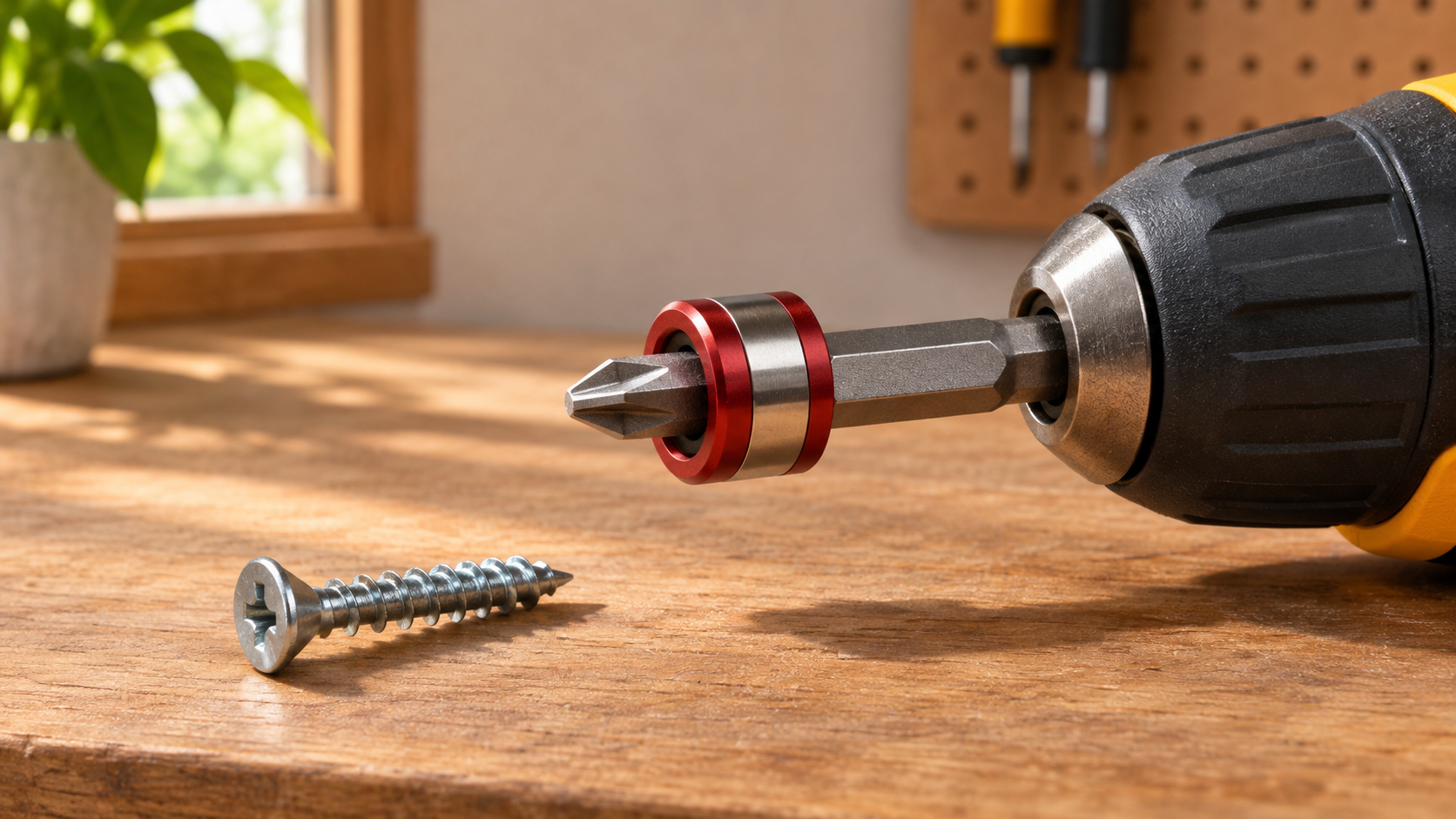
You have a small bracket in one hand, a driver in the other, and a screw that keeps taking the scenic route to the floor. If the work is above shoulder height or tucked into a cabinet, retrieving that screw can take longer than driving it. A magnetic screw holder ring is meant to help by adding magnetic hold to a compatible driver bit, so the screw is less likely to slip away while you get started.
One current option is the SEESE Strong Magnetic Screw Ring. Its listing describes a removable holder for 1/4-inch (6.35 mm) hex bits and says the pack contains two rings. That gives you a useful starting point, not a promise that every bit, screw, or awkward repair will suddenly behave. Check your own tools and the product listing before buying.
What the ring does, and what it does not
The ring slides onto a compatible bit and helps magnetize it so a screw can stay against the tip while you position the driver. That can be handy when you are reaching into a corner, holding a piece in place, or working overhead. It may also reduce the number of times you pause to fish a dropped screw out of a drawer or off the floor. Few workshops need more floor hardware.
Think of it as an extra hand for the first part of the job, not a clamp or a substitute for steady control. A magnetic hold can help keep a screw near the bit, but it does not guarantee a straight start, prevent a stripped head, or keep a workpiece from moving. You still need the correct bit, a stable stance, and a way to support the material. If a part could fall, shift, or pinch your fingers, secure it before reaching for the driver.
Check fit before you check out
The product name specifies a 1/4-inch, or 6.35 mm, hex fit. Look at the part of your driver bit where the ring will sit and compare it with the listing dimensions and instructions. A ring that does not slide on as intended is not a clever workaround; forcing it can make bit changes annoying or damage a small accessory. Also confirm that the ring can sit in the position the manufacturer shows without blocking the bit from reaching the screw head.
Then look at your screws. The listing describes a magnetic holder, but it does not establish that every screw material or size will hold equally well. If you often use tiny fasteners, coated screws, or unusual hardware, test with one spare screw before committing to a delicate assembly. Keep the screw aligned with the bit rather than letting it hang at an angle. A magnetic nudge is useful; a crooked start is still a crooked start.
Finally, check the package details. The product name says two pieces, which may be convenient if you keep one ring with a drill and another with a hand driver. Verify the current listing for the contents and fit rather than relying on an old note or a product photo. Listings can change, and buying a second accessory you do not need is a small but remarkably durable form of clutter.
Where it may earn its place
Imagine assembling a cabinet with one hand steadying a side panel while the other starts a screw near the back. A holder ring may help keep the fastener on the bit while you bring the driver into position. The same idea can be useful for mounting a small bracket or making a quick repair where the screw is hard to reach. It is most appealing when dropped fasteners are a recurring nuisance, not because every screw in the house needs a magnetic escort.
For a bench-top project with easy access and both hands free, you may not notice much difference. A magnetic parts tray, a manual screwdriver, or simply staging the screws in a shallow dish could be enough. If you already have magnetized bits that hold the fasteners you use, another ring may duplicate what is in the drawer. The right question is not whether a small accessory looks handy in a listing. It is whether your actual jobs have the problem it is meant to solve.
Use extra care around electronics, magnetic media, or any equipment whose instructions warn against magnets. The supplied product information does not set out a safe-use guide for every setting, so follow the equipment maker's directions and keep the ring away from sensitive items when you are unsure. For repairs involving wiring, heavy parts, or overhead loads, a screw holder is not a safety device. Use the right support and procedures for the work.
A quick test beats wishful thinking
When the ring arrives, try it on a spare compatible bit and a spare screw over a clear work surface. Confirm that it slides on and off without a fight, that the screw sits straight, and that the ring does not interfere with your driver or the screw head. Start slowly and watch how the fastener behaves. If it slips, catches, or feels unstable, stop and check the fit rather than adding more pressure.
Try one low-stakes task before taking it overhead or into a tight spot. That little test tells you more than a dramatic product photo can. Keep small parts sorted, use eye protection when the job calls for it, and avoid placing fingers near a moving bit. The accessory can make positioning easier, but the driver still spins, and it has no sense of humor about loose sleeves.
Who should consider a two-piece set?
A two-ring pack could make sense if you regularly start screws in awkward positions and want a holder kept with more than one compatible driver. It is less compelling if you rarely drop screws, already have a solution that works, or cannot confirm the ring fits your bits. Check the dimensions, pack contents, and current listing details, then compare them with your own tools and the jobs you actually do.
If the fit checks out and dropped screws are a familiar interruption, the SEESE ring may be a modest helper to keep nearby. If your main problem is holding a heavy board, getting a screw started perfectly straight, or reaching a fastener with the wrong bit, this accessory will not fix the underlying setup. Sort that part first. The best small tool is the one that solves a small, recurring annoyance without creating a new drawer puzzle.