A Multi-Process Welder Can Save Space, If You Check the Setup First
A crowded workbench makes one box that welds and cuts sound tempting. Before a YESWELDER MCT-520 goes in your cart, check which processes you will use, what the listing leaves out, and whether your shop can support the setup.
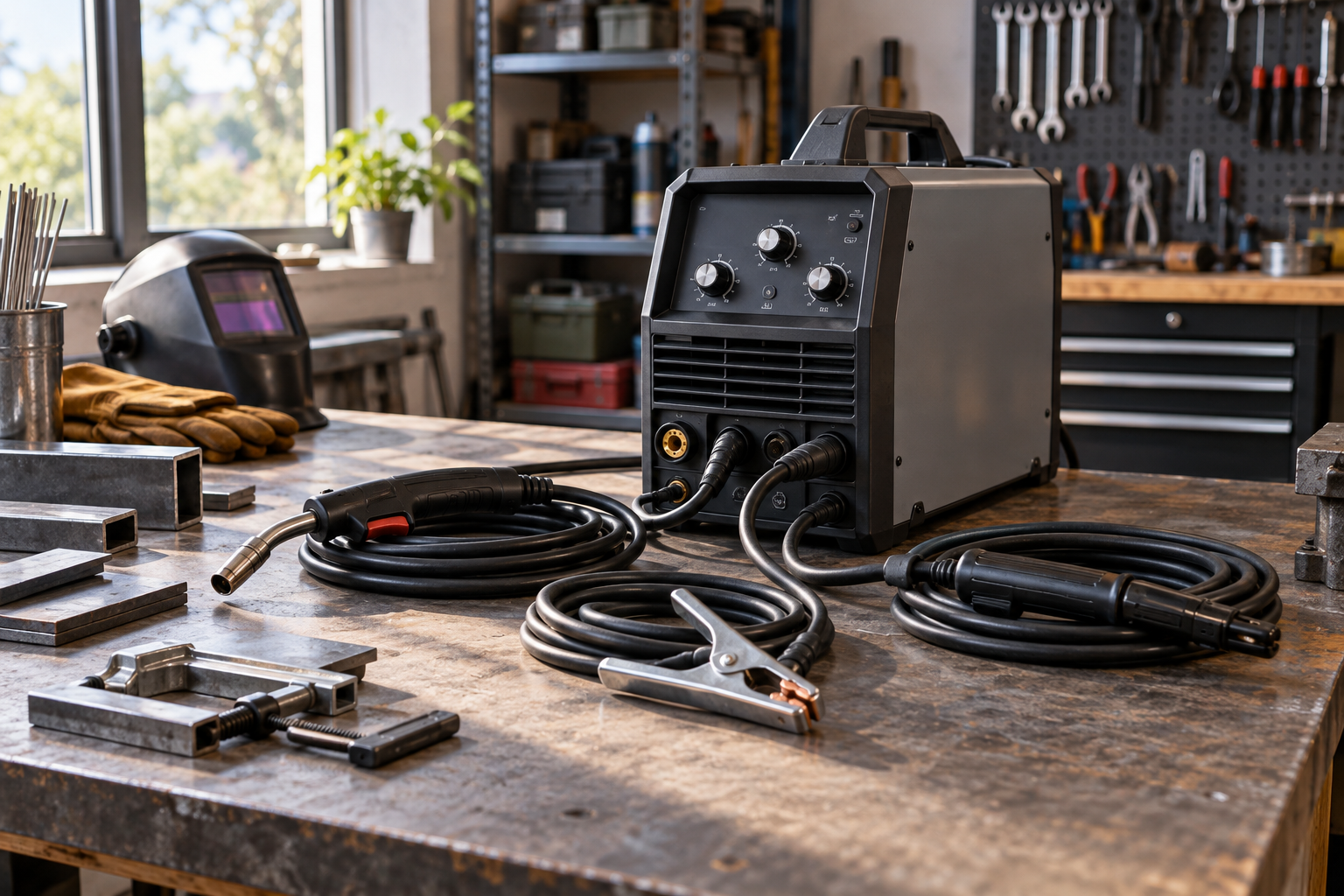
Picture the corner of a garage where a welder, a cutter, and three boxes of accessories are already negotiating for floor space. A machine that combines several jobs sounds like a tidy solution. It can be, but the mode count on a product page is only the start of the buying decision.
The YESWELDER MCT-520 is listed as a six-in-one welder and plasma cutter with 110V/220V capability. Its listed modes are gas MIG, flux-core MIG, plasma cutting, HF TIG, MMA (stick), and spool-gun aluminum welding. That is a broad menu. Whether it is useful depends on the work you actually do, the accessories each process needs, and the electrical and safety setup where you plan to use it.
Start with your projects, not the mode count
Write down a few real jobs you expect to tackle over the next year. Repairing a steel gate, joining tubing for a cart, and cutting stock into shorter pieces are different tasks. A machine that covers several processes might reduce the number of boxes in the shop, but unused modes do not make a better fit by themselves.
Think about how often each job comes up, too. If nearly everything you do is one kind of welding, a dedicated machine may be easier to choose and equip. If your projects vary, a multiprocess unit may make more sense. Be honest here. Planning a race car build someday is an entertaining shopping argument, but it should not outrank the work waiting on the bench this month.
The MCT-520 listing describes MIG options, TIG, stick welding, cutting, and aluminum welding with a spool gun. Treat those as separate capabilities to investigate, not a promise that every process is ready to go the moment you open the carton. The listing says the spool gun is sold separately. Check the included accessories and each mode's requirements before comparing prices.
Know what the process names mean for your shopping list
MIG welding feeds wire through the torch. The product listing separates gas MIG from flux-core MIG, so check which wire, shielding gas, regulator, torch parts, and consumables are included or needed for the jobs you have in mind. Do not assume that one roll of wire covers every setup.
TIG and stick welding use different equipment and work habits from MIG. A process label on the front panel does not tell you what comes in the box, how much practice a technique takes, or whether the machine's specifications match a particular material and thickness. Read the manufacturer's current manual and the complete product details. If those details do not answer a question that matters to your project, ask the seller before buying.
Plasma cutting is another distinct job, not a bonus setting that makes the rest of the setup disappear. Check what the cutter requires, including its air supply and electrical needs, and what consumables it uses. The API listing confirms a CUT mode, but it does not provide enough verified detail here to promise a particular cut thickness, speed, or finish. Look for those figures in the current manufacturer documentation rather than guessing from a headline.
Give the power question its own pass
The MCT-520 listing identifies 110V/220V capability. That does not mean every outlet can power every process at every setting. Before ordering, confirm the machine's input requirements for the work you plan to do and compare them with the circuit and outlet available at your workspace. If you are unsure about the circuit, ask a qualified electrician. A plug that fits is not a wiring inspection.
Also look at where the machine will sit. You need room for the unit, leads, work pieces, gas cylinder if your chosen process uses one, and the tools you reach for during a job. Think about how you will keep cables out of walkways and protect nearby items from sparks. A compact footprint is less helpful if the only place it fits is beside cardboard boxes and a can of paint.
Budget for the whole setup
The API listing showed a price of $569.99 when checked. Online prices change, so treat that as a snapshot, not a promise. More important, compare the complete setup cost rather than the machine price alone.
Depending on the process, the rest of the bill can include protective gear, wire or electrodes, gas and a cylinder, a regulator, an air compressor or filtration equipment, replacement consumables, and the separately sold spool gun if aluminum work is part of your plan. Some buyers already own part of that kit. Others are starting from an empty shelf, where the extras can change the comparison.
Make a short checklist before checkout:
- Which processes will you use soon, and which are only a possible future project?
- What comes in the box, and what must be purchased separately?
- Does your available power match the manufacturer's input requirements?
- What consumables and accessories does each planned process need?
- Can you set up the machine with clear space and appropriate ventilation?
Plan for practice and a safe workspace
Multiple modes do not remove the learning curve. A machine may make the controls more convenient, but good results still depend on setup, material preparation, technique, and practice. Start with the manufacturer's instructions, learn one process at a time, and practice on appropriate scrap before taking on a repair you need to trust.
Welding and cutting involve heat, bright light, fumes, electricity, and fire risk. Use the protective equipment and workspace precautions specified by the manufacturer and applicable safety guidance. Keep flammable materials away from the work area, arrange suitable ventilation, and do not treat a home garage as safe just because the door is open. If you do not know how to assess the hazards or prepare the space, get qualified guidance before striking an arc.
That safety check belongs in the purchase decision. If the only available corner has poor ventilation, no room to manage sparks, or an electrical supply that does not match the manual, solve that problem first. A discount cannot make an unsuitable workspace suitable.
How the MCT-520 fits the decision
The YESWELDER MCT-520 may interest someone who wants several welding processes plus plasma cutting in one machine and is willing to check the requirements for each. Its listed six modes and 110V/220V capability give you useful points to investigate. The spool gun is sold separately, and the product listing alone does not settle questions about included accessories, process-specific performance, or what your workspace needs.
Before buying, compare the current listing with the manufacturer's manual, confirm the exact included kit, and map each intended job to the right process and supplies. If two or three modes cover your real projects, that is a more meaningful reason to consider a multiprocess machine than the impressive number on the front. If you would use only one mode, compare a dedicated alternative as well.
See the YESWELDER MCT-520 listing, then check the latest specifications, package contents, and price before ordering. The link uses the Amazon URL returned by the current product search; the product page itself was not independently checked.