Before You Buy a Cordless Pressure Washer, Check the Water Plan
A portable washer can make a muddy car or patio cleanup easier, but the bucket, hose reach, battery routine, and spray controls decide whether it fits your home. Check these details before the box arrives.
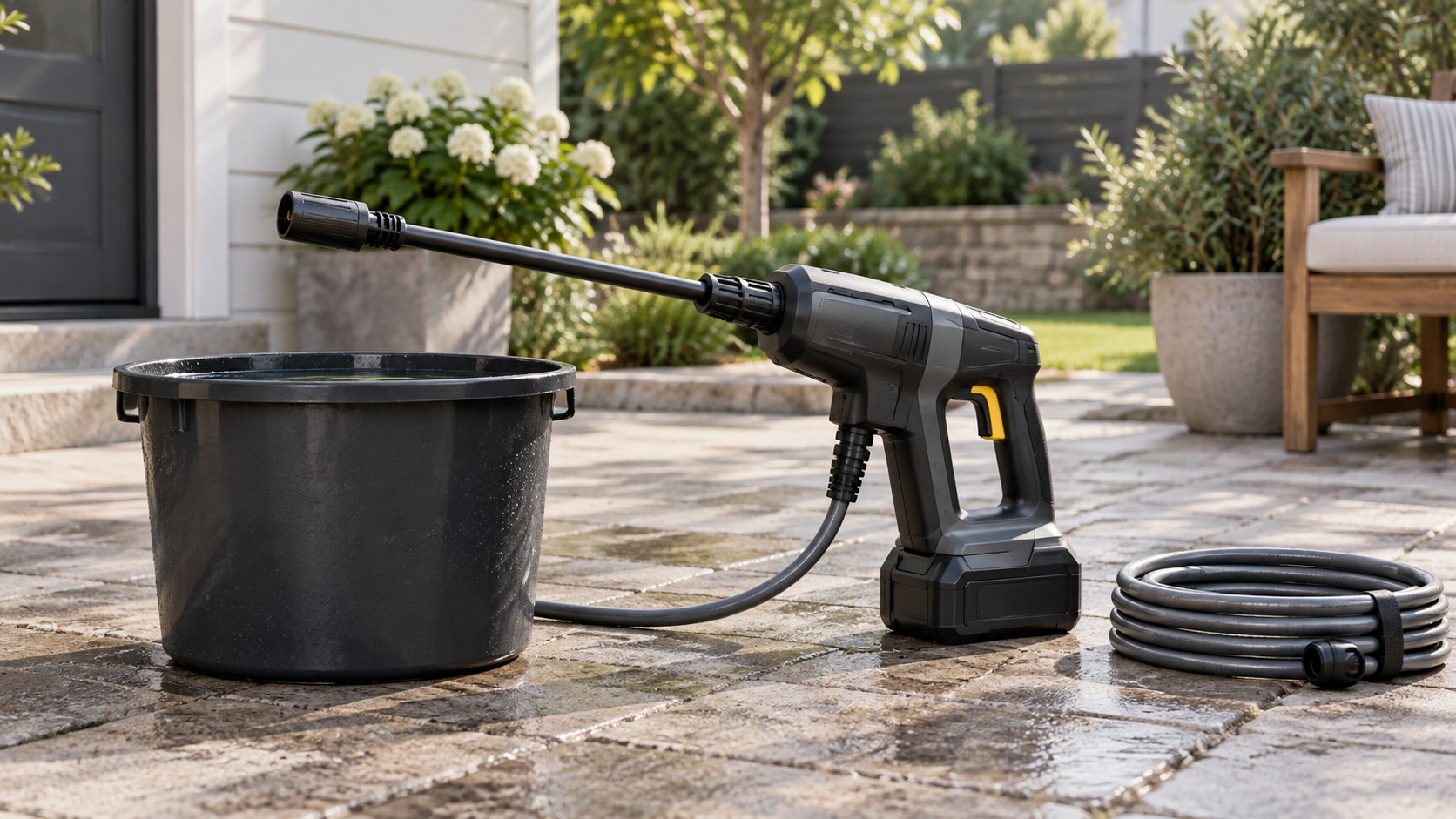
A cordless washer sounds wonderfully simple: carry it outside, point it at the dirty thing, and reclaim your afternoon. Then you get to the driveway and discover the nearest tap is on the other side of the house, the bucket is too small, and the battery needs charging. The machine may be portable. The whole setup still needs a little planning.
That is the useful question to ask before buying one. Not whether a product page can print a big pressure number, but whether the water source, reach, battery, and jobs you have in mind make sense together. A handheld washer can be handy for occasional rinsing. It is a poor match for anyone expecting a small battery tool to behave like a large plug-in or gas unit.
Start with the water, not the pressure number
Some portable washers can draw from a container as well as connect to a tap. That sounds like a small feature until you picture the job. If you want to rinse muddy boots beside a shed, a bucket may be enough. If you plan to wash a car, you will need enough water nearby to work without stopping every few minutes to refill. The water source becomes part of the kit.
Before checkout, picture where the washer will run. Is there an outdoor faucet? If not, can you set a stable bucket close to the work area? Will the intake hose reach without being stretched across a walkway? Keep the container on flat ground, and make sure its opening and depth suit the supplied intake filter. A filter resting against the bottom or a hose that slips out can interrupt the job at exactly the moment your hands are wet.
Also check the product listing and manual for the approved water sources and setup instructions. Do not assume a nearby pond, pool, or other water supply is suitable just because a hose can reach it. Follow the maker's directions rather than experimenting with water that could carry debris into the pump.
Measure the route to the mess
A hose measurement is useful only when it includes the path it must take. Measure from the water source to the farthest spot you expect to clean, then allow room for turns and for moving around the object. A hose that barely reaches on paper can become a tug-of-war once it loops around a tire or patio chair.
For a car, check that you can reach both sides while keeping the bucket, hose, and washer out of the way. For patio furniture, decide where you can stand without spraying through an open doorway or toward a neighbor's window. If the source sits inside a garage, consider whether carrying water out in a bucket is a chore you will actually repeat. Convenience tends to disappear one awkward trip at a time.
The product linked here is listed with a 23-foot hose. Treat that as a specification to compare with your own layout, not a promise that every corner of a yard is within easy reach. Hose routing, where you place the water, and the space around the job all matter.
Know what the numbers can and cannot tell you
Listings often put PSI, or pounds per square inch, in very large type. It describes pressure, but it does not by itself tell you how pleasant a washer will be to use or how quickly a particular job will go. Water flow, the nozzle setting, the distance from the surface, and how stubborn the dirt is all affect the result. A headline figure is a starting point for comparison, not a cleaning guarantee.
This cordless model's Amazon listing describes it as a handheld battery washer and lists a 21-volt battery, a charger, a foam container, and a six-in-one nozzle. The page title also lists 1,480 PSI and 3.3 gallons per minute. Treat those as seller-listed specifications, not an independent test. Check the current listing for the exact package and operating instructions before you buy, since online product details can change.
A selectable nozzle can make one tool more flexible, but it does not make every surface safe for every setting. Start with the gentlest option the manual allows, hold the wand at a sensible distance, and test a small, hidden area first. Be especially cautious around paint, soft wood, loose grout, seals, screens, and anything electrical. If the manual warns against a surface, believe the manual. Replacing a damaged finish is a very expensive way to learn about nozzle settings.
Plan around a battery, not an imaginary marathon
A battery-powered tool saves you from dragging a power cord around, but it still has a finite working window. The actual time you get depends on the tool, its settings, the battery's condition, and how continuously you use it. Do not turn a seller's runtime claim into a promise for your own job. A long, uninterrupted wash may be a frustrating first assignment for a compact washer.
Try a small task first. Rinse one bike, a pair of muddy garden tools, or a short stretch of patio. Notice how often you change position, refill the water, adjust the nozzle, or pause. That modest trial tells you more about the routine than an ambitious Saturday project. Charge the battery as the manual directs, and avoid starting a larger job if you need the tool for another task right afterward.
Think about where the washer and its accessories will live, too. A tool that needs a special shelf, a dry place for the battery, and a little hose untangling may still be convenient. A pile that must be assembled from three closets is less so. Keep the intake filter and small nozzle parts together; tiny accessories are very good at disappearing when they are most needed.
Give the first wash a low-stakes job
Once the package arrives, compare its contents with the listing and read the setup directions before connecting anything. Check that the battery, charger, hose, filter, and nozzle pieces are present. Learn how the water intake is fitted and how the nozzle settings change. If something is missing or does not match the listing, pause and contact the seller rather than improvising a connection.
Choose a washable, forgiving surface for the first test. Clear away loose objects, keep people and pets out of the spray path, and aim away from doors and windows. Use a low setting and a little distance, then adjust only if the material and manual allow it. The first outing is about learning the controls and water routine, not proving that the washer can strip every stain from the county.
Afterward, follow the maker's instructions for shutting down, draining or storing the hose, and caring for the battery. Put the small parts back in one place. That last step sounds boring, but it is the difference between a tool you grab next month and one you remember only when you are reorganizing the garage.
Make the buying decision fit your actual chores
A cordless washer makes the most sense when your jobs are occasional, your water source is manageable, and avoiding a long power cord matters. If you expect to clean large areas for long stretches, compare larger models and their water and power requirements instead of assuming portability will cover every need. If a regular hose rinse already handles your jobs, buying another tool may add storage more than convenience.
Before ordering, check the current price, return terms, included accessories, battery details, and user questions on the product page. The listing can change, and a deal is only useful if the tool matches the routine you will actually keep. The cordless pressure washer listing is an affiliate link, which means Kivoras may earn a commission if you buy through it, at no extra cost to you.
A good test is easy to remember: name the first job, point to the water source, and sketch the hose route. If those three pieces fit without a complicated workaround, a portable washer could earn its place. If the plan already involves hauling a bucket across the yard and hoping the battery lasts, keep browsing. Your future self, standing beside a half-clean patio, will appreciate the honesty.