
Countertop control on sale season: how to buy one useful kitchen bundle on Amazon
A discounted cart can grow quickly. This guide gives an easy kitchen workflow for buying one useful bundle, checking real savings, and avoiding the common counter clutter that shows up after a good deal ends.
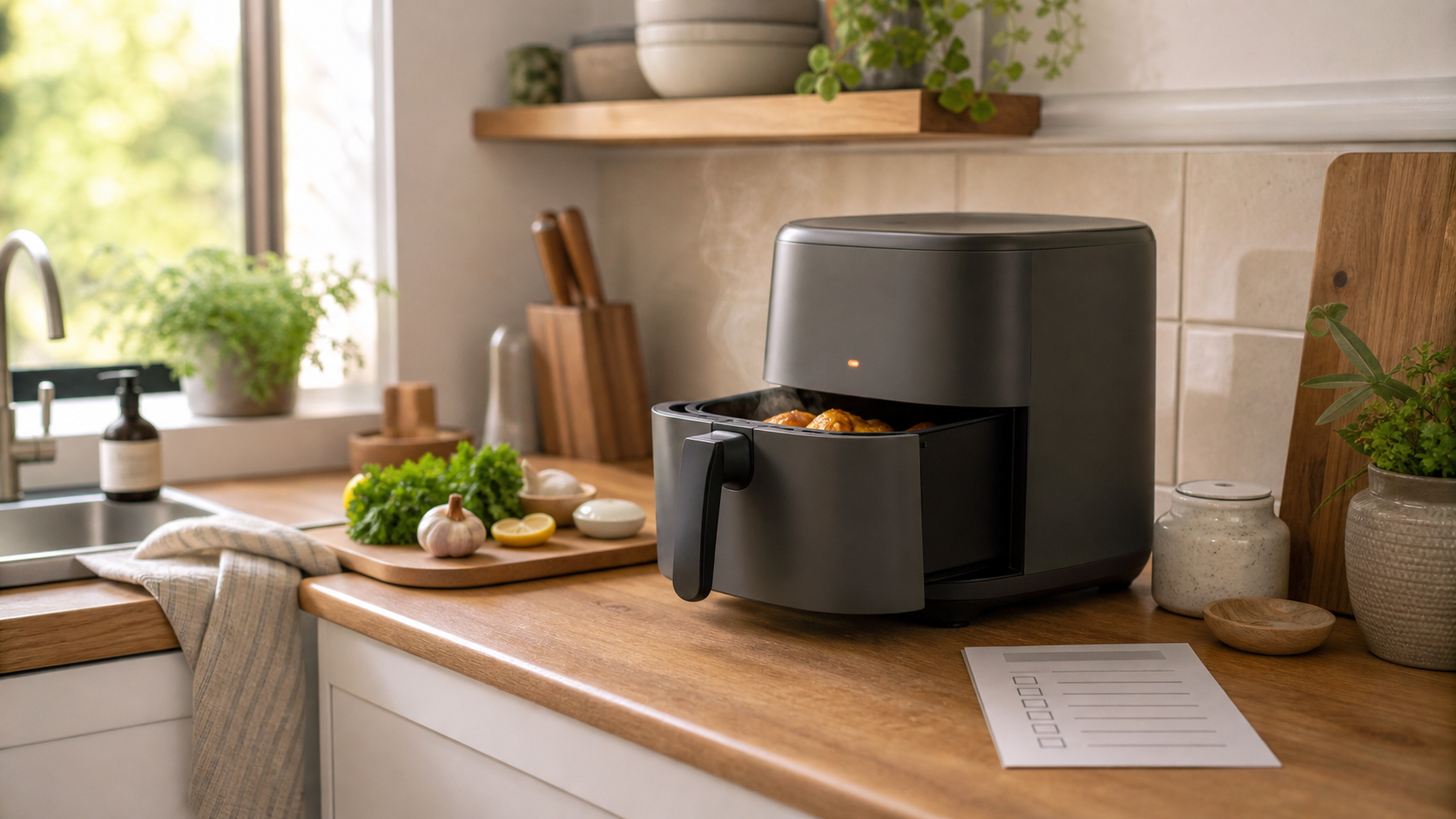
Saturday morning, the kitchen clock says 10:15 and you are still in your house slippers when a sale alert pings. The sale looks harmless enough, maybe even kind, because it promises a deep-fryer upgrade, a compact blender, and a stand mixer set. Then you open the app and suddenly there are six carts, three tabs, and a long line of reasoning about how much future convenience is worth paying for this month.
That is how kitchen clutter starts in this hobby of good intentions. The object is usually not laziness. It is usually uncertainty. Most people are trying to solve three problems with one afternoon purchase: less work, less mess, and more free space. On sale day, those goals become a puzzle with glitter, and glitter tends to hide the wrong choices. So the first rule is to pick one routine you actually perform every week, then buy only what that routine needs.
Pick one routine, then build a small counter plan
Start with a list of three tasks you already do every week. Keep it tiny. For example, one person may choose: reheat leftovers, make a single protein fast, and clean a small number of pans after dinner. Another person may choose: blend smoothies for one person, warm coffee in the morning, and air crisp snacks on weekends. Use your real life schedule, not a generic list from an ad. If a task is not repeated at least three days a week, it usually does not deserve its own checkout line.
Next, define one hard limit for each task. Here is a useful format:
- How many times will I use this item this week?
- Where will it live when not in use?
- How long can I keep it in service before resale or returns become stressful?
If the answer to any one question is vague, the item can wait. It is not a bad rule, just a budget and sanity filter. A machine that saves no real time after two uses is a red flag, even if it is cheap today.
Choose tools by job, not by review score
Reviews are useful, but they are not your buying engine. The real engine is task fit. That means comparing options by where your counter stays open and what your body needs during prep.
Here is a clean comparison map that avoids overbuying:
- Air fryer: best when you replace deep frying and want one basket for two or three foods.
- Toaster oven: best when you want shared heat for small baking and reheating without a full oven footprint.
- Immersion blender: best when you blend in small batches and need cleanup in one basin.
If two tools solve the same job and take the same counter footprint, pick the one with easier cleaning and fewer accessory parts. This is not a power struggle. It is a noise problem. Too many nozzles, trays, manuals, and cables are how countertop anxiety is born.
Use one shopping page per item type and keep the same anchor phrase
Do not jump across ten pages. Use a narrow search phrase each for each task and keep your browser window clean. For compact air fryer choices, stay in one focused search and scan only models that list your basket size and daily use needs. A useful path is to open
Compact air fryer options on Amazon with affiliate links.
For a small heat-and-toast option that can also dry and reheat, compare results in
Countertop toaster ovens and bake-ready mini ovens on Amazon.
If you need one prep helper, avoid the broad category and keep it specific:
Compact blender options with small footprint for prep.
When you click in this sequence, one page per task does not mean weak shopping. It means disciplined shopping. You are deciding by function and space, not by whichever listing has the loudest discount badge.
I keep one paper in my wallet that says: If it does not fit on my counter and return shelf, it is not in the plan. It sounds plain, but it saves money every month.
Decode sales so you keep only real discounts
Not every blue tag is a real deal, especially near the end of summer when many brands run broad campaigns. Amazon explains the structure of savings, reference prices, and timing in ways that are easy to miss. If you like short sources before checkout, this helps: how Amazon frames genuine savings. Pair that with their savings and shopping guidance so you have a clean mental baseline.
Use this three point check before adding one item:
- List the normal list price and the sale price side by side.
- Check whether the coupon applies to this exact item and if it overlaps with shipping promotions.
- Make sure the total after tax stays inside your weekly food or home budget.
If all three numbers pass, save it to your shortlist. If any one fails, skip it. You can always return after price updates. Returning is less work than regret, but it is better to avoid both.
Plan the first week before checkout
Most people buy tools and then wonder where they sit. Build a easy week plan before paying. Put one item in your basket and decide where it will go in the first 24 hours.
For example, if your route is air fryer first, mark a spot for the hot wire and a second spot for a removable basket. If your route is toaster oven first, reserve two inches near the wall and a known plug point on a surge protected strip. If your route is blender first, keep one container ready for rinsing. This little routine prevents the one-week fog where you keep items wrapped and unopened because it is easier to open a clean shelf than to unpack one more box.
The bundle mindset is not about buying more
Many people hear the word bundle and think they should purchase a trio of items. Here bundle means sequence. Buy one item, test it in one routine for two weeks, then decide if your second item earns its place. This prevents a stack of one-off tools that are useful only for one day each. In practice, this means:
- Week one: Buy only the item that removes the biggest bottleneck.
- Week two: Keep testing and note what was actually used twice.
- Week three: Add second item only if it pairs with the first.
That slow path may sound less exciting than a big Sunday rush, but it is how you avoid expensive dust collectors. It also gives Amazon time to show whether the savings was stable. If price swings are temporary, you can pause rather than double down.
Set a return and repair window for your own stress level
Before checkout, define a hard decision window. A common one is 48 hours for fit and feel, 14 days for return review, and two weeks for performance check. That sounds like policy language, but it is simply calendar hygiene. You know your schedule, so you know your patience. If a tool is not used more than once every few days, it should not stay by default. The same is true for cleaning time. A useful tool is one you use; a shelf ornament is not a tool.
When your check lands and returns are done, keep one line in notes: what was the one reason the purchase stayed? this becomes your filter for the next quarter, and it beats all the generic advice you read in a template. The best systems are boring after a season. Boring systems are the reason people spend less and cook more.
Sample three-step route for a real kitchen
Here is a steady mini route for a small kitchen with two cooks and a tight counter:
Step 1: buy a compact air fryer that fits two plates and has one removable basket.
Step 2: after one week, buy one toaster oven only if reheating is still a pain point.
Step 3: add a hand blender only if you make smoothies or sauces at least four times a week.
This route sounds strict, yet it is easy to follow. It also keeps your counter visible for what matters: a place to chop, cook, and clean without stepping sideways into the path to the sink.
Wrap up with a realistic purchase rhythm
Sales are not the enemy. Weak shopping plans are the enemy. A clean plan gives you freedom to use the deal window without turning your kitchen into a museum of unused boxes. Pick one real routine, verify real savings, buy one item, test before adding the next, and only then expand. That rhythm turns a checkout rush into a stable home workflow.