
How to buy a compact induction cooktop on sale without adding another countertop headache
A discounted countertop cooktop can be a useful upgrade or a cluttered money pit. Use this kitchen-first checklist before you buy, and a sale signal can become A useful purchase instead of a regret.
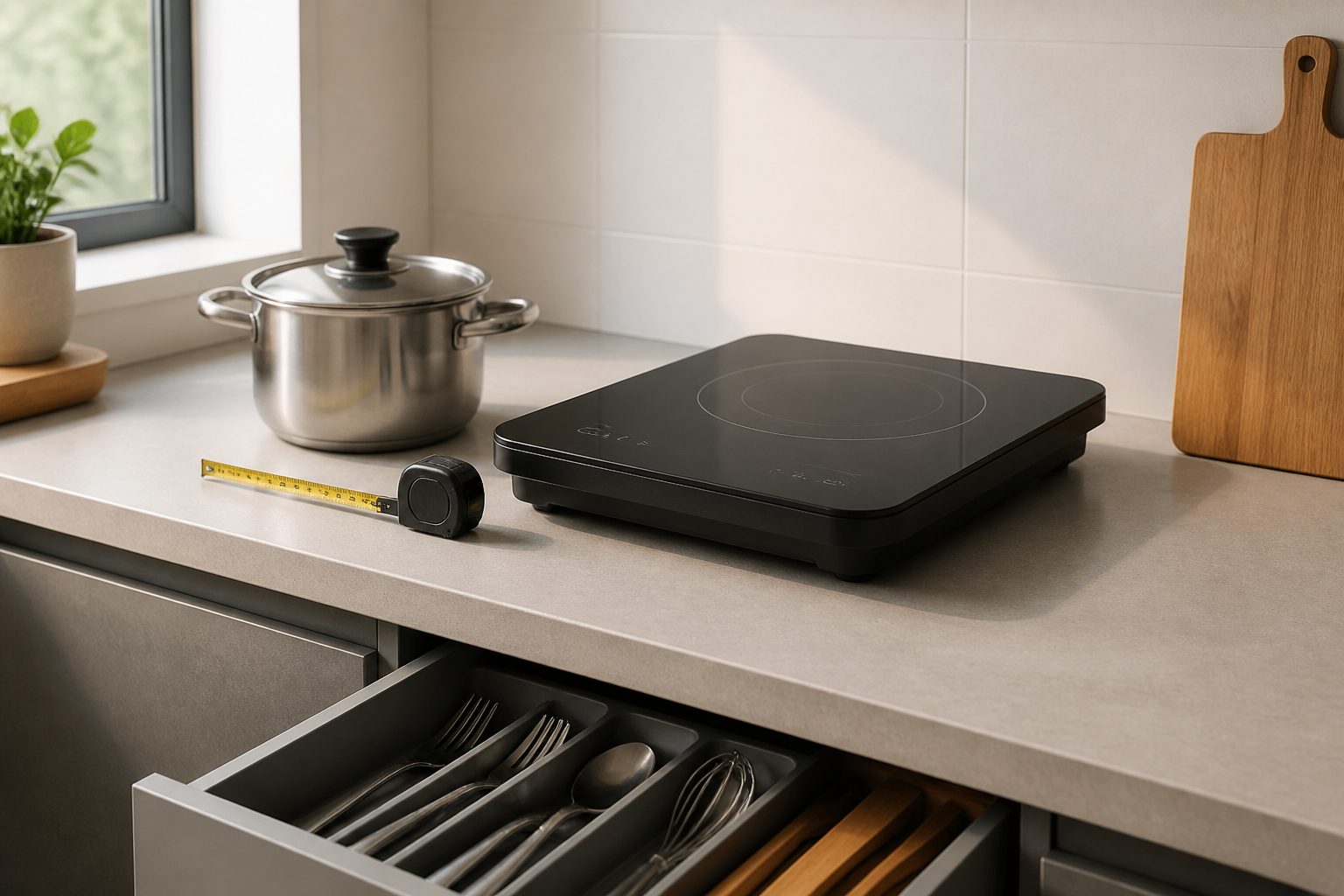
At 10:45 on a Tuesday evening, you have one dinner left to cook and a surprise deal alert in your phone. The listing says 30 percent off a compact induction cooktop, which feels like a lucky break. You check your kitchen counter, then your wallet, then the cart, and by the time you click past the first page of specs the same old questions return: Will this fit under my cabinet? Can it actually simmer, or will it take me back to single-pot dinners? And if this is too weak for my pans, will I keep it in the drawer and regret both the money and the shelf space?
That is why a sale can be the wrong place to buy a small appliance if you do not use a sequence. Induction appliances are one of those products where the headline discount hides the real cost. A few dollars saved at checkout can cost you a lot more later if the unit arrives too small, too weak, or too fragile for daily use. This guide keeps that trap simple: you will check fit, power, controls, and return risk before your impulse says buy.
Start with the actual problem, not the headline number
Before you open Amazon, write one short sentence: what is this tool for this week? If your answer is only "I want to cook faster," you might be buying the wrong class of unit. Small kitchens usually need a cooktop that handles one or two small meals, often one pan at a time, and does not block circulation around the prep area. If your goal is to replace a full stove, then this guide is less useful than you think. Induction is strongest when it is specific. Define the specific meal habits first, then match the device to those habits.
Also define your floor plan before power specs. You do not need engineering precision, just real measurements: counter width, cooktop depth, and where the power cord will be routed. A compact unit that looks tiny in photos can steal your entire prep line once you add the pan, ladle, and clearance for the ventilation. A short rule that keeps people happy is to keep at least 5 to 6 inches of open counter in front of the base and at least 2 inches of air to the side on one side. This is not about luxury. It is about not turning a usable upgrade into a day-to-day obstacle.
Step 1: Choose the right wattage for your use
Induction wattage is the first real performance gate. For one-burner, occasional cooking, a 1200W model can work, especially for reheating and low-temp tasks. For a bigger pot, wok stir-fry, or frequent frying, a unit closer to 1600W to 1800W gives more flexibility. If the listing makes it sound like everything is "perfect for small apartments," read that as marketing language until you see actual cooking data. What you need is control over low heat, predictable power jumps, and stable simmer behavior. If a seller does not show A useful wattage breakdown for common use cases, flag it for deeper review.
You can find this kind of model-level detail by reading the question section and user images, but do not trust only photos. Compare at least three listing variants and two shipping sellers when possible. This is where the same appliance can appear with different listed power modes, and your chosen listing may be the weak one. The cheaper version may be on sale now, but your return window is what determines whether it becomes an upgrade or a lesson.
Step 2: Make pan compatibility the next gate
Even the strongest unit is useless if your cookware is not induction-ready. Instead of deciding on the cooker alone, open one cookware drawer first and measure pan diameter and base thickness. If you routinely use 10-inch or larger pans, a narrow unit with limited control may still heat only the center. That can create hot spots and the sense that the bargain feels weak. This is one of the common sale mistakes, and it is easy to spot before checkout by asking three questions.
- Does the listed pan base material include the cookware you already own or can buy under your budget?
- Is there a minimum vessel size warning for reliable heat transfer?
- Does the unit include a wide enough control panel for one-handed use on a crowded counter?
If the answer to these is unclear, the item is not ready for your sale cart yet. A model can be perfect for a tidy kitchen photo and still be weak in real cooking because the advertised heat goes to a small center ring only.
Step 3: Scan safety and use controls as if you live with kids or pets
Countertop appliances in family homes need predictable behavior, not only clean edges. Your check list should include auto shutoff, heat-lock, and whether knobs are obvious at a glance. Good products usually make these features explicit in the main specs block, not buried in a fourth paragraph. If the listing hides them under accessories or user reviews, the listing may still be fine, but the signal quality is lower and the risk is higher.
If your home has little hands, pets near the floor, or a habit of stepping away from the stove for one cup of tea, prioritize an auto shutoff and cool-to-touch controls. That choice reduces accidental heat events and is often worth a few dollars on Amazon.
Step 4: Treat deal types as a filter, not the decision
Amazon uses multiple sale patterns, including lightning deals, coupon-backed offers, and temporary price drops. A good guide from Amazon explains that time windows can be short and unpredictable, and that can pressure buyers into a fast click. A compact induction cooktop in a 1-day price bubble is fine if it already passes your fit checks. If it does not, no amount of urgency should change that decision. A useful way to avoid pressure buys is to treat every sale like a delayed commitment.
The idea is simple: save the ASIN, track it for 24 hours, then confirm two numbers before checkout. First, verify that delivery arrives before your immediate need disappears, not merely before your sale timer ends. Second, verify that returns are available under Amazon's shipping and return policy for this exact sold-by seller. If the item is free-return eligible, that is a bonus, but even then check inspection rules and reversal fees. This is where most buyers lose money on "good deals."
Step 5: Do a five-minute checkout review before adding the item
Use this checklist as your final gate right before pressing Checkout. It takes less than five minutes and saves the frustration of returning bulky items that take twice the shelf space you expected.
- Does the dimensions list include width, depth, and handle clearance, and does it include cable length?
- Can your cookware and your usual cooking style both work at target wattage?
- Are return rules for this seller still clearly available on the listing page?
- Does your total cart include one accessory only or six extras you do not need?
- Is there a better alternative in the same budget with better shipping speed or return confidence?
If any check fails, add the item to wishlist and set a 24-hour reminder. If all checks pass, add it to cart and continue with a final coupon comparison.
Step 6: Compare the same model through two listing paths
Some buyers feel more confident when they see two pricing paths side by side. You can start with a compact induction search for a short price check, then move to alternatives filtered by return and shipping conditions. This keeps the sale feeling real and prevents a single listing from driving the decision.
Browse compact induction cooktop options with the required affiliate tag. Also cross-check for compatible cookware and bundled options with induction-friendly pans that match size and base requirements. The difference matters more than the listed price alone, because returns are easier when the first setup is realistic.
Step 7: Keep the decision human, not algorithmic
Sales pages are built to keep you moving, but your kitchen is not a dashboard. If your decision has to pass three constraints — space, power for your meals, and low return risk — then it is already strong. Keep notes for each candidate model, even if only three lines. If one model wins, use it for one week. If it is too weak for your typical pan, return it while the window is open and avoid the urge to buy the next discount immediately.
When you keep this sequence, you do not need to reject every sale. You only reject the ones that do not fit your actual routine.
This is the moment your next Amazon cooktop discount becomes useful instead of stressful. You stop starting from the discount and instead confirm your real use first. You start from your kitchen and ask whether that discounted unit can live there for weeks. If the answer is no, you skip with zero guilt. If the answer is yes, you buy one model, use it properly, and avoid the second and third shelf-busting buy that usually follows.