
Crumbs in the Console? How to Care for a Car Armrest Storage Bag
Receipts, crumbs, and a sticky pocket can undo a useful car organizer. Give your armrest storage bag a careful cleanout without guessing how to wash its cover or foam.
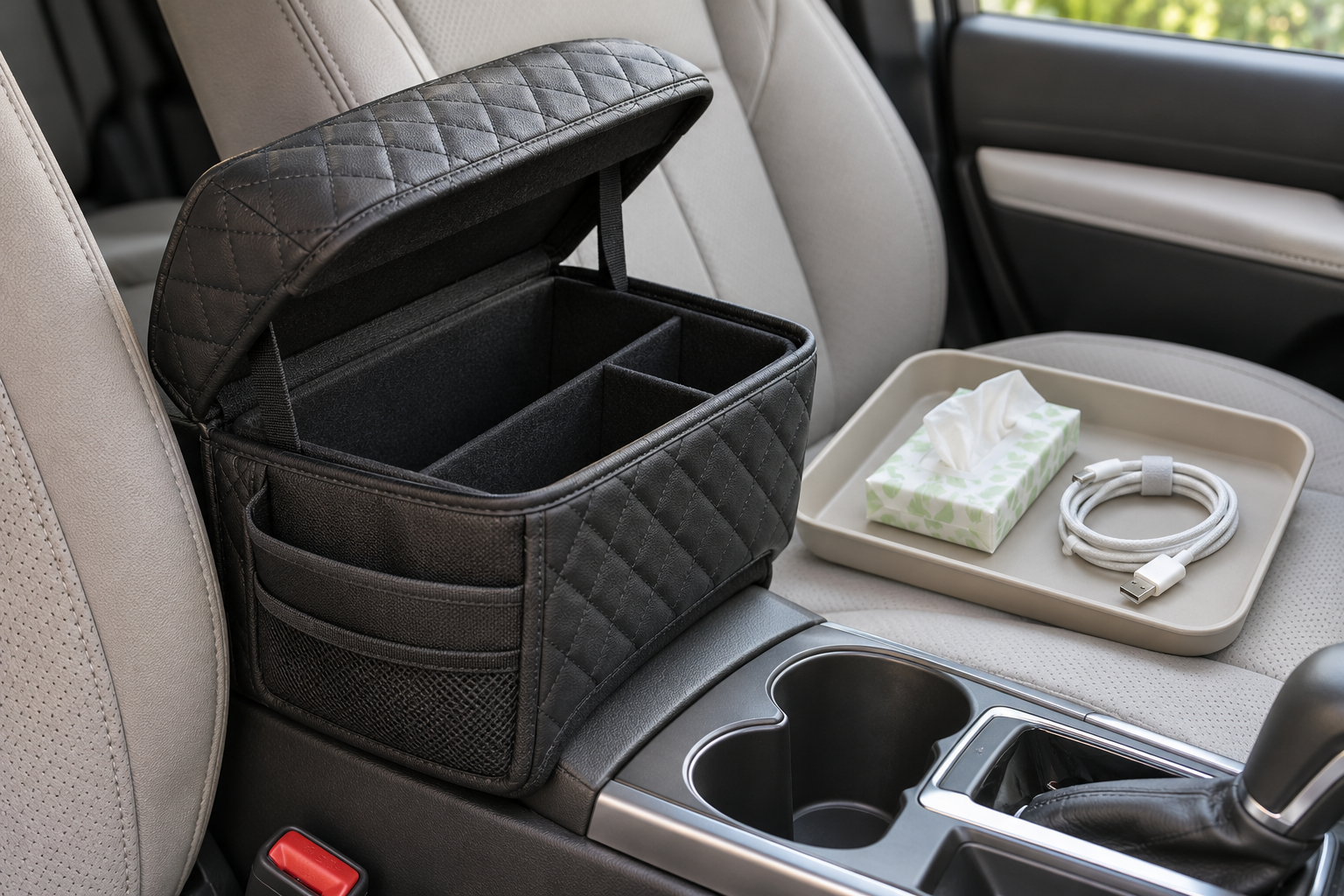
You reach into the pocket beside the armrest for a tissue and come back with a parking receipt, a pen cap, and a mysterious crumb. The organizer did its job: it caught the small things. Unfortunately, it also kept them.
A car armrest storage bag needs a cleanout routine that goes beyond moving everything into the cup holder. The useful part is deciding what leaves the car, checking the pockets and fastenings, and finding out what the material can actually tolerate before you reach for a cleaning spray.
The Coficoi black car armrest cushion is one example of this style. Its current listing describes side storage bags, a cup holder, a tissue box slot, and a phone slot. Those separate spaces give you several places to check when something spills or disappears. The care advice below is a cautious routine, not a substitute for that product's instructions or a report from hands-on testing.
As an Amazon Associate, KivorasCart earns from qualifying purchases.
Empty every pocket before you clean anything
Start with the car safely parked. Bring a small bag for rubbish and a tray or reusable container for things you want to keep. Empty the organizer completely, including the pocket that looks empty from above. A folded receipt can sit quite happily behind a tissue packet for weeks.
Separate items that belong in the car from items that arrived there by accident. A charging cable you use regularly can earn its place back. Yesterday's coffee receipt probably cannot. Take personal papers indoors rather than leaving them in a visible pocket while you work.
If two people share the car, put unfamiliar items aside instead of throwing them away. The tiny plastic piece that looks useless might belong to someone's headphones. You can solve the crumb problem without starting a household investigation.
Remove the organizer only as its installation instructions allow. Do not pull it off by a pocket or force a strap around the console hinge. If you cannot see how it releases, stop and check the directions before turning a cleanout into a repair.
Find the care directions, not a cleaning shortcut
The current Coficoi listing describes the surface as microfiber leather and the cushioning as memory foam. Neither description tells you that the whole assembly is washable. A material name alone also does not establish which spray, wipe, or treatment is suitable.
Look for care information on the label, packaging, or supplied instructions. If you no longer have them, ask the seller or manufacturer for directions for your exact model. Useful questions are whether the cover comes off, whether the foam must stay dry, and which cleaning products are approved.
Until you have those answers, do not put the organizer in a washing machine, soak it, or assume a removable-looking section is meant to come apart. A seam or zipper is not permission to wash the contents. Avoid choosing a leather conditioner simply because the listing includes the word leather; confirm that the maker recommends it for this material.
Match the cleanup to what you find
For loose, dry debris, empty the pockets over your rubbish bag and lift out what you can reach without stretching the seams. If the instructions allow a dry cloth or soft brush, use that approved method gently. There is no reason to add liquid to a pocket that only contains dry crumbs.
A sticky mark needs more patience. Identify the approved cleaning method before treating it, and follow any directions about testing an inconspicuous spot. Do not turn a small spill into a whole-surface scrub with an unapproved cleaner.
If liquid reaches a seam or padded section, pause before putting everything back. Follow the maker's drying directions, and leave affected compartments empty until the assembly is fully dry. A surface that feels dry does not establish that cushioning underneath is dry too. If the care directions do not cover a soaked cushion, ask for advice rather than improvising with heat.
Persistent odor, tackiness, or a damaged surface deserves another look. Covering the smell with fragrance does not tell you whether you have removed the spill. If you cannot clean the affected area using an approved method, replacement may be more sensible than repeated experiments.
Check the attachment while the bag is empty
An empty organizer makes it easier to notice a loose fastening, a stretched pocket edge, or a seam starting to separate. Inspect those areas before reinstalling it. Stop using a damaged attachment until you know whether it can be repaired or needs replacing.
Once it is back in position, check it with the vehicle still parked. Open and close the console as intended, move the seats through the positions you normally use, and confirm that buckles and controls remain accessible. Keep the accessory clear of any airbag area identified in your vehicle manual. If its position interferes with normal operation, remove it.
This is a use-and-wear check, not a promise that a correctly fitted organizer is crash-safe. A storage pocket is not a certified restraint for loose objects, and an extra cup holder should not be treated as proof that any bottle will stay put.
Put less back than you took out
Before refilling the pockets, give each item a reason to be there. You are choosing supplies for the next few journeys, not packing a second glove compartment. An easy starting point is:
- A small tissue packet, if it fits the intended compartment without forcing it.
- The cable you actually use, arranged so it does not trail across controls or a buckle.
- A few small essentials that fit without stretching the pocket.
- Enough empty space that you can see what is already inside.
Keep rubbish separate from supplies. Otherwise, the pocket that stores tissues becomes the pocket that stores used tissues, which is a fairly quick demotion. Empty wrappers and unwanted receipts when you leave the car instead of waiting for the next full cleanout.
Do not interpret a roomy pocket as a weight rating. Unless the maker supplies a load limit, avoid stuffing it with heavy items. If a full pocket sags, pulls the organizer sideways, or crowds a passenger, take things out.
Make the routine a parked-car job
Choose a natural moment to empty the bag, such as after bringing in the shopping or clearing the car at the end of the week. Check sooner after a spill. The calendar matters less than dealing with the mess before another layer lands on top.
Set up what you need before driving, and leave sorting or searching for a safe stop. NHTSA's distracted-driving guidance explains that any activity taking attention away from driving can be a distraction. Having a pocket beside your elbow does not make rummaging through it a driving task.
If the old organizer needs replacing
The Coficoi black car armrest cushion with storage pockets is a comparable option to consider if your current bag is damaged or no longer useful. Before ordering, ask for the care instructions as well as checking compatibility with your console. The listing's material description does not establish machine washability, waterproofing, or compatibility with disinfecting wipes.
If your existing organizer is sound, keep it. Empty the last pocket, return only the things you use, and take the rubbish indoors. The next time you need a tissue, it should be a much shorter search.