
Put the Cordless Washer Away Before the First Freeze
A portable washer can sit quietly in the shed until spring, but leftover water and a forgotten battery can make that wait less pleasant. A few careful storage steps help you protect the tool and decide whether this compact format suits your routine.
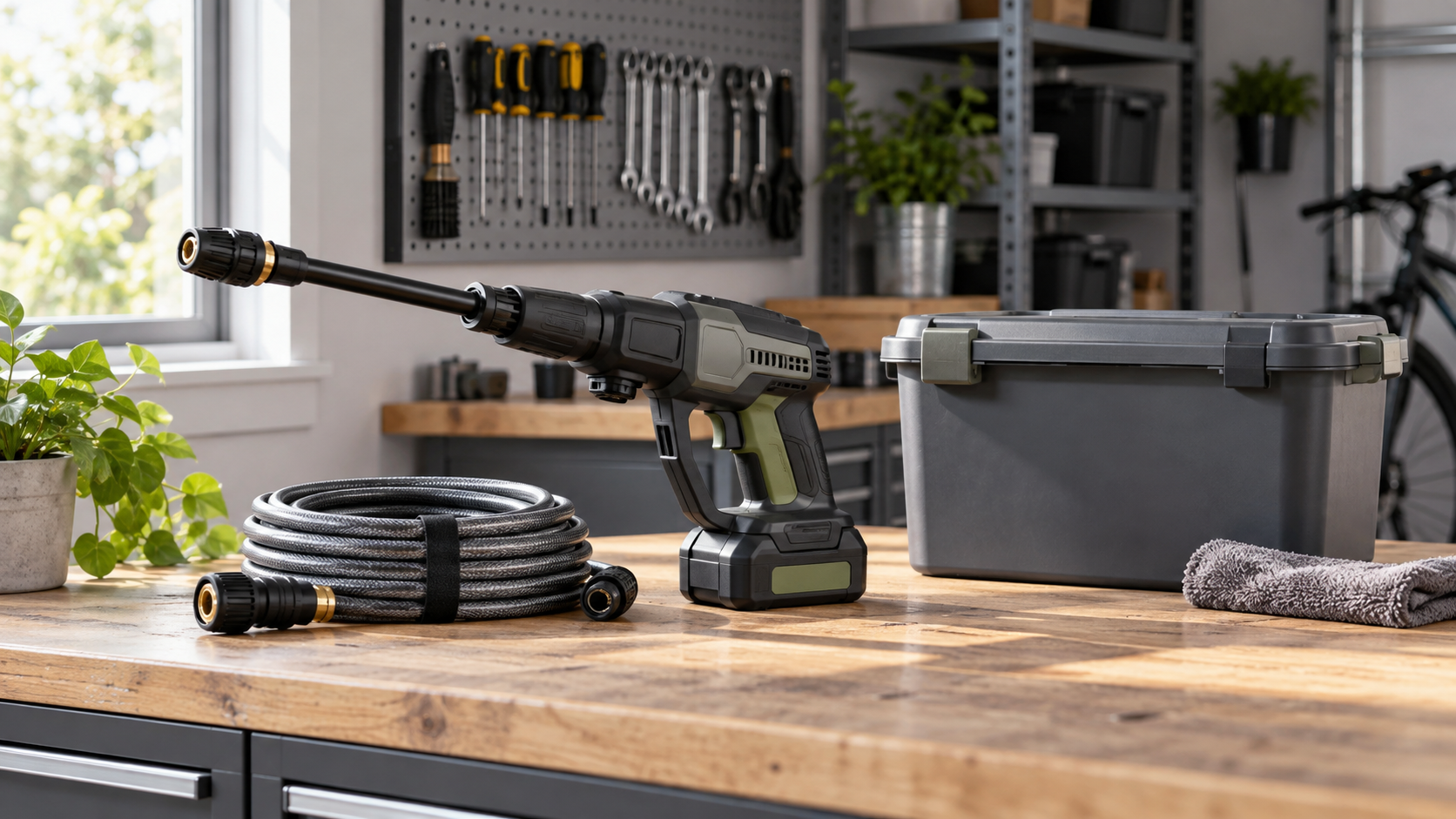
The last patio rinse of the year is over. The chairs are stacked, the garden hose is coiled, and the cordless washer is still sitting beside the back door with water in its parts. It is tempting to call the job done and stash it in the shed. Give it a little attention first, especially if freezing weather is on the way.
A portable washer is useful only if it is ready when the next muddy project appears. Cold storage, trapped water, and a battery left in the wrong place can turn a tidy end-of-season routine into a springtime puzzle. The exact storage instructions vary by model, so the manual for your washer should settle questions about draining, temperature, charging, and removable parts. The steps below are a sensible checklist, not a substitute for those instructions.
Start with the water, not the shelf
Disconnect the water source and release pressure using the method in the manual. Then drain the hose, intake line, spray gun, and any accessory that held water during use. A quick shake may clear a loose drop, but it does not prove that every internal passage is empty. If the maker gives a specific drain or winterizing procedure, follow that instead of improvising with compressed air or a cleaning chemical.
Why fuss over a little water? Water expands when it freezes. A small amount trapped in a fitting or hose can put stress on parts while the washer sits unused. You may not see the problem until you reconnect everything months later, which is a rather annoying time to discover that winter left a souvenir.
Wipe the outside with a dry cloth and let damp accessories air-dry before packing them away. Check the intake filter or screen if your model has one, and clear visible grit according to the manual. Dirt left around a connection can be harder to remove after it dries. Keep small pieces together in a labeled bag or container so the spring setup does not begin with a scavenger hunt.
Give the battery its own plan
If the battery comes off the washer, remove it for storage unless the maker says otherwise. Look for guidance on the recommended charge level, storage temperature, and whether the battery should be checked during a long break. Battery advice varies, so do not assume that fully charged, completely empty, or permanently attached is the right answer for every model.
Store the battery somewhere dry and away from direct heat, moisture, and loose metal objects that could touch its contacts. Do not leave it on a charger for the whole winter unless the instructions explicitly allow that. If you cannot find the manual, check the brand's official support page using the exact model number on the product label. A listing title alone may not identify every revision or accessory package.
This is also a good moment to look at the battery for swelling, cracks, unusual heat, or damage. Stop using a battery that appears damaged and follow the maker's guidance for service or disposal. Do not try to open it or repair it yourself.
Choose a storage spot that stays boring
A dry indoor shelf is generally a better home than a damp corner of the garage or an exposed porch. Keep the washer out of direct sun and away from heaters, fuel, solvents, and places where boxes or garden tools can fall onto it. Store the hose without a sharp kink, and avoid hanging a heavy tool from a plastic connector.
If your only available space is an unheated shed, check the product instructions for the lowest storage temperature. Do not guess from the temperature at the back door; a shed can get much colder overnight. When the manual says the unit must be protected from freezing, bring it indoors or choose another protected spot.
Keep the washer and battery separate from children's play areas, pets, and anything that could snag a trigger or switch. A simple shelf with the accessories in one bin is often easier than wrapping every piece in layers of plastic. The goal is a dry, stable place where parts stay together and the washer cannot be knocked over.
Use the quiet month to check what you own
Before storage, inspect the cord or charging adapter, battery contacts, hose, fittings, and spray attachments for wear. Look for cracks, leaks, loose pieces, and clogged screens. Do not use a damaged charger or a hose that has split. Note anything that needs attention while you can still remember what happened during the last cleanup.
Write down the model number and take a photo of the label before it disappears behind winter gear. Save the manual with that note. If the product page and the item label use different names, rely on the model information printed on the unit when looking for instructions. Online listings can be messy, and a similar-looking washer may have different parts or care directions.
If you are considering a compact cordless washer, compare the SEESII Cordless Pressure Washer listing with your storage plan. Check its exact model name, battery configuration, charger, and care instructions before buying. Those details vary by product, and the manual for the washer you own should guide winter storage.
Make spring startup a two-minute check
When warmer weather returns, do not rush straight into a full cleanup. Look over the hose and connections, confirm the battery and charger are in good condition, and check that the intake path is clear. Reassemble the washer as directed, then run it briefly in a safe area and watch for leaks or odd sounds. If anything seems damaged or does not work as expected, stop and consult the manual or the manufacturer's support team.
That little check is especially worthwhile before spraying a car, painted furniture, wood, or any surface that could be damaged by pressure. Start gently and test an inconspicuous spot when the instructions allow it. A cordless washer can be handy for small outdoor chores, but it is still a powered tool that sends water at pressure. Treat it with the same respect you would give the larger machine in the garage.
Put the unit away dry, keep the battery according to its own instructions, and store the accessories where you can find them. Spring cleanup will still arrive with its usual collection of muddy surprises. At least the washer will not add a mystery leak to the list.