How to Build a Desk and Sofa Recovery Routine for Stiff Shoulders
A fast recovery corner is possible in a tiny room if you buy only what helps your body move, not just what looks good in a sale list.
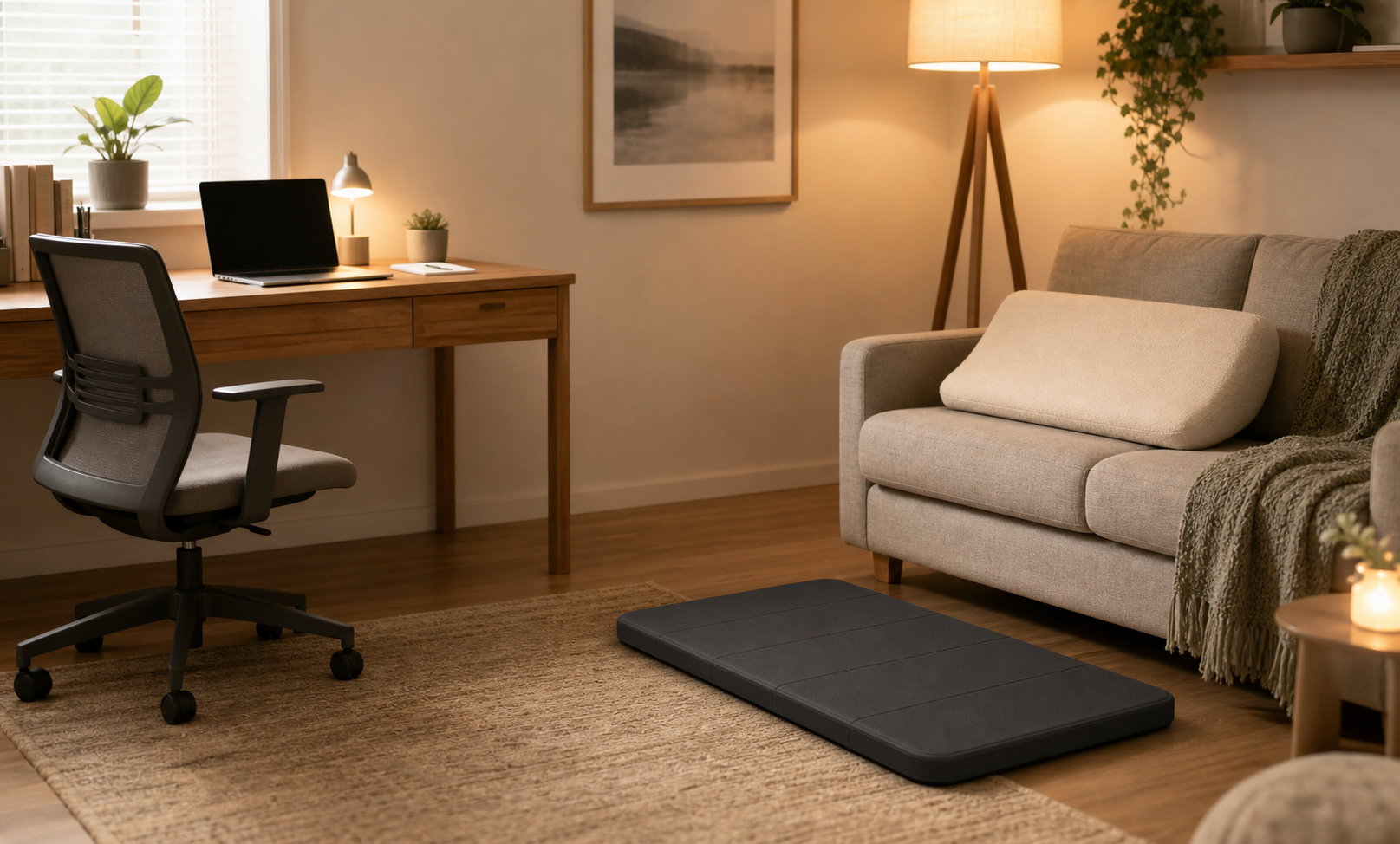
On Tuesday nights, you can still feel your shoulders dragging by the time you sit down at the desk for one last check of email, even before dinner. Three hours later, you leave work and your whole body asks for the same thing: a short reset without a full workout setup and without a bigger mess in a small room.
Most people fix this by buying one expensive thing at a time and waiting for the next pain spike. That works until the cart gets full and the routine gets empty. A better path is a mini recovery corner that fits both your desk and your sofa, and that is built around a simple purchase rule: buy one support piece, one movement tool, and one comfort layer.
Start with one support piece, not a full package
Choose a single cushion first, and pick it for your body shape, not for the glossy image. A firm seat with a gentle curve helps your lower back during long work stretches and makes it easier to sit tall before a stretch. If you only buy one thing, this is a smart first choice because it changes posture all day, including during work calls, late reading, and one-minute resets.
If you want one practical listing to begin with, look at this sample: an Amazon memory foam seat cushion used for small recovery setups. It is not a miracle product by itself, but it can make simple floorless movement easier if your routine stays realistic.
Add one movement tool with a clear use window
Second, add a movement tool only if you will use it at least three times a week. If a product only works when your mood is perfect, it is not yet worth the delivery fee. Keep this in mind before checkout:
Keep your movement window short for the first two weeks. One idea is a ten-minute evening sequence after dinner:
- One minute of slow shoulder rolls while standing by the desk.
- Two minutes of gentle step or march work.
- Three minutes of one hip mobility pattern.
- Four minutes of breathing and calf stretch on the sofa edge.
If your room is truly tight, you do not need a full under-desk machine. You do need a surface that lets you do controlled steps and short marching motions without feeling trapped. A useful option is this Amazon deal page for under-desk walking pads: under desk walking pads when they are on offer. If the pad is too narrow for your stride, skip it. A tiny routine should feel easy, not cramped.
Use a sofa-friendly recovery finish
Third, use your sofa for two calm down minutes, not as a place to sink into for an extra hour. Most sore-neck days happen when people skip the last step.
Try this exact finish-up:
- Put one arm on the armrest and pull your shoulders down for eight breaths.
- Roll your neck through a small half circle without forcing movement.
- Lie flat against the sofa back and press your feet down for six quiet exhales.
Three minutes here lowers the stress carryover and helps you stop the day with less body tension. The goal is not flexibility theater. It is repeatability.
Shopping rules that stop buyer regret
When you shop for recovery gear, use the same rules for every item:
- Will this item fit your daily routine for at least 14 days?
- Is the post-sale return window already on your radar before checkout?
- Can this item be moved in one hand, or does it force a permanent footprint?
- Will it help you with two specific pain points, not one vague goal?
One more guardrail is timing. For sale and coupon items, do not buy because a badge is green. Buy because the product checks passed. If you do this, a 20 percent temporary discount feels like a gift, not a gamble.
For broad ideas on what athletes and daily movers are comparing now, use Amazon's current fitness best sellers as a category scan.
A realistic two-week rollout
Week one is about consistency, not variety. Buy only the first two pieces and run the sequence for seven days. Track one note each night: what worked, what was skipped, what made your body feel calmer after 10 p.m. Week two is optional refinement. Maybe your cushion is fine and your movement tool still feels big. Then swap only that single item. The third step is only for people with space and budget for one more small piece.
A recovery corner does not need a full equipment list. It needs one solid pair of habits and honest timing. At the end of each day, ask one question before you close the laptop: did this setup help my body recover, or did it help me shop more than recover? If the answer is clear, keep it. If the answer is not clear, the answer should be to wait for the next slot, not to keep adding gadgets.
In practice, the best setup for a recovery routine is not expensive and not complex. It is a short sequence, one good seat, and one honest budget rule. That is all it takes to replace the old reflex of scrolling all evening then buying at random.