
This Motion-Sensor Ceiling Light Could Save You from Midnight Hallway Chaos
Three months ago I moved into a place that had a lot to love and one very small complaint: every night was a mission run called "the hallway hunt." I would sit down to relax, hear a small noise, and instantly become a...
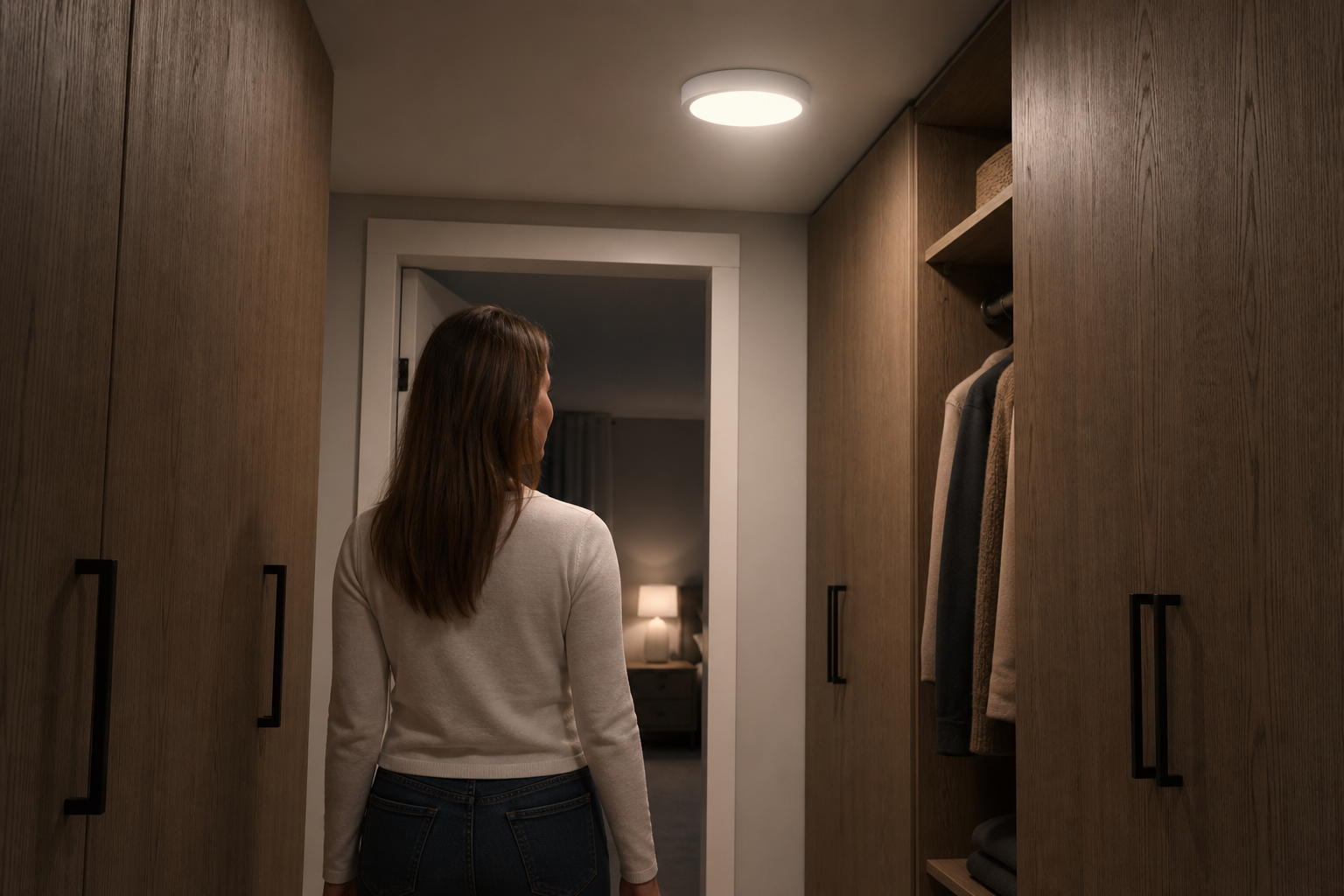
Three months ago I moved into a place that had a lot to love and one very small complaint: every night was a mission run called "the hallway hunt." I would sit down to relax, hear a small noise, and instantly become a shadow crossing the room with a phone in one hand and a lamp in the other, trying to check if the cat was in the kitchen, if the closet door was open, and whether the hallway light was even still working.
It is not a tragic story. It is the sort of little annoyance that quietly steals your evening. The fix is not always a bigger lamp or a full smart home upgrade. Sometimes it is one narrow-use object, placed well, with a routine around it. In this case, that object is the rechargeable motion-sensor ceiling light with remote.
I call it a hallway peacekeeper because it does one thing cleanly: it lights spaces right when they matter, then gets out of the way. For a small price in attention, that is a real gain. It can make a busy home feel just a little calmer.
What this model does best, in plain terms
From the title alone, you can read three practical promises. First, rechargeable means fewer dependency points on wall outlets for hard-to-reach spots. Second, motion-sensor means you do not have to remember to switch it on. Third, ceiling placement usually gives you broad, even coverage instead of narrow spot beams.
That last point matters. A lot. Narrow spotlights look sharp in ads and on shelves, but in real homes they produce bright islands and dark islands. A ceiling-mount sensor light usually creates one calmer brightness profile, especially for long hallways, closets, stair entries, and walkways where your eyes are mostly looking ahead, not at a table lamp.
This model also advertises remote control, which sounds like a "nice-to-have" until you are carrying groceries or one little hand is full of socks. Remotes do not replace good habits, but they do remove small friction in situations where every extra second feels like a countdown.
What makes it different from a regular nightlight
Regular nightlights are fine for one or two moments. Motion-sensor lighting is better for moving routines. If your late-night path involves kitchen, hall, bathroom, and maybe a staircase, a nightlight can leave you stepping in a lot of semi-dark spaces. A ceiling sensor light is better at creating continuity.
- It activates when movement happens, so your home responds without waiting for you to hunt for a switch.
- It can support short check-ins without turning every routine into a full lighting ceremony.
- It fits where hands are often full, which is a real usability upgrade during busy moments.
- Its rechargeable design lets you think past outlet placement friction.
My favorite part is the simplicity. It is still not magic, still not a robot assistant, and still needs your judgment. But it helps you make that judgment without searching for switches in the dark.
Where this helps most in real homes
I see this product shine in these use zones: hallways that connect to bedrooms, closets where laundry sits behind doors, and staircase landings where you want to confirm the next step before your foot does one. In those places, lighting is not about aesthetics first; it is about orientation.
For people who work with kids and pets, it can remove repeated tiny interruptions. Picture this: you hear a noise at 10 p.m. You walk to the hall, see the sensor light turn on, and can confirm in seconds that your socks are not doing an unauthorized migration. That is not a life-changing security feature. It is a stress reducer.
If you have a small bedroom-adjacent walk-through, this can also be cleaner than adding a stack of battery lights around the space. One light, one power strategy, one behavior pattern. You are not hunting for where to put half a dozen smart bulbs; you are setting one anchor point.
A tiny implementation story before the shopping cart
The first mistake people make is treating every home improvement like a full-blown project. They read specs, watch ten-minute videos, and then still place it awkwardly. This is where the "one week, no stress" setup test saves you.
Day one, you mount it where your family steps and turns most often. You do not pick the place that looks pretty in the shipping box. You pick where feet actually pass.
Day two, you walk the space twice in low light and adjust tilt or sensitivity so it activates when you need it. If it turns on for minor movement, lower sensitivity. If it misses normal movement, check the angle and test again.
Day three, you add the real annoyances: entering from the main door with groceries, opening a closet while half-awake, and stepping to the laundry area at midnight. If the light still helps, you can stop testing and start owning the routine.
If, after three days, it still adds value, you probably made a practical choice. If not, keep it as a trial and move on. A practical home object should earn its place, not just its shelf space.
The shortcut is this: if a gadget needs a manual every day, it is probably the wrong shape for your house.
When this is probably not the right pick
If your space already has a broad smart-light schedule with motion automations and scenes, this might overlap too much. In that case, you may spend more time managing than saving.
If you dislike anything with batteries, skip this style unless you enjoy charging routines. No gadget should win if it creates a new to-do list that you do not want.
If you need mood lighting for design reasons, this is not your first choice. This model is about visibility, orientation, and low-friction checks. If your goal is cinema ambience, look for warmer tunable options instead.
How to decide in one shopping window
Use this practical filter: do you want fewer dark-zone surprises more than prettier scenes? If yes, this is likely a fit. If your main goal is color theme, compare options only after you solve the functional need.
Second, map where you use the light most. Hallways with clutter, stairs, and storage entries often benefit more than open living rooms where you can already scan with normal light.
Third, check your replacement comfort. If you are already comfortable with one app and one remote habit, this is a good fit. If you prefer fully manual switches, it may feel like extra complexity.
Fourth, think in terms of friction: if this light saves you from five short pauses each day, then that is enough to matter. If it saves you from one, still nice, but not worth stacking more complexity around it.
Why a small upgrade can beat bigger plans
Not every improvement has to feel like renovation-level planning. Some upgrades are small and still meaningful because they remove a repetitive decision point. This light does that. It does not ask you to change your entire home system. It simply helps your home respond for a second when your feet are already moving.
Think of it this way: if a motion-sensor light reduces a few annoying mini-pauses in your nightly routine, that is a real gain. You get back attention for bigger choices, like what to cook tomorrow or how to keep tomorrow less chaotic than tonight.
And if it works, you move forward with one less hidden friction point. That is not a flashy headline, but it is the type of help that usually lasts.
If you want to try this, use a normal Amazon flow, check current listing details and return policy, and review pricing on the day you decide to buy. Practical upgrades should support your routine with low drama and honest outcomes.