
Pick a Cutting Board by What You Actually Cut, Not by What Looks Good on the Counter
A cutting board is the one kitchen tool you use almost every day, and the wrong one quietly makes prep slower, messier, and harder on your knives. Match the material and the size to what you actually cut, and the choice gets simple.
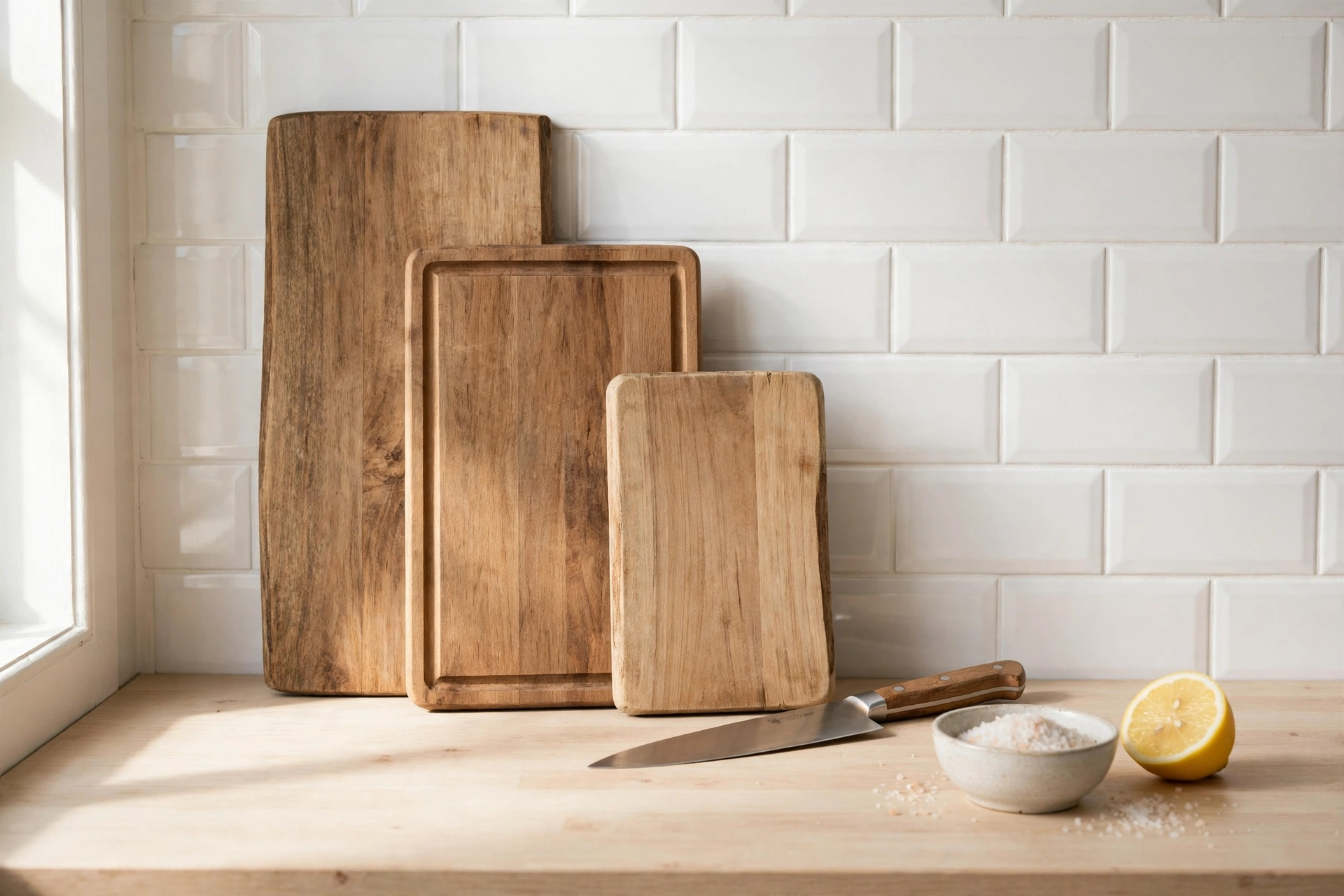
The board you reach for every day matters more than the one that photographs well
A cutting board is probably the most-used tool in your kitchen. It is under your knife for vegetables, bread, and meat, it catches the juice, and it takes the wear. Yet most people pick one the way they pick a vase: by how it looks sitting on the counter. Looks are fine, but a board that is too small, too hard, or too fussy to clean will end up leaning against the wall while you chop on a plate instead. The fix is to choose by what you actually cut, how much counter space you have, and how much care you are willing to give it.
Start with size, not material
Before comparing wood, plastic, and bamboo, check the size. A board should be big enough for the food and your knife to move without pieces sliding off the edge. For most home cooks, that means a main board roughly the size of a sheet of paper or larger, with room to pile chopped vegetables to one side while you keep cutting. A board that is too small forces you to work in tiny batches and makes a mess of the counter. A board that is too big for your sink is a different problem, because you still have to wash it, so measure your sink before you commit to the largest option.
Most kitchens do better with two boards than with one perfect board. A large everyday board handles vegetables, bread, and fruit. A second, smaller board handles the quick jobs, like half an onion or a lemon, without dragging the big one out. Two boards also make it easy to keep raw meat separate from ready-to-eat food, which is the single most useful habit in this whole article.
Wood: kind to knives, needs a little care
A solid wood board is the easiest on your knife edge, it feels good to cut on, and a thick one can last for years. Hardwoods like maple, walnut, and cherry are the usual choices because they are dense enough to hold up to daily use. End-grain boards, where the wood fibers point up at the knife, are especially forgiving on blades, while edge-grain boards are lighter and usually cost less. Either style works well for everyday cooking.
Wood does ask for a little upkeep. Wash it by hand with hot soapy water and dry it standing up so air reaches both sides. Never soak it, and never put it in the dishwasher, because long exposure to water and heat can warp and crack it. When the surface starts to look pale and dry, rub in a food-safe board oil and let it soak in overnight, then wipe off the excess. That is the whole routine: wash, dry upright, oil when it looks thirsty.
Plastic: practical, easy to clean, and best as a second board
Plastic boards are light, inexpensive, and easy to wash, and most can go in the dishwasher, which makes them a strong choice for raw meat and fish. That is exactly how to use them: keep one plastic board as your designated raw-meat board so the job with the strictest cleaning needs is also the easiest to clean. Thin, flexible plastic mats are handy for scooping chopped food into a pan, but they slide around, so put a damp cloth underneath to hold them still.
The trade-off is lifespan. Plastic scars, and deep knife grooves are hard to clean fully and hard to sand out. When a plastic board is heavily grooved, stained, or warped, replace it. It is a consumable, and treating it as one is cheaper than trying to rescue a board that has done its time.
Bamboo: hard, light, and a middle ground
Bamboo boards are light, resist moisture better than most wood, and are usually easy on the budget. They are also harder than maple or walnut, so they are tougher on knife edges over time. If you sharpen your own knives or use a good chef's knife you care about, that hardness is worth knowing. If your knives are basic and you value a light board that dries fast, bamboo is a reasonable compromise. Care for it like wood: hand wash, dry upright, and oil it occasionally with a food-safe oil.
What to avoid
Glass, marble, granite, and other stone boards look striking, and they are fine as serving platters. As cutting surfaces they are a bad idea: they dull a knife edge fast, they are unforgiving if a knife slips, and they chip. If a board is marketed as a cutting board but feels like a countertop, use it to serve cheese, not to chop on it.
Also skip boards with deep decorative grooves across the whole cutting surface, handles that make the board wobble, and boards so thin they flex under pressure. A board should sit flat and stay put. If it rocks or slides, a damp paper towel underneath will steady it, but a board that needs rescuing every time you use it is the wrong board.
A simple way to choose
- One large wood board for everyday vegetables, bread, and fruit, sized to your sink and your counter.
- One plastic board reserved for raw meat and fish, because it is the easiest to wash thoroughly.
- A small board for quick jobs, so the big board does not have to come out for half a lemon.
- A juice groove if you cut a lot of tomatoes, citrus, or roasted meat, and no groove if you mostly chop dry vegetables, since a groove traps crumbs.
- Feet or a damp cloth underneath if your board slides on your counter.
Care that keeps any board useful
Good habits matter more than the material. Wash the board right after use instead of leaving food to dry on it. Use one side for raw meat and the other for everything else only if you are certain you can keep them straight, but separate boards are simpler and safer. Dry boards upright so both faces get air, and store them where they can breathe rather than stacked flat against each other while still damp.
Retire a board when it is deeply grooved, warped, cracked, or smells off after washing. A board that cannot be cleaned properly is not saving you money, it is working against you. Replacing it is the cheapest fix in the kitchen.
The right cutting board is not the prettiest one or the most expensive one. It is the one that fits your sink, fits your cooking, and gets washed and put away without a second thought. Pick for the food you actually cut, keep raw meat on its own board, and the rest of the decision takes care of itself.