
A practical AI morning routine for a small apartment that keeps bills, noise, and stress in check
At 6:45, most apartments feel rushed while the room is still quiet. A small AI routine can make mornings calmer, faster, and easier on your budget.
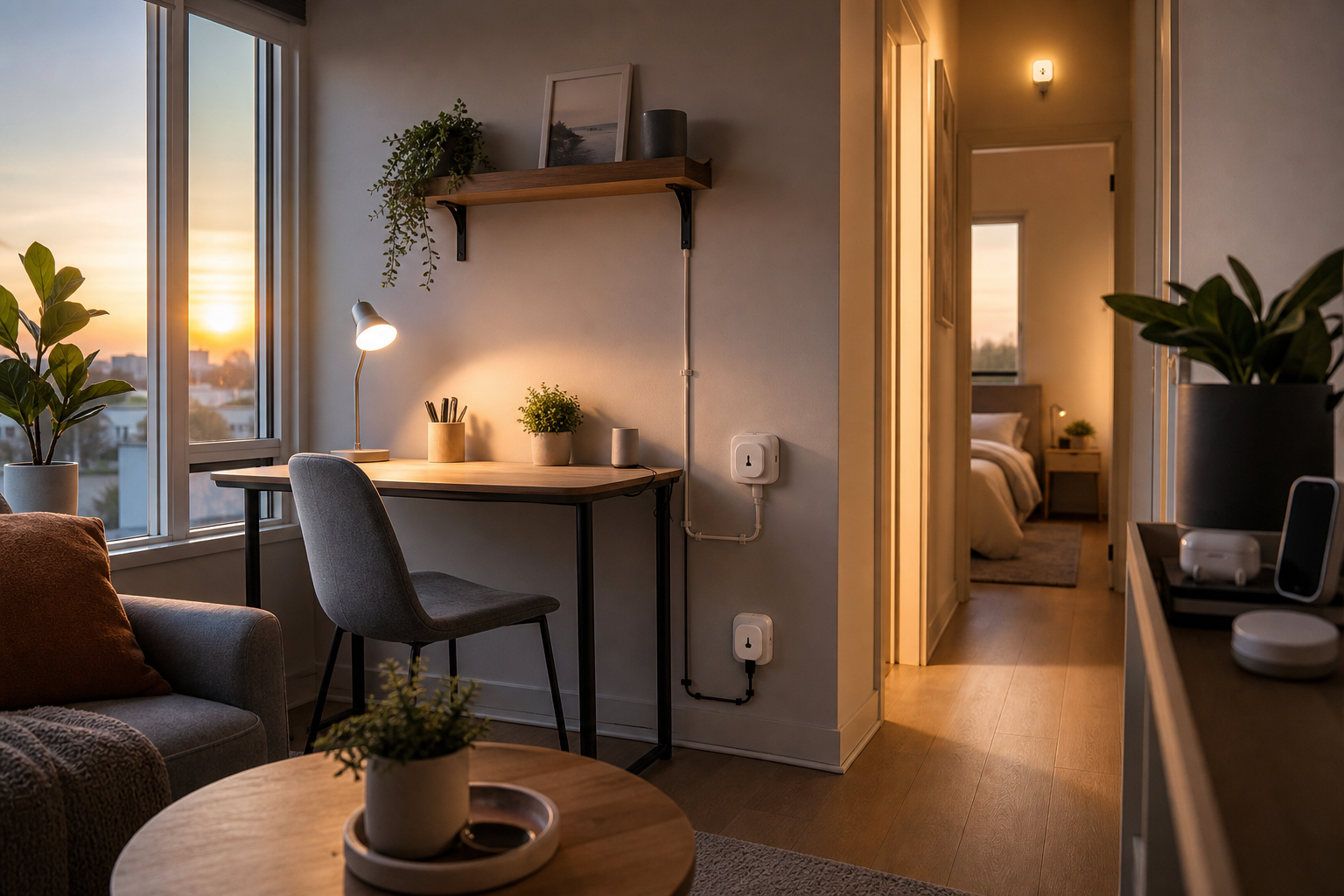
At 6:45 on a warm weekday, your apartment is still quiet but your list is crowded. Coffee, shower, outfit, commute calls, a waiting email thread, and a charging cable tangle all expect attention before your bus or coffee shop opens. In that rush, habits that depend on memory fail. Habits that depend on repeatable automation last longer.
Most people reach for a bigger gadget list first. A bigger list can create more confusion than comfort. For a rented room with a thin wall and a short budget, this guide is about fewer controls, stronger defaults, and a small smart stack that keeps your morning moving.
Start with three outcomes, not with products
Write three outcomes and keep each one measurable.
Outcome one: air feels cleaner and cooler without spikes in energy use.
Outcome two: lights and appliances start only when useful.
Outcome three: if a device fails, the morning still works with simple manual controls.
Every product you buy should support at least one of these. If it does not, keep that money in your wallet.
Product one: smart plug scene as the first building block
It looks simple, but this is the most useful upgrade. Put your mini fan and any small air appliance on controlled outlets. Make one startup schedule and one shutdown schedule. That alone removes the late-night forget loops.
Use one scene rule for both items if your app allows it. In a small apartment, this avoids app overload and keeps the routine easy to debug.
Smart plug candidate with app scene control. In checkout, check whether the app allows grouped actions and stable Wi-Fi behavior before sunrise and bedtime.
Product two: compact air support for humid corners
Small apartments usually do not need loud machines, but they do need fresh air after early dinner prep and shower windows close. A compact unit that can run in short intervals usually fits this use better than an oversized one.
Look for noise level and a quick interval timer. A unit that runs at low speed for only a small period can reduce moisture and odor without turning the apartment into a lab.
Compact air support for small rooms. This link is for comparison only. Compare model size, filter access, and whether short scheduling is in-app.
Before buying, test this rule in your own layout: can one run cycle work while you are moving through the room, or does it interrupt your morning focus?
Product three: hallway light cue for wake timing
A small motion-aware light can replace one alarm loop. Set this bulb to a dim startup at wake time, then normal level after movement is detected. You feel less rushed, and the room does not need a loud flood.
Keep the transition smooth. One cue should be enough. If you need more, shorten each rule, do not add more light scenes.
Motion-aware smart lights with schedule controls. The better choices are predictable, simple to pair, and easy to stop when plans change.
Product four: voice fallback that can override everything
Most routines feel complete until they fail at 6:50 p.m., or during a guest visit. Add one fallback path and test it now. A small voice shortcut, or a physical button, should pause all routine actions in under thirty seconds.
When this path fails, the routine becomes annoying. When it works, you get reliability. Pick the least complicated tool for override.
Simple control hub or mini button options. Do not buy a fancy panel if the basic override button is hard to reach.
Build the routine in slow steps, not in one rush
Set the smart plug and hall light rules first. Run them for three nights and note actual behavior. Does the wake tone still feel late? Does the room get too bright before you leave? Does any rule trigger by mistake after midnight?
Only after that, add the air device. If two or more devices are active at once too early, you cannot tell which one is helping and which one is just extra noise.
Use a one-minute weekly tune-up rhythm
Night before: charge devices, open the app, and confirm each target has one clear name.
Mon to Thu: keep rules fixed; only observe outcomes.
Friday: compare wake time and bedtime calm level against the previous week.
Weekend: adjust only one setting at a time, either duration or start time.
Your goal is not a perfect stack. The goal is a repeatable one. A routine that still works with one missing device is stronger than one that breaks as soon as connectivity drops.
Use a realistic price view, not a hype map
For deals, compare two candidate products and verify shipping details before checkout. A one-day price dip is useful only if returns and compatibility are clear.
Use seasonal context from retail cycle coverage and deal reporting to decide if now is right for your purchase, or if waiting for the next reset is smarter.
Keep your budget fixed, then test if one third of that budget reaches one outcome. If a product does not help that outcome in two weeks, do not force it.
Before you buy, answer three questions
Can this setup run one full week using only your chosen outcomes?
Can you stop every action quickly if plans change?
If you cannot answer both with confidence, pause your purchase and reduce your shopping list to one product.
Small apartments do not need many gadgets. They need calm patterns that are easy to follow, easy to pause, and easy to restart when life changes.
Final line
If this works, mornings should feel cleaner, not heavier. In a good setup, automation reduces decisions, reduces noise, and keeps your apartment bills and stress in safer range.