
The $40 Steam Cleaner That Fixed the Kitchen Problem a Sponge Cannot Touch
Grout, grease, and a stovetop ring that resisted the sponge all gave up to a 15-second heat-up and a kit of fifteen attachments. What the machine handles, what it does not, and the ten-minute first pass that tells you if it belongs in your kitchen.
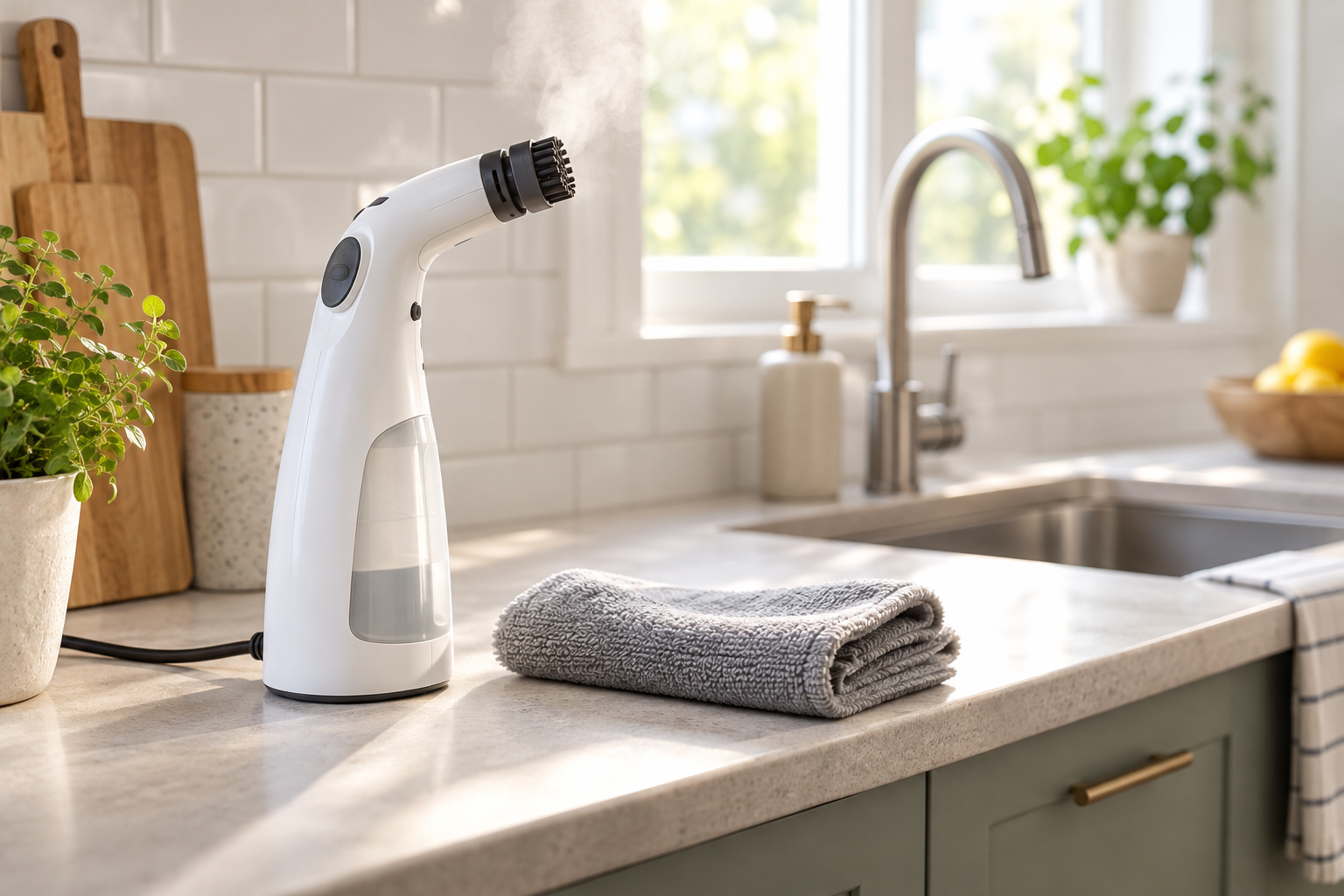
The grease around my stovetop was not a thin film. It had layers. A month of frying, a pot that boiled over, the kind of brown ring that a scrub brush leaves exactly where it started. I spent twenty minutes on my knees with a sponge and the ring barely moved. That is the moment you start to wonder whether the problem is your elbow or your tool. In this case, the tool.
Steam gets into the gap the sponge does not. A handheld steam cleaner is the small-appliance version of that idea: hot water vapor, no chemicals, a nozzle you aim at the problem. The Gyrivav handheld steam cleaner is the one that made the case for me. It is a 1,500 watt machine that heats up in about 15 seconds, and it ships with a 15-piece accessory kit that covers most of the places in a house where grime likes to hide. Here is what it is actually good at, where it runs out of tricks, and how the kit breaks down before you decide whether it belongs on your counter.
What the heat actually does
Steam cleans by heat and by pressure, and those two things do different jobs. The vapor hits a greasy surface at roughly 248 degrees Fahrenheit, which is hot enough to soften grease that has baked onto metal or ceramic. The pressure from the nozzle then pushes the loosened film off, and the towel or brush in the kit wipes it away. No detergent, no smell, nothing to rinse off a glass door or a tile wall.
That distinction matters more than it sounds. A spray-and-wipe cleaner fights grime with chemistry. A steamer fights it with temperature, so the results follow a simple rule: the longer the grime has been sitting, the more passes of steam it takes. A week-old splatter gives up in one pass. A season of ring around an oven door wants three or four, and the patience to let each pass work before wiping. If you walk into this expecting the first pass to be magic, you will be disappointed. If you treat it like a pressure washer in a glove, you will be impressed.
The kit is the whole argument
A bare steamer is a gun with one bullet. The accessories are what make this machine cover a house, and the 15-piece kit is the part worth reading before you buy. Here is exactly what the listing ships with:
- The main steamer unit with its built-in water tank
- A 75 inch (1.9 m) steam pipe and a 61 inch (1.55 m) power cord
- Three brushes: small nylon, large nylon, and a brass brush for the really stuck-on surfaces
- A steel wool pad and its holder, for the heavy grease jobs
- A scraper, a functional glass scraper, and a towel cover for wiping
- A storage tank, a connector, two sealing rings, and an extension rod with its gasket
That list is doing three jobs at once. The brushes and pads split the work by surface. Nylon is for the broad, everyday wipe. Steel wool is for the stovetop ring and the oven rack corners where the grease has hardened. The glass scraper is for the window-side glass door, and the scraper handles the painted trim where you do not want to scratch. The towel cover keeps the steam from spraying at your hand when you wipe down a flat panel.
The extension rod is the quiet feature. It reaches the top of a tall window, the ceiling corner where the smoke detector ring collects a film, and the space behind the toilet where nobody wants to stand for long. Most small steam cleaners stop at your wrist. This one goes where your arm does not reach, which is exactly where the grime is.
Where it earns its space
The grout lines in my kitchen tile are the test I give any steam cleaner. This one handled them in the way I want: the steam softens the dark film in the grooves, and the small nylon brush works the line in short strokes without digging at the grout itself. I did a section of floor I had put off for a year, and it came back to a color I had forgotten was in there. The 1 to 2 inch nozzle distance the listing recommends is real. Hold it close and the steam concentrates. Let it drift and you are mostly blowing warm air.
Two other jobs went well. Car windows and mirrors: the glass scraper and the steam take the waxy film off without the streak you get from a spray bottle and paper towel. And the seats: a pass of medium steam over a cloth loosens the dust that has packed into the fabric between the bolsters, which a vacuum only pushes around. The 6-level control is what makes the car pass comfortable. Full blast on the grout, a low setting on the upholstery, and the button on the handle means you change power without reaching for the unit. The small LED tells you which level you are on.
What it does not do
Be honest with yourself about this one before checkout. A handheld steamer is a surface tool. It is not a carpet cleaner, it is not a vacuum, and it will not pull dust out of a couch. Put it on a porous material like unsealed wood or a suede jacket and you are bringing moisture to a surface that did not ask for it. Electronics are out, obviously, even though 221 degree steam sounds gentle. It is also not a substitute for removing a chunk of food. Steam loosens and lifts. It does not scoop.
There are two housekeeping notes that come from real use. The brass nozzle and the extension tube get hot, so the 15 seconds of heat-up is also your warning: treat the nozzle like a small burner, not a handle. And if your tap water is hard, you will see white mineral marks on dark surfaces. The listing says it plainly, and the fix is the same plain thing: wipe the surface with a microfiber cloth when the pass is done. The 40 minutes of continuous steam from the 1.4 liter tank is more than enough for one full room at a time, and the top-fill design means you can top it off between rooms without hunting for a way to open the cap.
Who should buy it, and who should not
Buy the Gyrivav steam cleaner listing on Amazon if your house has tile, grout, glass, or a kitchen that sees frying. It is the right tool for a weekly ten-minute reset on the surfaces a sponge gives up on, and the kit means you are not buying a second attachment the first weekend. The 15 second heat-up matters more than any spec sheet admits, because the fastest machines are the ones that actually get used. You fill the tank, you press the button, and by the time your elbow is ready, the steam is ready.
Skip it if your main problem is carpet, or if you want one machine to do everything. A steamer does one job well. People who buy it expecting a vacuum, or who have a home full of delicate porous surfaces, end up storing it in a closet by spring. Pair it with the vacuum you already own and you cover almost every surface in a normal house without owning a second large appliance.
How to use it the first time
The first run is where people get the wrong impression, so do it on a forgiving surface. Fill the tank to the line, put it on a hard floor, and run it at the lowest setting on an old tile section. Watch how the steam behaves at the nozzle before you touch anything that matters. Then move up a level and try the grout. By the third level you will understand the range of the machine and you will have used two minutes of a 40 minute tank. When it is done, tip the drain and let the tank air dry, and the next time you reach for it the machine will be as good as the day it arrived.
I keep mine on the kitchen floor, which is where it lives, next to the vacuum it works with. After a year of stovetop passes, grout refreshes, and the occasional car seat, the ring around my cooktop is something I fix in one pass instead of an hour of scrubbing. That is the whole review in one sentence: it turns a Sunday chore into a ten-minute habit, and the kit is what keeps it pointed at whatever the house is being rude about this week.