The Driveway Test: When a Car Wash Water Gun Is Enough and When You Need a Pressure Washer
One hose, one gun, one booster nozzle. Most weekends, that is all the car needs, and the five-minute test below tells you when the big machine actually earns its place.
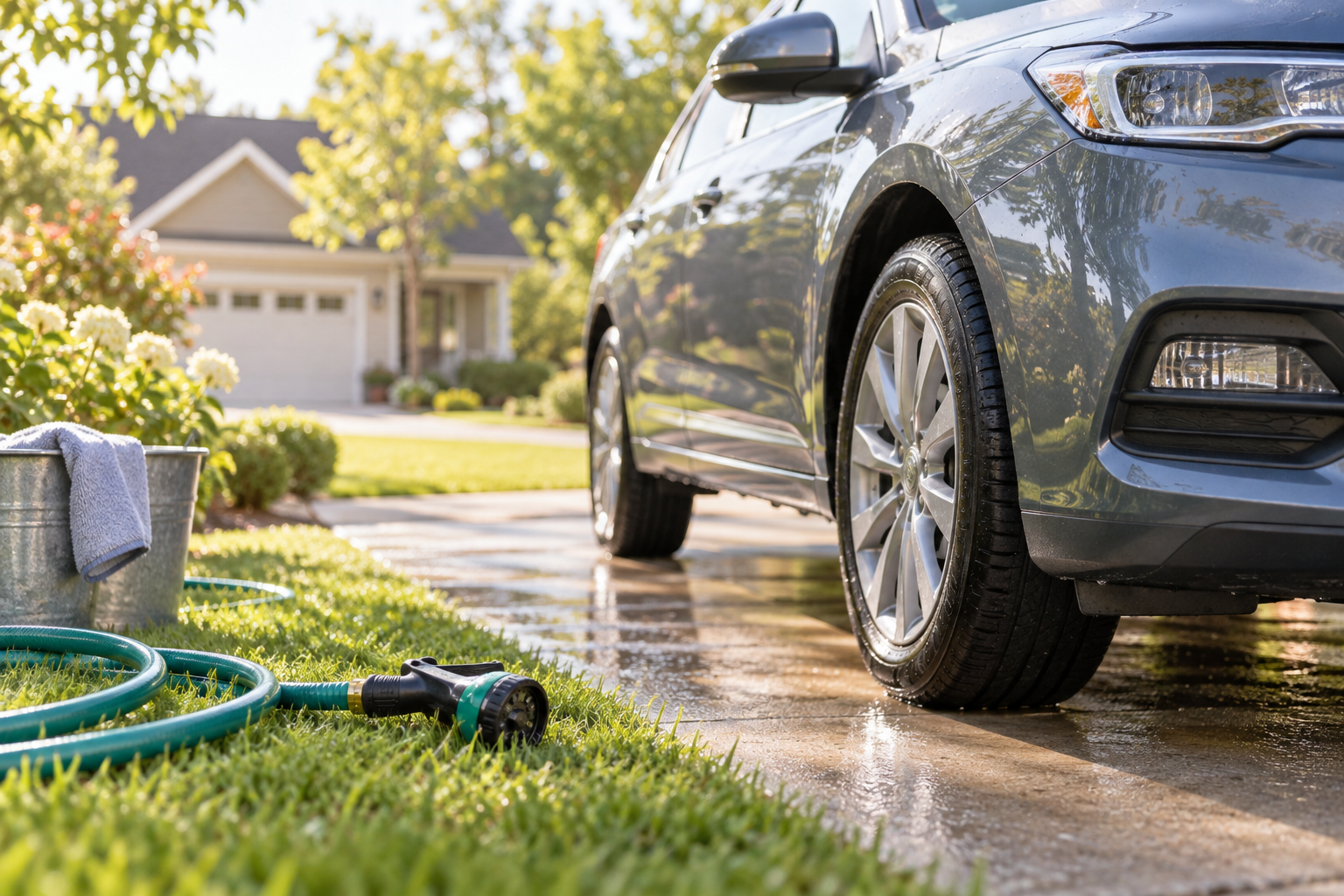
It is Saturday morning, the car is parked in the driveway wearing two weeks of pollen and road film, and you are standing on the grass holding a water gun. The kind with a booster nozzle on the end. The kind that hits your shins and turns the front walk into a swimming pool. And the question in your head is the one that keeps most of us awake while we scroll through pressure washers at 11 pm. Is the thing I already own enough, or is a real machine about two hundred dollars away from being the correct answer?
The honest answer is more often "yes" than people expect. A garden hose, a water gun, and a booster nozzle can carry a big chunk of the washing job. The rest is technique, not horsepower. But the other side of that sentence is where the money goes, so it is worth five quiet minutes of thinking before the credit card does the thinking for you.
What the booster nozzle actually does
Quick plain-English version, because the name does a lot of work. A booster nozzle sits between the hose and the gun and squeezes the water as it passes through. The squeeze raises the pressure at the exit and tightens the stream, so the water lands like a small fountain instead of a dribble. It is the difference between rinsing a windshield and trying to convince the dirt to leave on its own.
Here is the part nobody puts in the manual. The washing itself, done with the gun setup, goes in an order, and the order is where the results come from. Wheels first, always. Brake dust and road grime are the nastiest thing on the car, and if you soap the body before you rinse the wheels, that mud gets flung around the panels by your mitt. So: rinse the whole car top to bottom, then scrub the wheels and the wheel wells, then rinse again, then start the buckets.
The two-bucket method takes about ninety seconds to explain and saves the paint most weekends. One bucket of clean water, one of soapy water. You work the car with a wash mitt in the soap bucket, rinse the mitt in the clean water bucket, and repeat. The grit that the mitt picks up goes into the clean bucket where it settles at the bottom instead of being dragged across the clearcoat. Rinse the mitt more often than feels polite, and the swirl marks mostly take care of themselves. The full routine, from the rinse to the final dry, lives in the hand-wash guide at wikiHow, and it is about an hour of work for a normal car, including the drying at the end.
The rinsing patterns that matter
Once the soaping is done, the rinse is where the gun setup really shows what it can do, and it shows it through three patterns, not one. The wide fan is the body rinse. You stay about an arm's length back and work top to bottom, roof to rocker panels, letting the water carry the suds off instead of wiping them with your hands. The medium pattern is for the seams, the mirrors, and the trim. And the tight stream is the workhorse for wheels, wheel wells, and the mud line, where you want the water to land with enough force to push grime out of the spokes rather than bounce off.
One rule keeps people from hurting the paint. Never park the tight jet in one spot on the clearcoat. A focused stream held still on the same patch, especially in summer heat, can start etching the clear layer in a way that looks like a faint cloud. Sweep it like you are rinsing a window, and the paint never even meets the jet twice in the same place.
There is also the water spot issue, which is a water problem wearing a car problem's costume. If the rinse water is hard, the droplets that dry on the panels leave behind the minerals in the water, and suddenly the car is covered in tiny white craters that no amount of buffing removes. The cheap fix is the one that sounds too easy. Towel dry the car after the final rinse, or at least the lower panels that dry slowest. It takes a few minutes and it is the difference between a car that looks washed and a car that looks washed and then regretted.
The weekend kit, in pieces
If the decision lands on the gun side, the pieces line up in a stack that is easy to budget and easy to store. The hose does the water work, the gun gives you the trigger and the aim, and the booster nozzle is the part that turns a garden hose into a real rinsing tool. You do not need three of anything. One good hose, one gun, one booster, and the kit is done.
A few of the setups that fit that shape are worth a look before the weekend. The portable car wash water gun with the booster nozzle and hose is the straightforward pick for a driveway and a normal car, and the same idea in a heavier build works the same way with more water pressure behind the trigger. If you want the rinse patterns as a separate tool that also does the garden, a metal multi-pattern hose nozzle covers the wide fan, the medium, and the tight stream in one head, and it doubles as the plant watering tool that lives outside the rest of the year. And when the grime has moved past the car and onto the concrete, the 2600 PSI electric pressure washer with the foam cannon is the step up that actually earns its weight.
- Handheld car wash water gun with booster nozzle and hose, the portable setup: see the price on Amazon
- High-pressure car wash water gun with booster nozzle and hose: check it out on Amazon
- Multi-pattern metal hose nozzle for car, garden, and pet rinsing: see it on Amazon
- Electric pressure washer, 2600 PSI with foam cannon, for the day the yard becomes the project: price and details on Amazon
The five-minute test that settles it
Before anything goes on a cart, run the test. Stand in the yard and count what the machine would actually have to clean for you, this season. A car or two, and maybe the front walk. Or the whole concrete pad, the fence, the deck, the patio furniture, and the car. The first list is a hose problem. The second list is a pressure washer problem, and paying for the machine pays for itself the first weekend it washes a driveway.
There are a few signs that the pressure washer is the honest buy, regardless of the test. You have a large concrete area that gets a green film or oil stains that a hose will not move. You have a deck or fence that has not had a real cleaning in a year or two. Or you wash the car, then the truck, then the trailer, every month, and the rinse time with a hose is starting to feel like a tax. When any of those is true, the gun setup stops being enough, and the 2600 PSI class of machine becomes the tool you will actually use.
When none of those are true, the water gun setup is the right size of tool, and the weekend stays a car problem. Rinse, wheels first, two buckets, three patterns, and a dry towel at the end. The car comes back clean, the hose goes back in the shed, and the two hundred dollar machine stays on the page where it belongs, waiting for the season when the yard takes over. That is the whole job, and it is better done with the right tool than with a louder one.