
How to Keep a Small Kitchen Pantry Reliable Through the Week Without Overbuying
A tidy pantry routine can save your week from chaotic grocery mornings, especially when every shelf has a purpose and no one buys duplicate essentials.
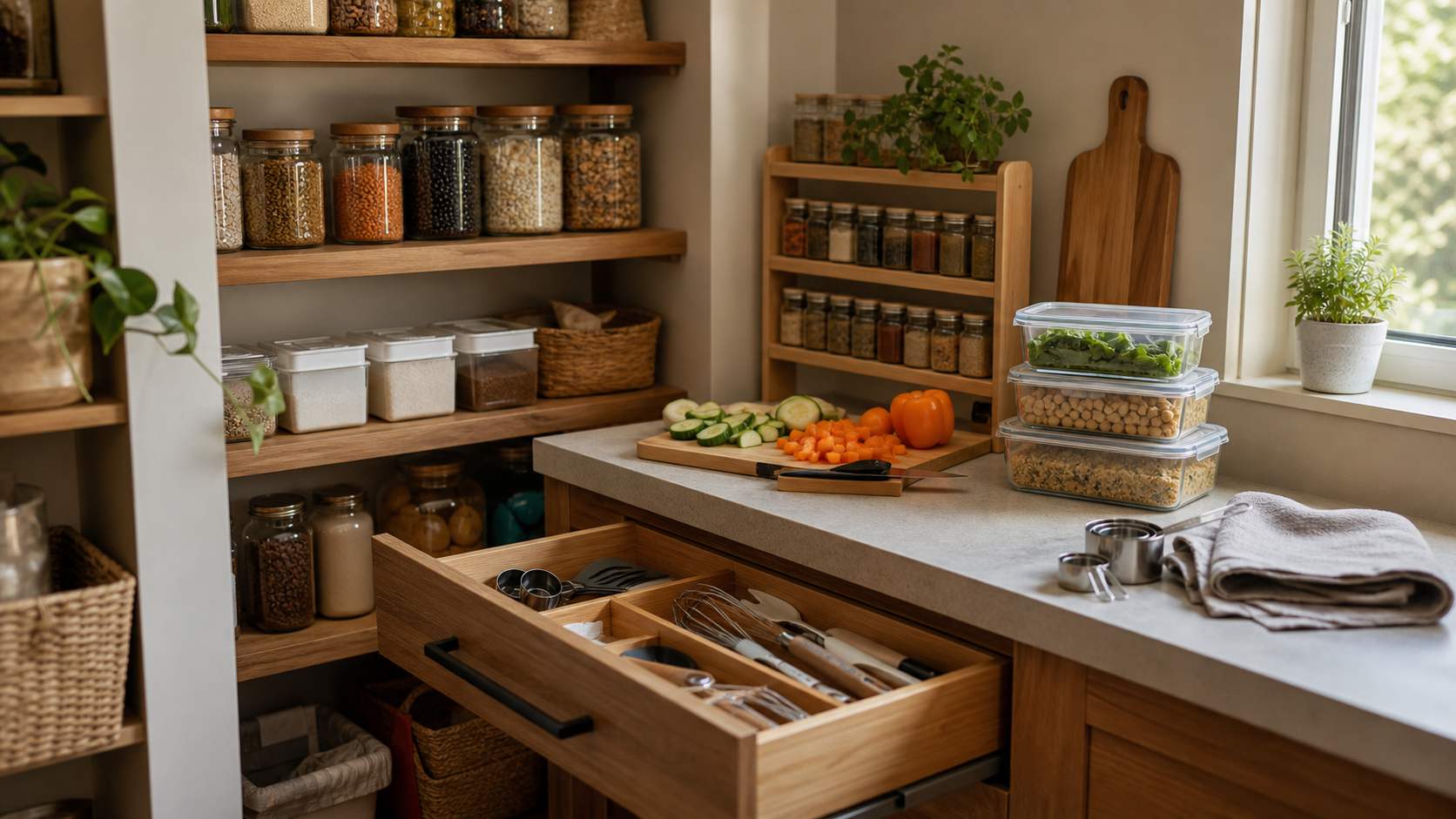
If the groceries arrive on Friday and your kitchen starts the weekend with every drawer full and every container open, you are not short on products. You are short on a pantry routine. The mess feels bigger because too many items arrive at once, and the first few meals of the week are built around this overload.
You can stop that loop by using a simple three-step rhythm before the next shopping day. This is not about becoming minimalist overnight. It is about making your pantry a repeatable system that helps your family find what they need quickly, while giving you room to buy only what you use.
Start with a kitchen map, not a shopping list
Before opening any product pages, stand in your kitchen for one full minute and count the flow spots, not the shelves. Most people map too much and move too slow. In this setup, you only map three spots:
Zone 1: what gets used before 10 a.m. every day.
Zone 2: what gets used between lunch and dinner.
Zone 3: what sits for emergencies and long weekends.
With this in place, every pantry and basket has one clear owner. If an item does not fit one of these zones, it is a candidate for donation, gifting, or the next season.
Pick a one-week shopping checkpoint for Zone 1
Zone 1 is your fast-use shelf. This is where staples for morning and late-night meals live. Do not overflow this zone. It should carry what is likely to move before the first grocery trip of next week.
Set a fixed threshold for each item. When rice drops below one and a half cups for the family and no one is planning a party, add one bag. If bread is still full and your freezer has protein, do not buy a third loaf.
Airtight pantry container options gives many sizes, but size is not the only thing to compare.
Buy the smallest width container your kitchen can support. Tall and narrow stacks move around corner cabinets easier, and they keep dry goods from crushing flat items.
Zone 2 keeps the daily rhythm from breaking
Zone 2 covers lunch and dinner prep. This is where people overbuy. Oils, condiments, snack boxes, and herbs are often purchased in bundles, then never used before expiry.
Use a seven-day cap here:
Day 1 and 2: buy or open only what you know will be used for two meals.
Midweek: restock one category based on actual use, not mood.
Friday check: top up only items that dropped to low-use limits.
Simple structure beats one-week perfection. If a jar sits untouched for two weeks, shrink the next order size by one step.
Zone 3 is a control shelf, not a storage graveyard
Most kitchens fail in Zone 3 because people treat it like insurance. You do not need six emergency backups if you already have a grocery app, a shared calendar, and one smart habit.
Zone 3 should hold:
- one backup grain or lentil pack for a missed shopping day
- one canning or frozen fallback for weekend guests
- one baking or baking-mix reserve for quick backup meals
If this shelf has more than three backup categories, you are likely paying storage tax.
How to avoid overbuying in a tiny kitchen
You do not need a giant spreadsheet. You need one rule and one review time. The rule is: every new item must save at least one future trip. If you cannot explain that in one sentence, add it to your shopping cart and remove it immediately.
Your second step is the review time. Pick one fixed evening each week for a 12-minute pantry check. Keep it short. Ask only four questions:
- What dropped below one week in each zone?
- What expired, cracked, or lost a lid?
- What moved to another zone because it does not fit current habits?
- What coupon or deal looked strong but has no place in this week map?
This review prevents the classic grocery trap: buying a beautiful deal for future use while forgetting current essentials.
Three practical shopping checkpoints with affiliate links
You should still use deal-hungry shopping channels, but with filters. If you are shopping under a strict budget, these checks save money faster than searching for a perfect layout.
A countertop magnetic rack with clean edge support is useful for your most used tools, but only if the hooks stay reachable.
Amazon gold box deals can help when timing is right, but a deal only works if it matches your zone map.
To avoid false urgency, apply this exact order: compare one base model, test in your own kitchen for one week, and only then buy the second option. This avoids a common pattern where people buy five small tools and use none.
Use product tags to force discipline
Give every item a place before buy-time. A simple card works well:
Tag A: weekly, always in Zone 1.
Tag B: meal-day, usually Zone 2.
Tag C: backup only, Zone 3.
When walking through a store page, skip any item without a tag assignment. This keeps your cart from random upgrades with no routine.
How to test your routine without buying a new container first
Do not buy a full set after one bad week. Use paper boxes for your first one-week test. If a box does not get used, reduce your buy plan. If a box works, move to one dedicated product purchase.
That sounds slower than grabbing a full kit, but it is faster than returning or storing unused boxes after one month.
Build your own decision log so the routine stays honest
Write this once a week in your notes app. Three columns only:
Date: what changed this week.
Item: what was used or not used.
Action: keep, trim, or move to another zone.
It looks basic, yet this log catches the hidden budget leaks. A family that tracks a few items can remove half of duplicate shelf purchases within two weeks.
If you are building this for a household, share the same list with everyone. Shared visibility means fewer duplicate buys from different phones and less surprise waste.
When the routine is not working, fix the smallest loop
If the kitchen still feels chaotic after three weeks, you usually did not fail at shopping. You failed at one loop. Find the loop that feels the messiest and simplify only that loop.
Sometimes the bottleneck is too many open containers. Sometimes it is a weak routine in Zone 2. Maybe you are buying in bulk and your family uses less than you think. Fix one loop, not the whole routine.
Keep this principle. Small kitchens usually win by trimming the wrong habit, not by finding one premium product that promises a total reset.
Final step: your one-week pilot
For seven days, use the three zones, the three tags, and the Thursday 12-minute review. If your checkout basket still looks crowded by day six, the fix is simple: remove one category, not one item. Fewer categories mean fewer impulse buys and more predictable weekly costs.
This pace feels plain, but plain systems are usually the ones that survive real life. A small kitchen with a pantry rhythm becomes cheaper to run, quieter to maintain, and easier for everyone to use before the weekend starts.